B2B e-commerce, UX research and design
APXpress
B2B e-commerce UX research and design that took a 30-year trim supplier from an unproven idea to a validated MVP, by mapping the one thing nobody had: how their buyers actually buy.
- B2B
- E-commerce
- User Interviews
- Personas
- Journey Mapping
- Information architecture
- Wireframing
- UI design
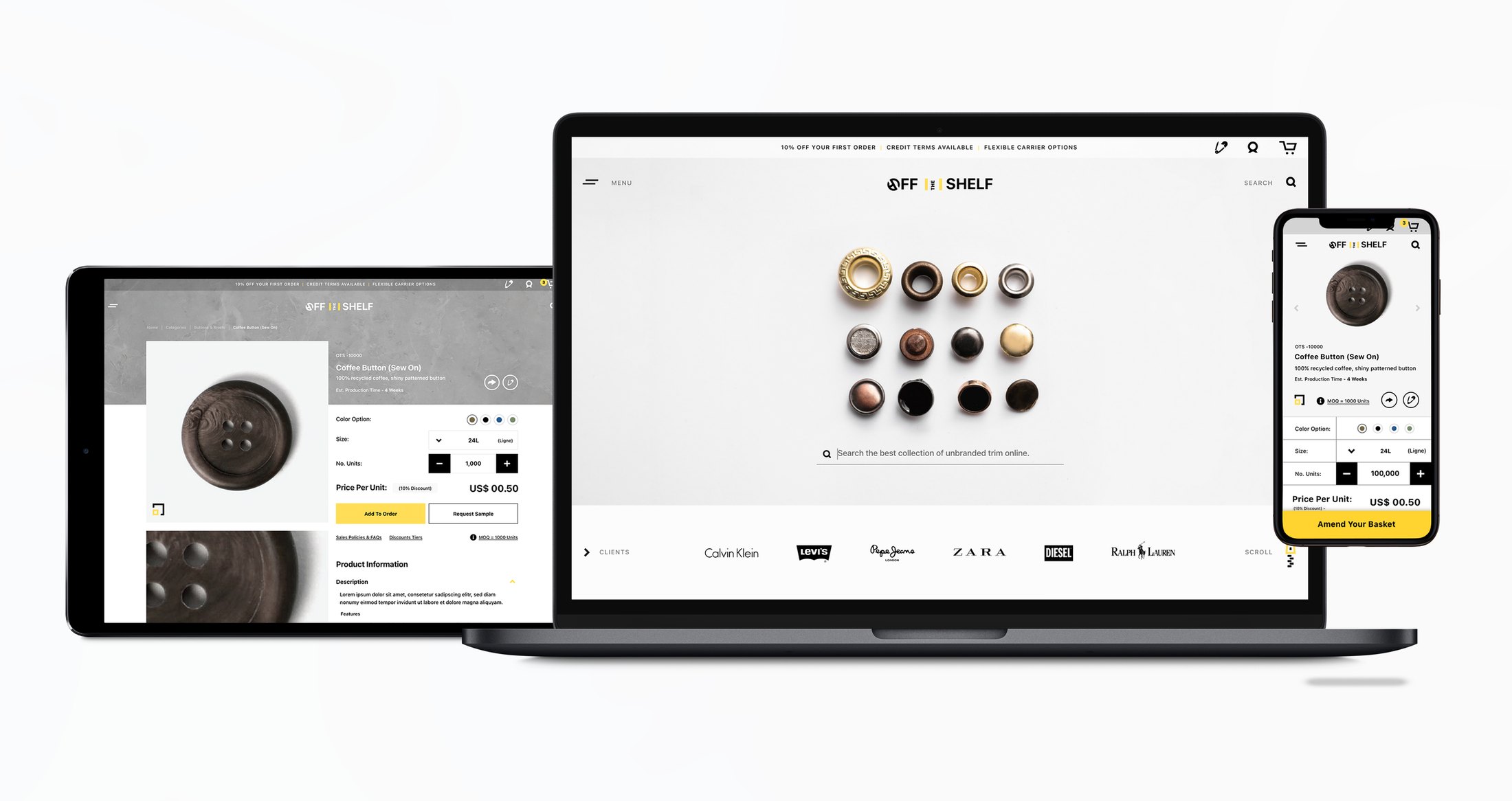
The demand was there. What nobody had mapped was how this trade actually buys: no one buys alone, and every order has a long procurement chain.”
The impact
- 100+
- Questionnaires, translated into buyers' first languages, to map how the trade really buys
- 30 years
- Of legacy processes translated into a modern B2B selling platform
- 6
- Bespoke trade features drawn from the research, from a shared order board to a 24-hour hold
- Sector
- B2B / e-commerce, fashion supply
- My role
- UX research and design lead
- Timeframe
- 2022–2023
- Team
- With APXpress's managing director and board of directors, and our internal developers
01
The challenge
APXpress have supplied branded garment trim, the zippers and buttons, to fashion houses such as Ralph Lauren, Levi and Zara for over 30 years. For just as long they fielded large orders for unbranded trim they could source but couldn't process inside a person-to-person model. That recurring missed opportunity became 'Off The Shelf': a B2B e-commerce platform to sell unbranded trim on demand, and a business moving online for the first time.
The shop was the easy part. The buyers were the hard part. The platform had to support a purchase that is really a negotiation: a chain of people who each need sign-off before anyone commits, working across different countries and cultures.
There was almost no market insight to lean on. The proposition had never been executed successfully, online competition was thin, and APXpress were moving from a service-led, relationship-driven business to a self-serve one. The product lifecycle was genuinely complex, with long lead times, mid-flight amendments and orders placed in batches of 1000.
The opportunity was clear, the route to it was not. The questions I had to resolve were:
- How a relationship-driven, person-to-person trade actually buys, and how much of that can move online
- How to design one buying experience around three user groups split across countries, cultures and roles
- How to deliver the bespoke features this trade needs while keeping the MVP inside the client's budget
02
My role
I led the UX research and design across discovery, working with the managing director on the proposal and the development team on what the MVP could realistically carry. In practice that meant:
- Shaping the proposal with the managing director, offering bronze, silver and gold options to fit the client's budget
- Planning and facilitating two full-day stakeholder workshops to surface and test the client's assumptions
- Designing the research, from competitor analysis to translated questionnaires and a small set of interviews
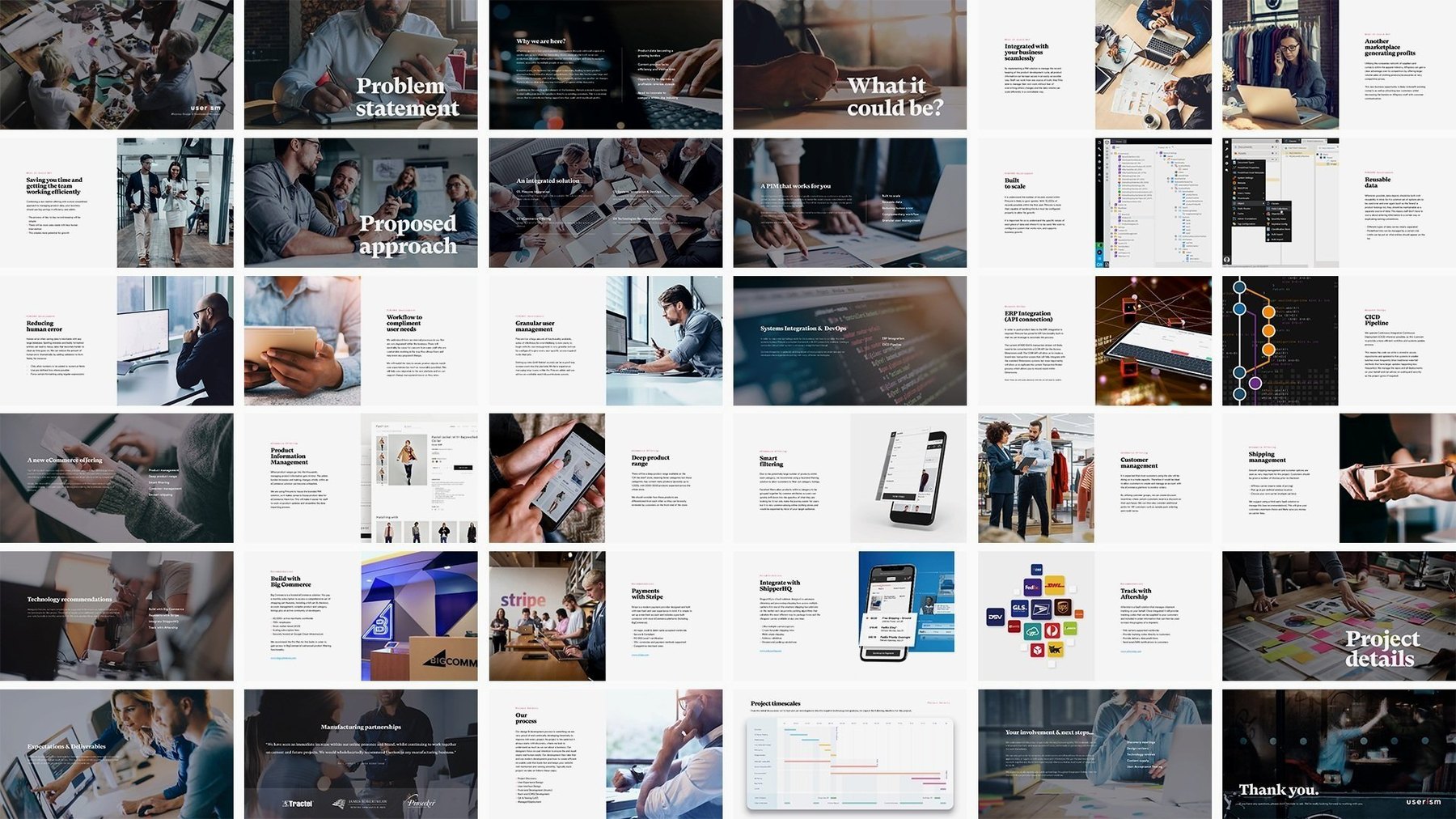
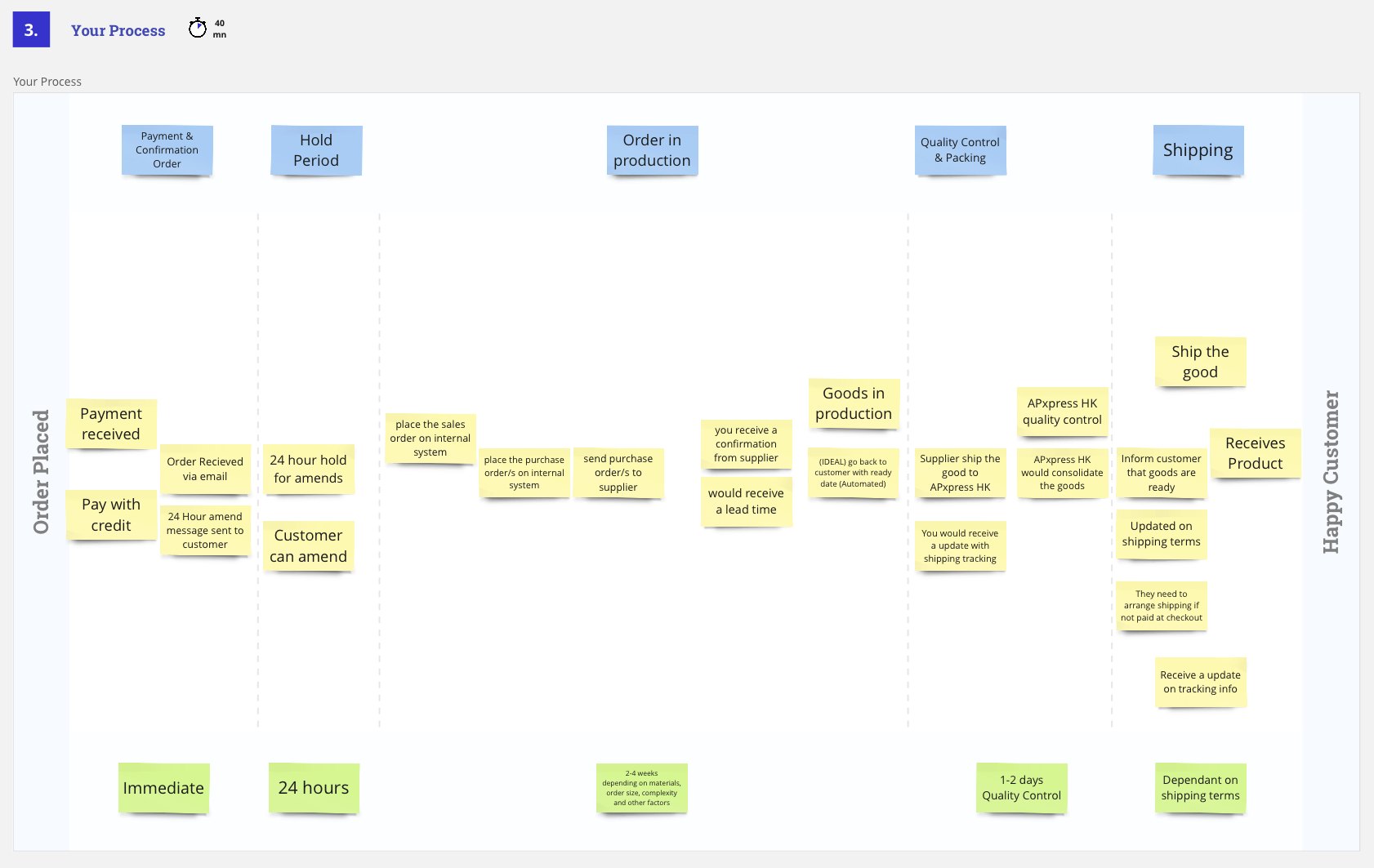
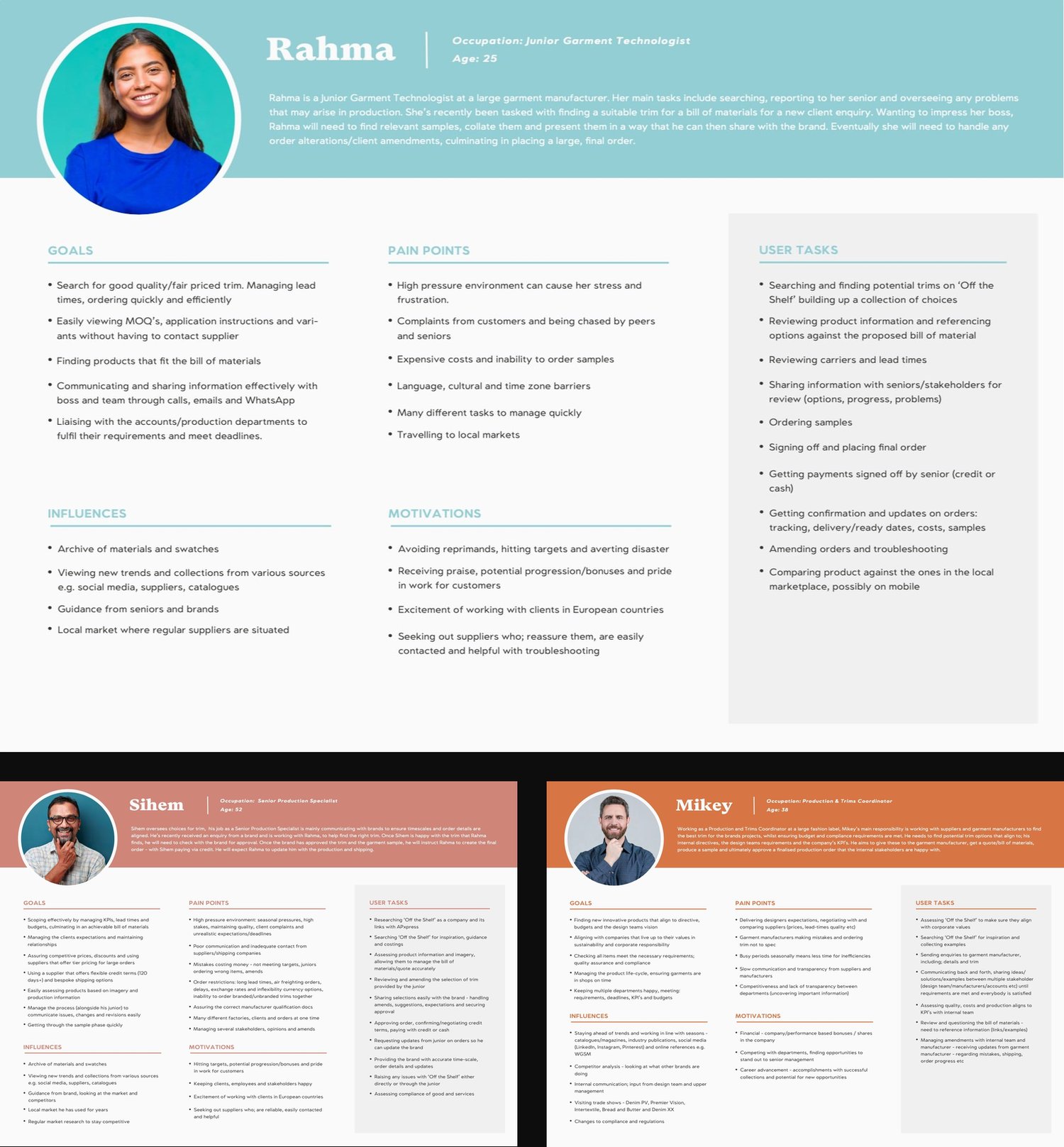
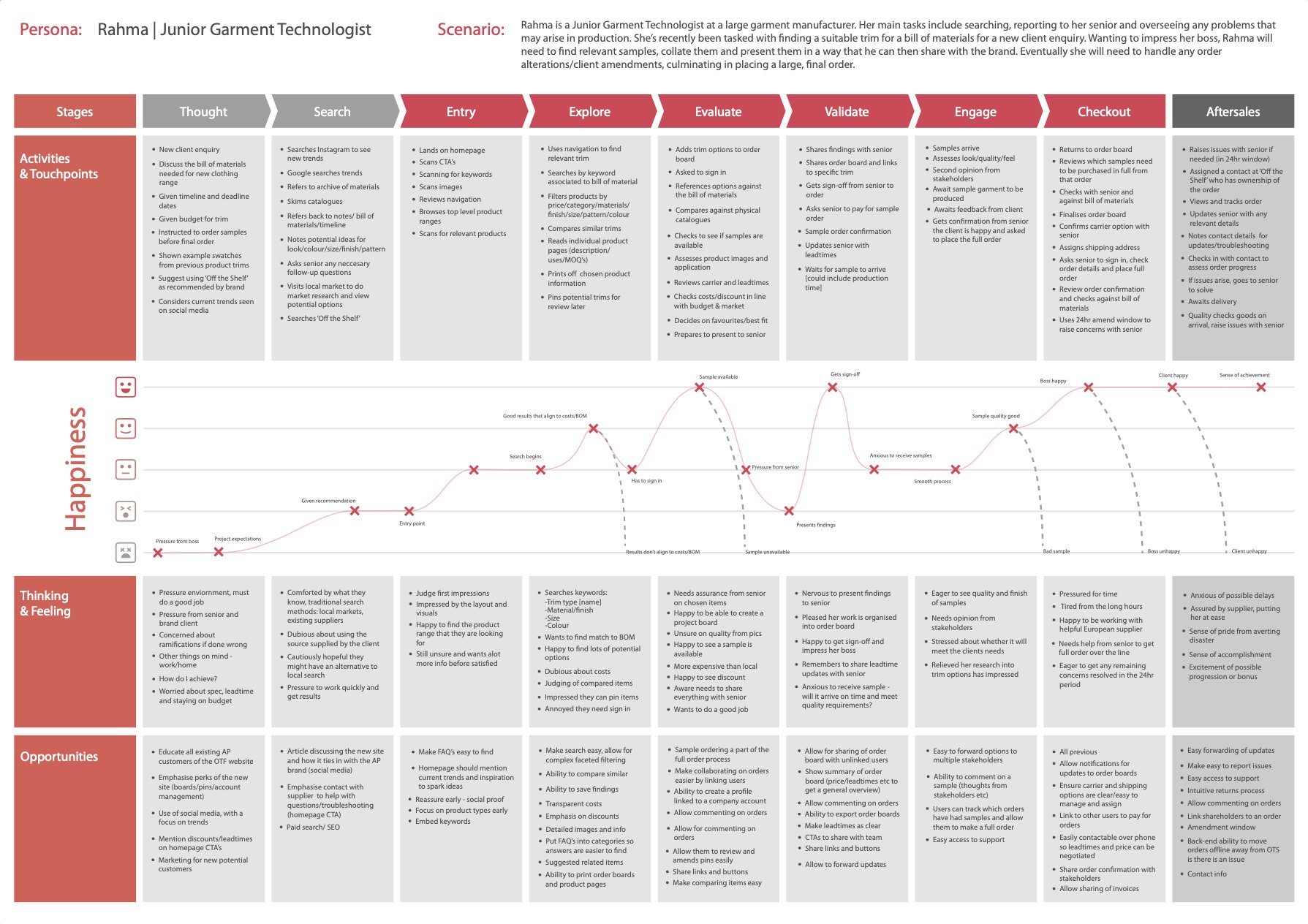
- Synthesising the evidence into three research-backed personas and full customer journey maps
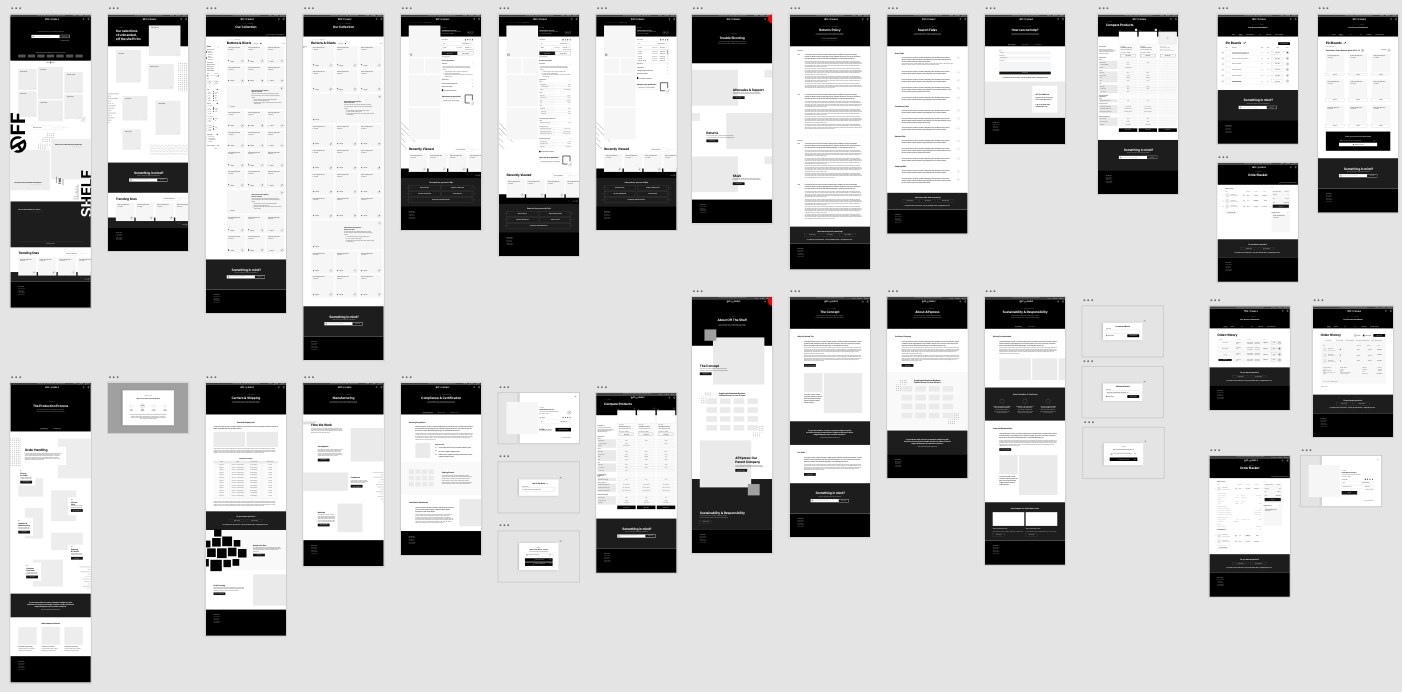
- Turning the findings into the information architecture, wireframes, brand identity and tested prototype
03
Evidence used
With little existing insight to lean on, I built the evidence base from scratch, combining the client's 30 years of trade knowledge with new, direct research:
- Competitor and market analysis, since there was little online competition to learn from
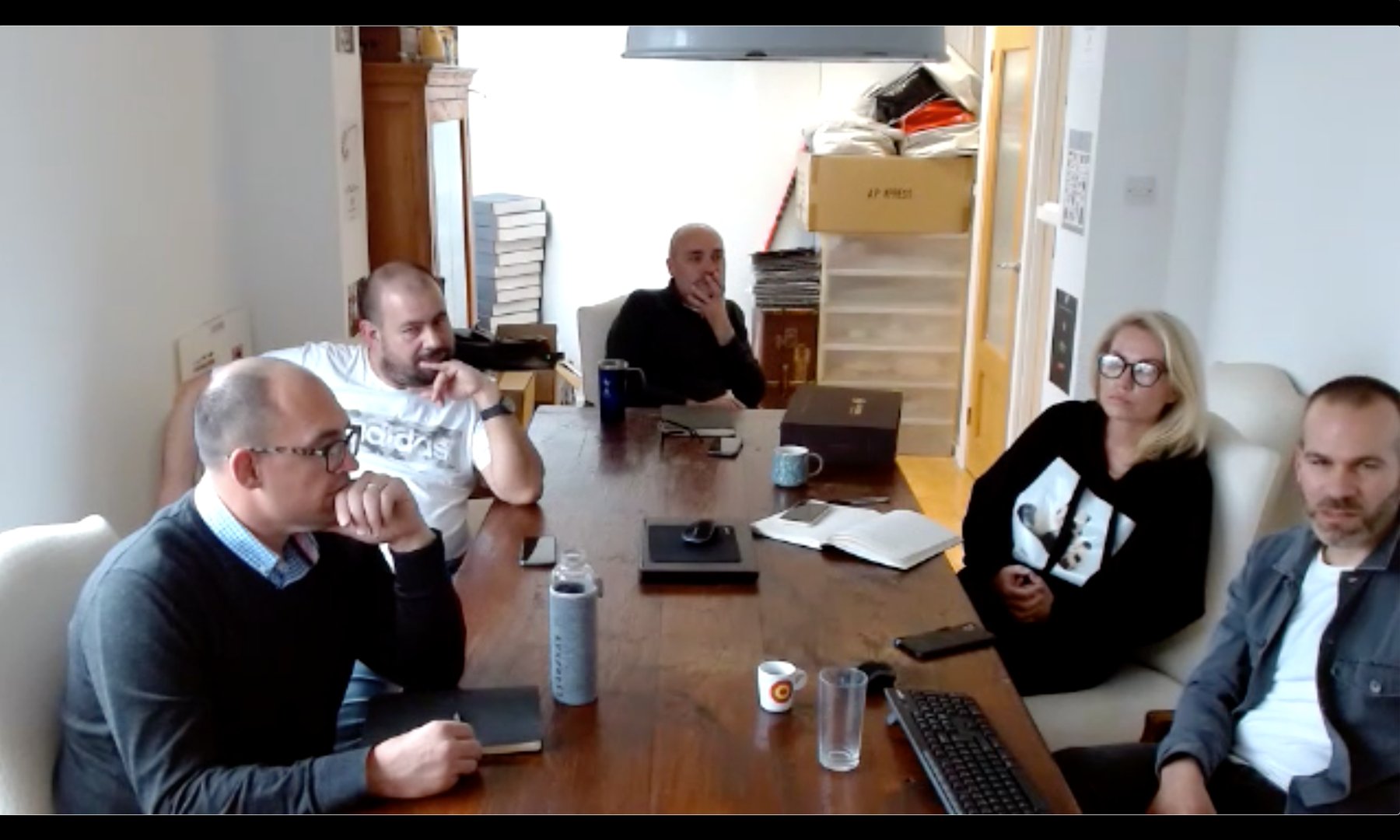
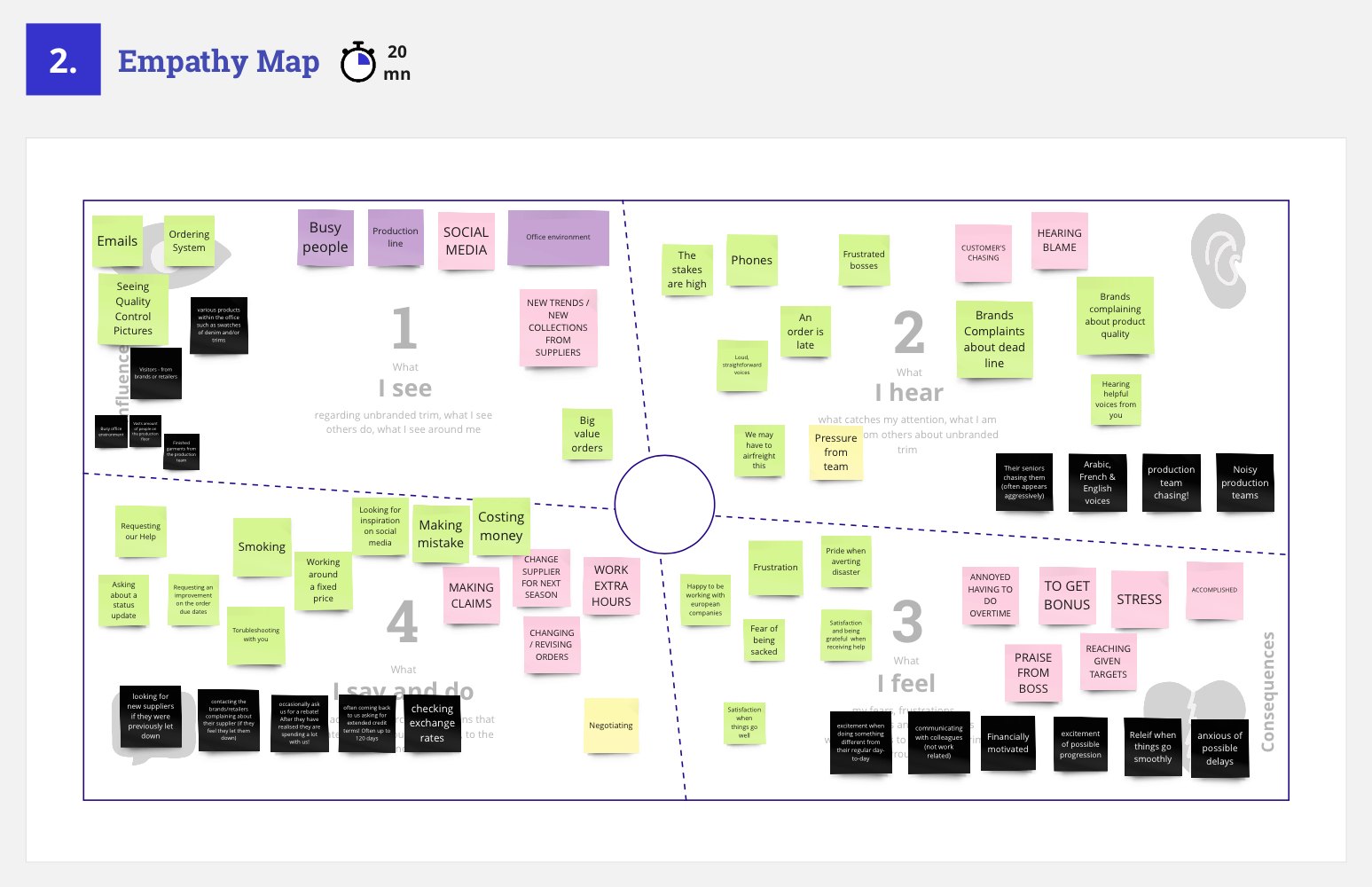
- Two full-day stakeholder workshops, using empathy mapping, card sorting and anonymous voting on terminology
- Over 100 questionnaires, translated into buyers' first languages, plus a small set of qualitative interviews
- Proto-personas built from workshop data to expose the client's assumptions and the gaps in them
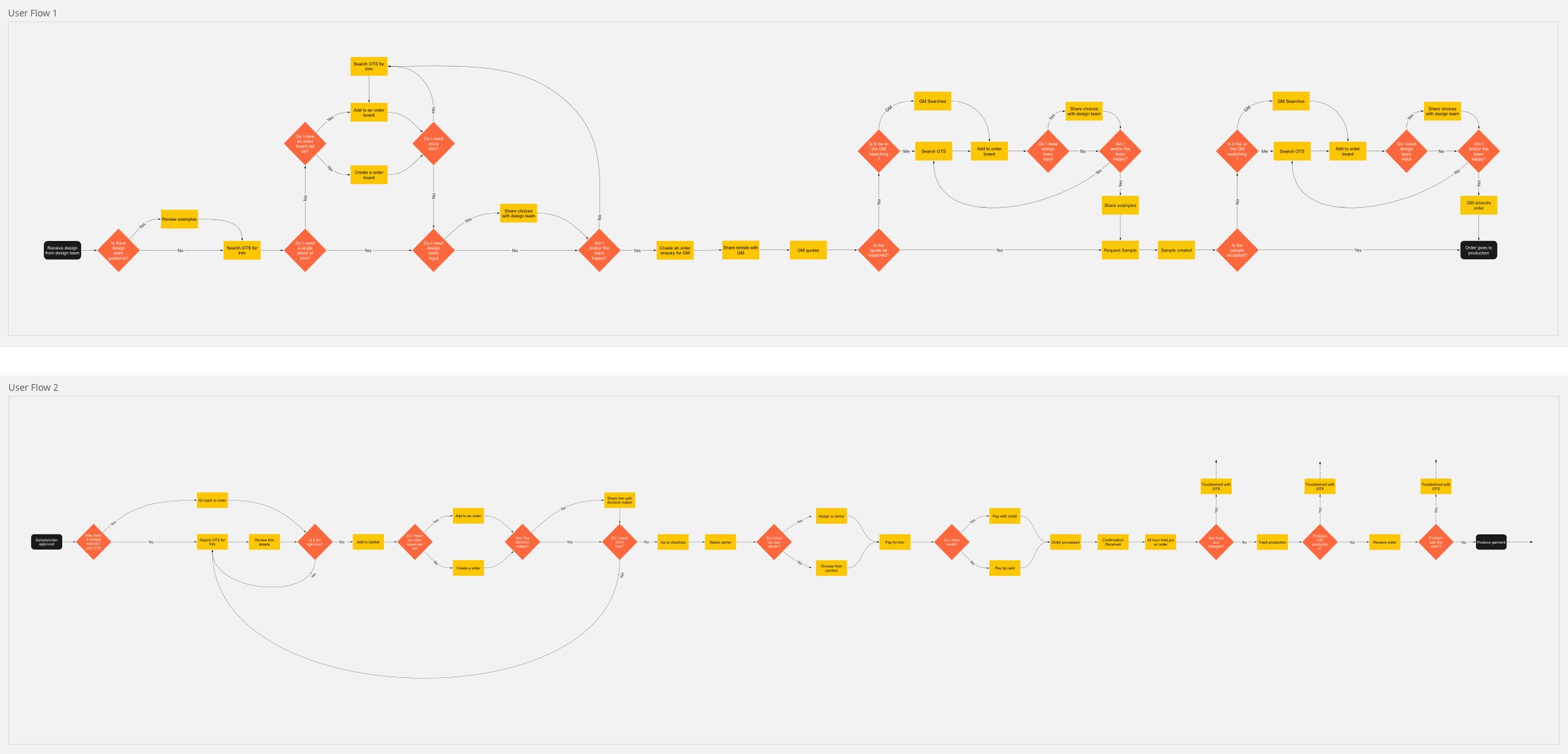
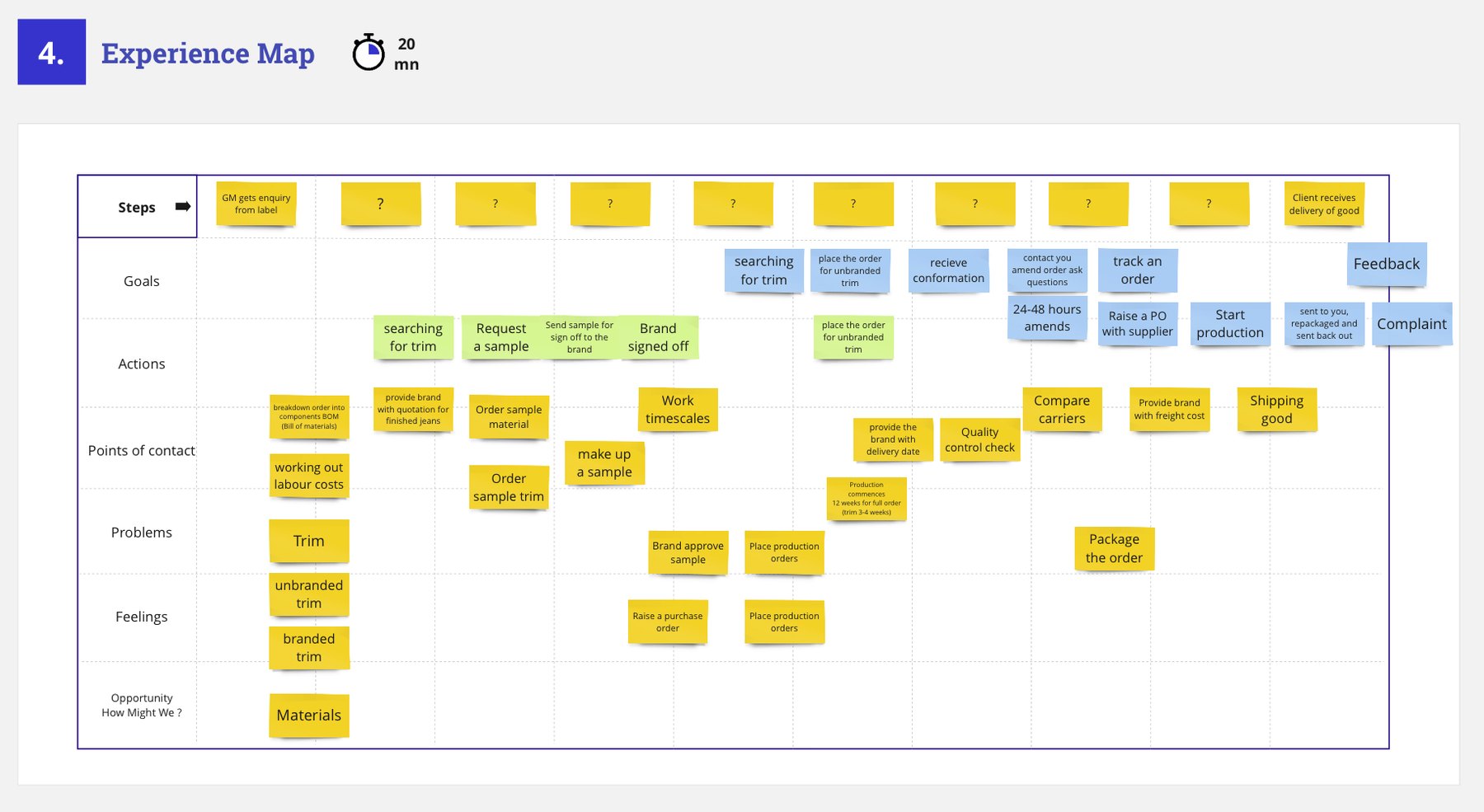
- Three research-backed personas and full customer journey maps spanning the online and offline journey
Some persona detail and the journeys still need validating with real users; final user testing will follow when the project resumes after the merger.
04
What I found
An order isn't a basket. It's a long conversation between people who have to agree before anyone commits, and the product had to be designed around that.
- Nobody buys alone. Three user groups share one purchase, and the order has to carry information and sign-off between them.
- The roles split cleanly. Junior technologists source and search, senior technologists sign off, and the label's trim coordinator makes the final call.
- The final say sits at the label. The coordinator answers to their own internal stakeholders and works from a different culture and set of motivators.
- Orders are slow and mutable. Long lead times mean orders are routinely amended mid-flight, so the design had to allow change after commit.
- Communication is the purchase. Stakeholders need to share, modify and link orders to keep everyone informed across the chain.
- The trade has its own units. Trim sells in batches of 1000, and shipping cost turns on weight, so both had to be native to the platform.
05
Strategic recommendations
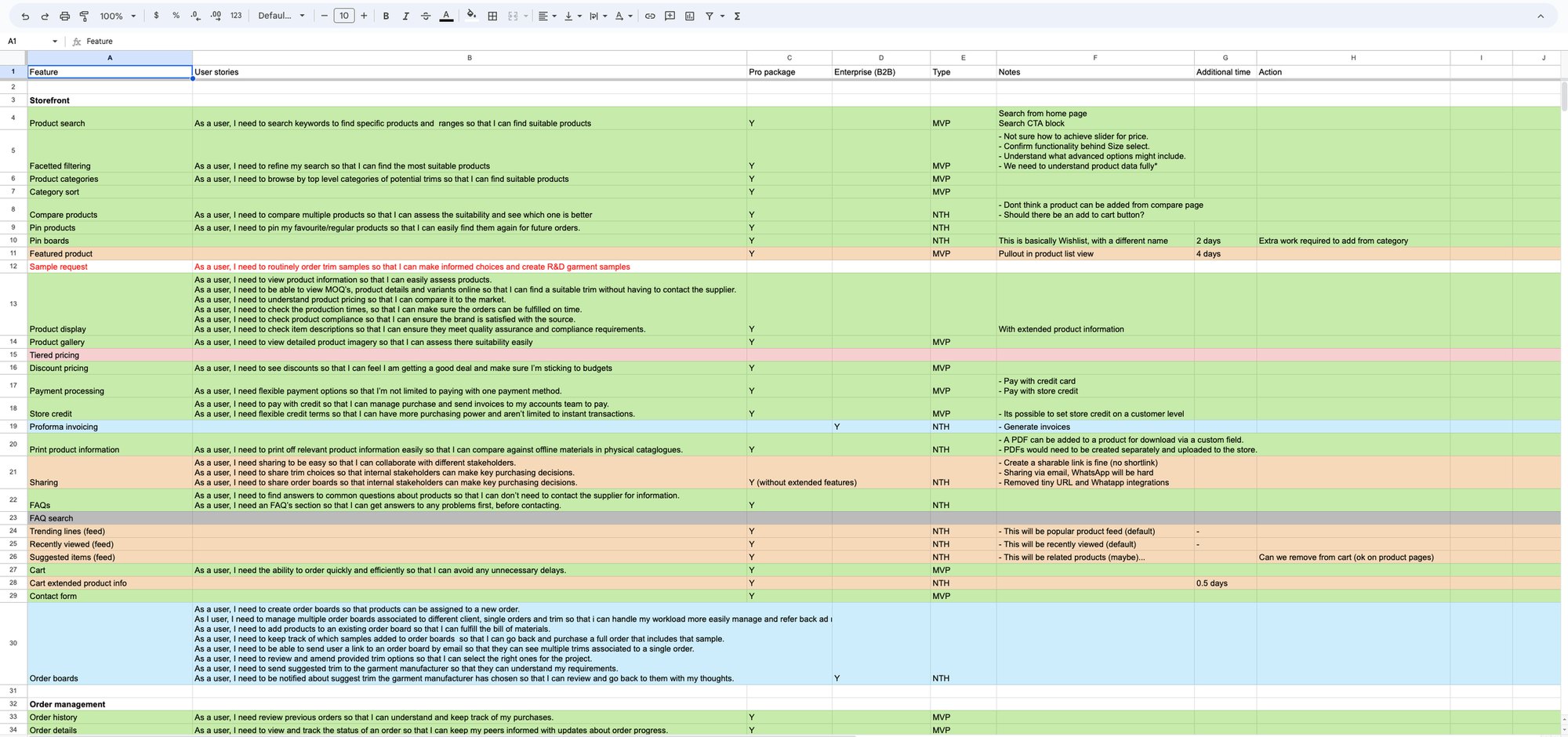
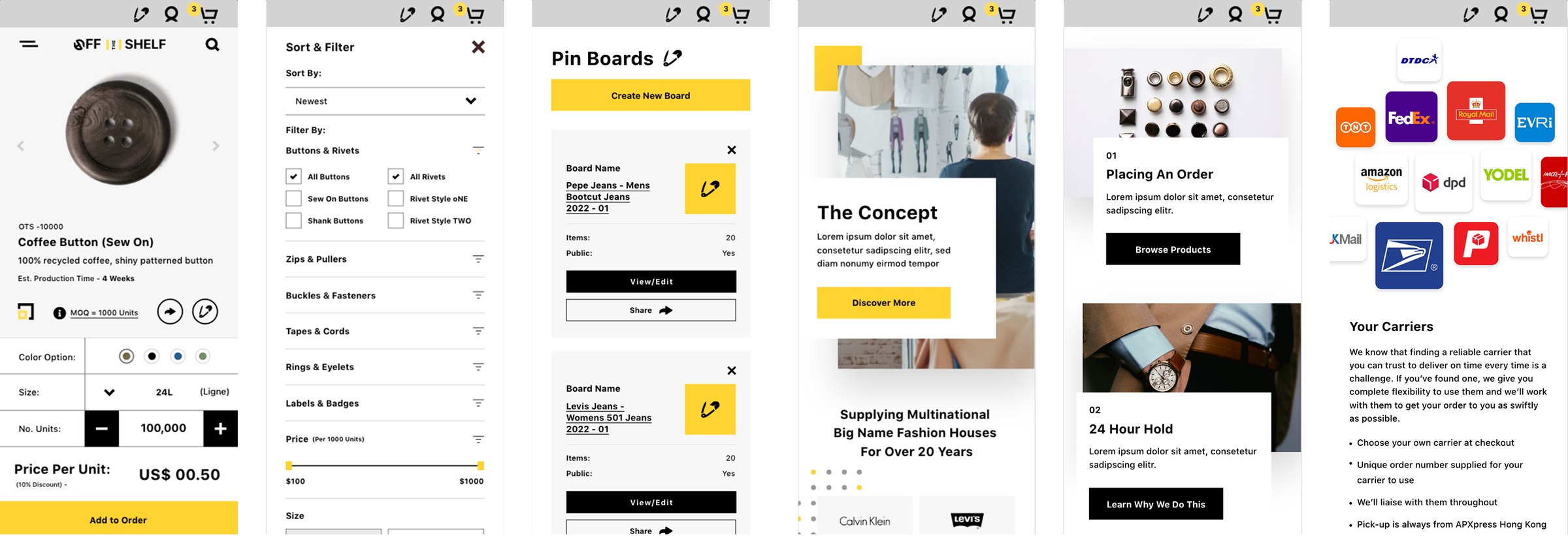
Each finding pointed at a specific feature. I turned the research into a structure and a set of bespoke features the trade actually needs, all kept inside the MVP budget. The order flow and its core features land in the MVP; the rest are sequenced into later sprints.
- Build a shared order board so stakeholders can save, link and pass an order between decision-makers across the chain.
- Enforce a 24-hour hold on every order to allow the amendments long lead times make inevitable.
- Estimate shipping from real weights, since cost in this trade turns on weight rather than item count.
- Make batches of 1000 the default ordering unit, matching how the trade genuinely buys.
- Structure the navigation and content around the bill of materials buyers already arrive with.
- Match the narrative to buyers' mental model of browsing fashion-label websites, not generic e-commerce.
06
Design and iteration
The strategy became a phased build, a responsive design and a brand that could stand apart from APXpress yet keep its authority.
- With the development team I phased the build, the MVP order flow and its core features first, with the full feature list sequenced into later sprints.
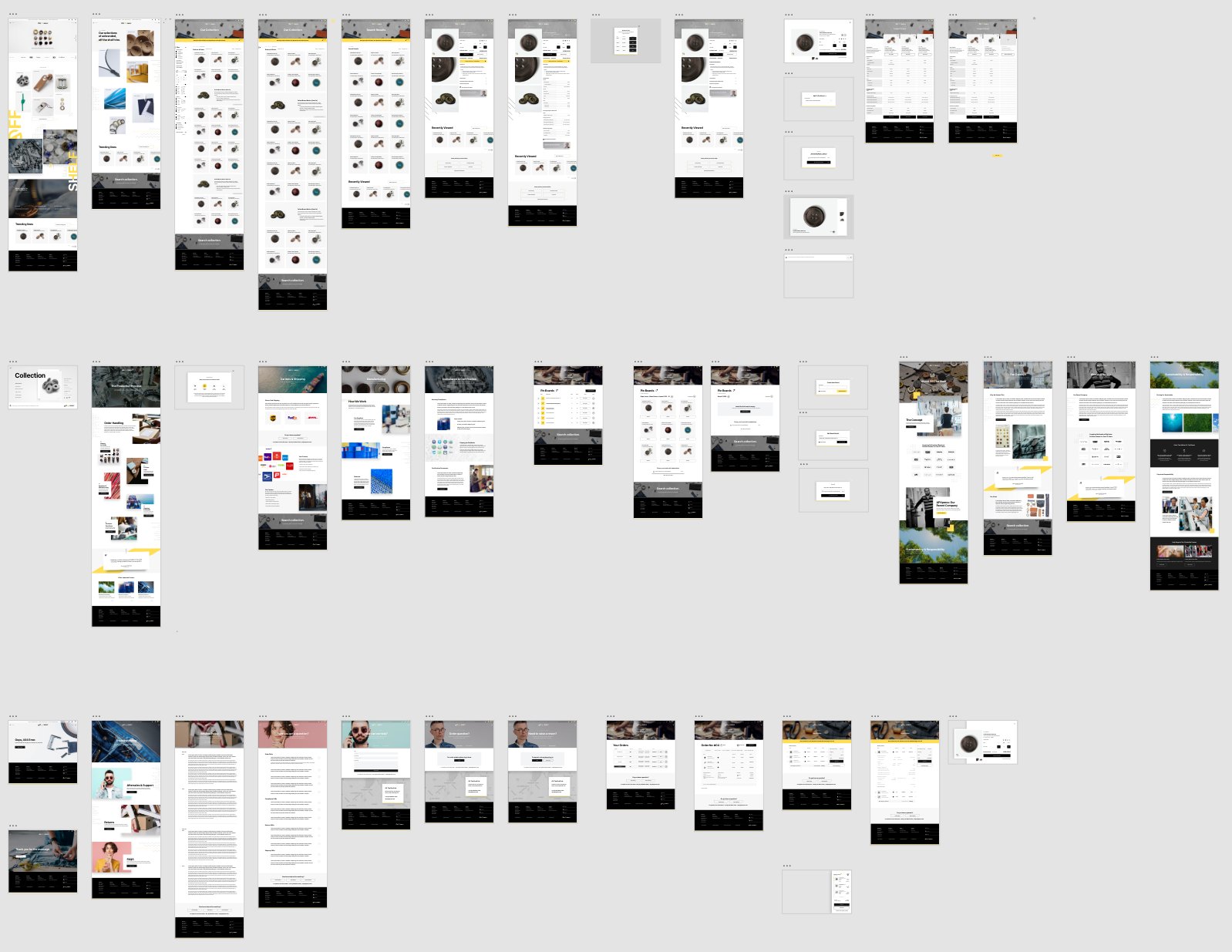
- I designed responsively for mobile and web, structured around buyers' real mental model and tested with the client for sign-off.
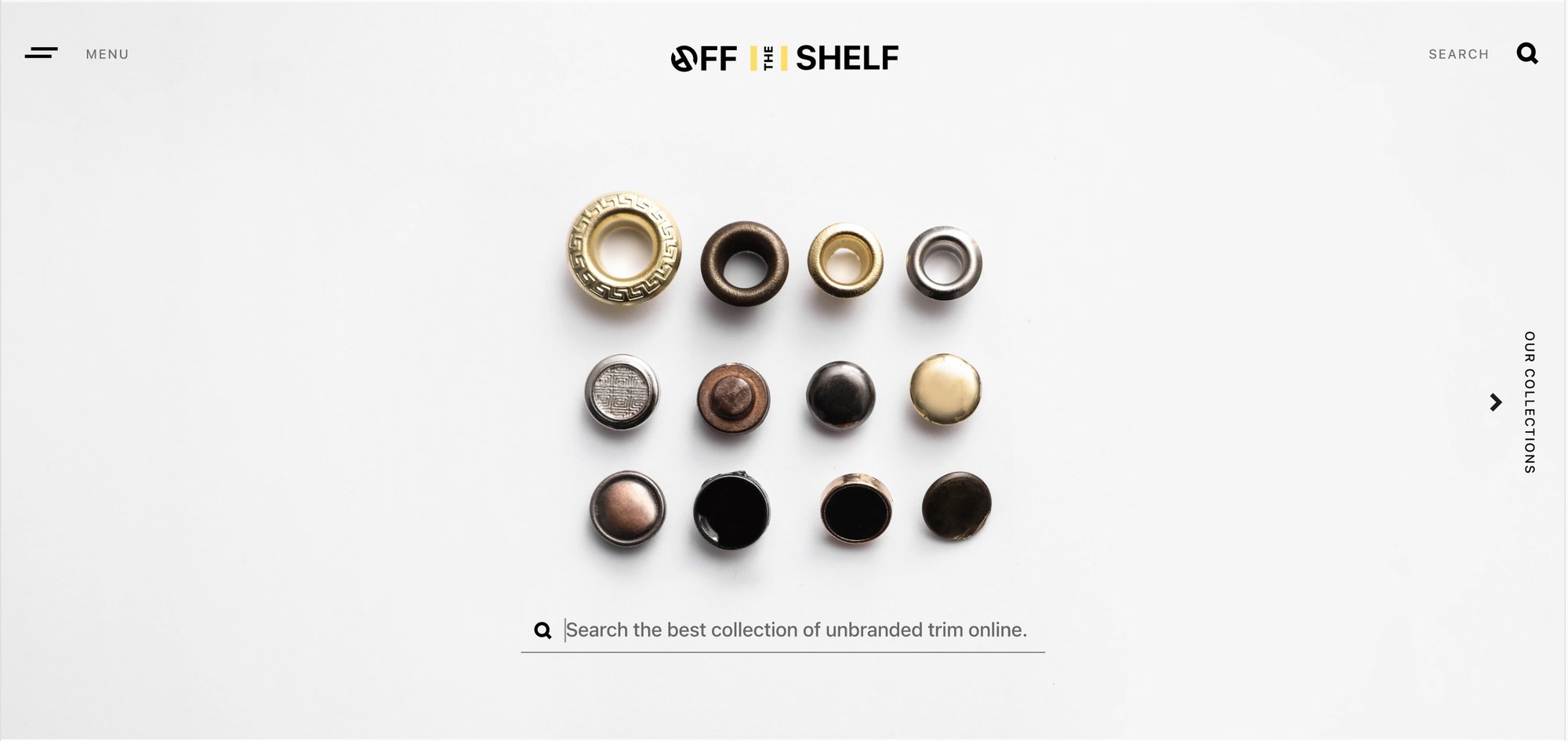
- I created a new brand identity and interactive prototype, tested with the original research contacts, with late-stage iterations from their feedback.
07
What changed
The programme delivered everything needed to take Off The Shelf to market: three research-backed personas, full journey maps, a new brand identity, a responsive design and a tested prototype, with bespoke trade features held inside the client's budget.
What APXpress took forward is a validated MVP: a working platform, a brand that stands apart yet keeps its authority, and a buying flow built around how the trade really buys. The platform passed a second round of QA; final user testing and launch are paused while APXpress goes through a company merger.
- A validated MVP, endorsed by Abraham Georgiou, COO of APXpress Group
- A standalone brand identity that keeps APXpress's reputation
- Bespoke trade features built inside the agreed budget
Outcomes are framed as a validated MVP; the project is paused during the client's merger, so measured results are not yet available.
Client testimonial
Everything is fantastic, the design, the usability, everything. It's all based on us and our customers. The workshops and customer outreach really helped us understand them better. Because of that, we now have a solution that we can confidently take to market. We're incredibly proud of it.”
08
Reflection
What I would do next
When the project resumes, the priority is to replace the remaining assumptions with evidence and iterate on real data:
- Run the final user testing and validate the order flow with the real buyer groups
- Use the scoped six-month post-launch window to gather feedback and usage data
- Sequence the nice-to-haves and love-to-haves into iterative sprints as the data supports them
- Instrument and measure the features the research bet on, especially the order board and 24-hour hold
What I took from it
- Constraints make the research, they don't excuse it. A language barrier and no precedent forced translated questionnaires and a method built around real obstacles.
- Find the real buyer before you design the shop. The order board, the hold and the batches all came from one insight: nobody buys alone.
- Ambition has to fit the budget. Working with the development team to phase the MVP kept the bespoke features without breaking scope.
- Be honest about where it stands. A validated MVP awaiting final testing is a stronger claim than a launch I can't yet measure.
Let's grab a coffee and start talking.
Hiring a lead position is a serious decision, and one that deserves a proper conversation. I'd welcome the chance to talk you through a decade of research-led strategy, design and team leadership.