UX research, journey design and content architecture
University of Manchester, FSE
Leading discovery and research to turn a complex, content-heavy postgraduate journey into a clear, evidence-led content architecture for a Russell Group faculty.
- Higher education
- User Journey Mapping
- Content Architecture
- Usability testing
- Journey mapping
- Information architecture
- Wireframing
- Stakeholder workshops
The information was all there. The way it was structured and delivered was quietly costing the faculty its best applicants.”
The impact
- 300+
- Hours of research, analysis and design behind the recommendations
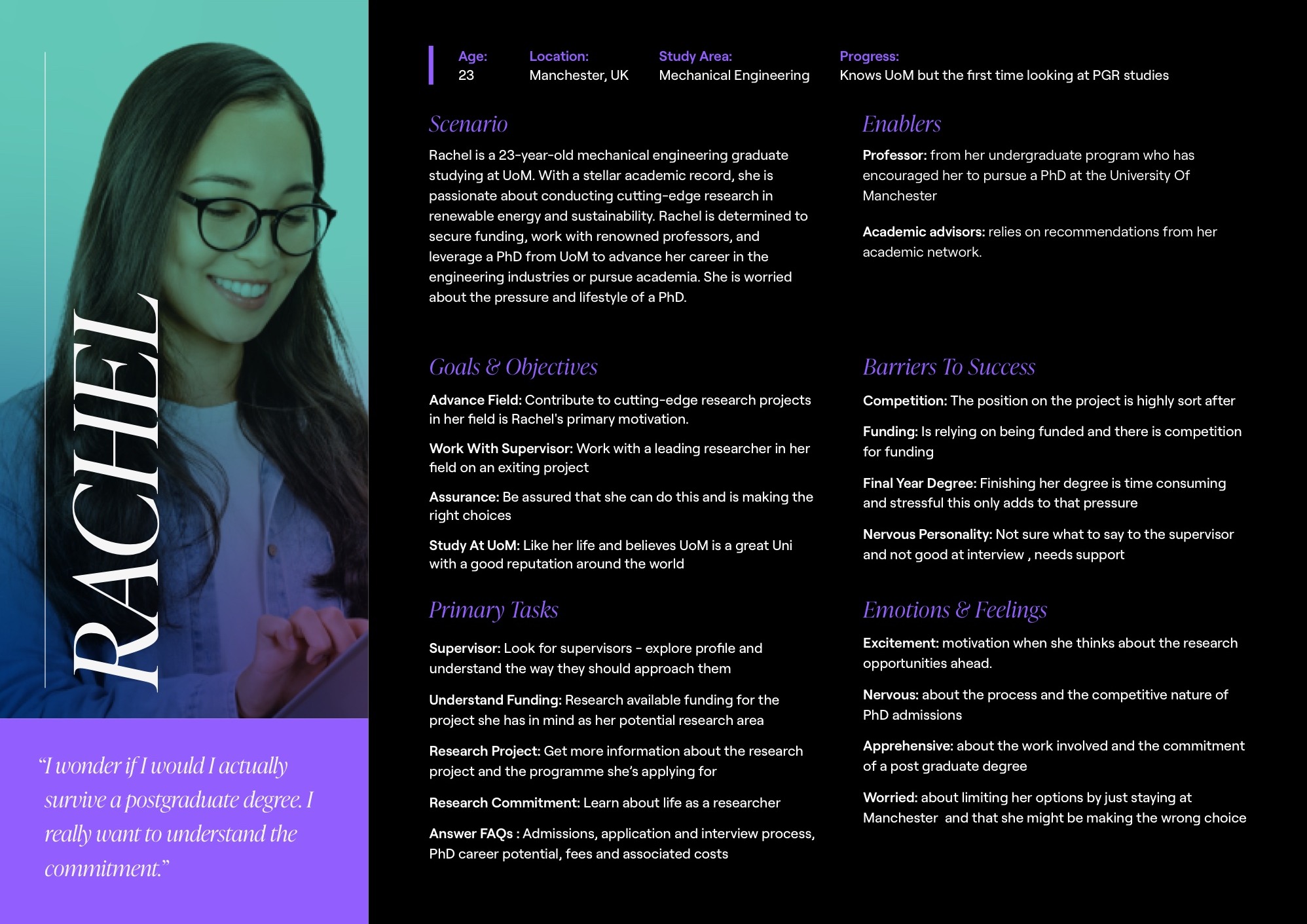
- 5 personas
- Evidence-based, built from focus groups, GA4 data and a stakeholder workshop
- 152
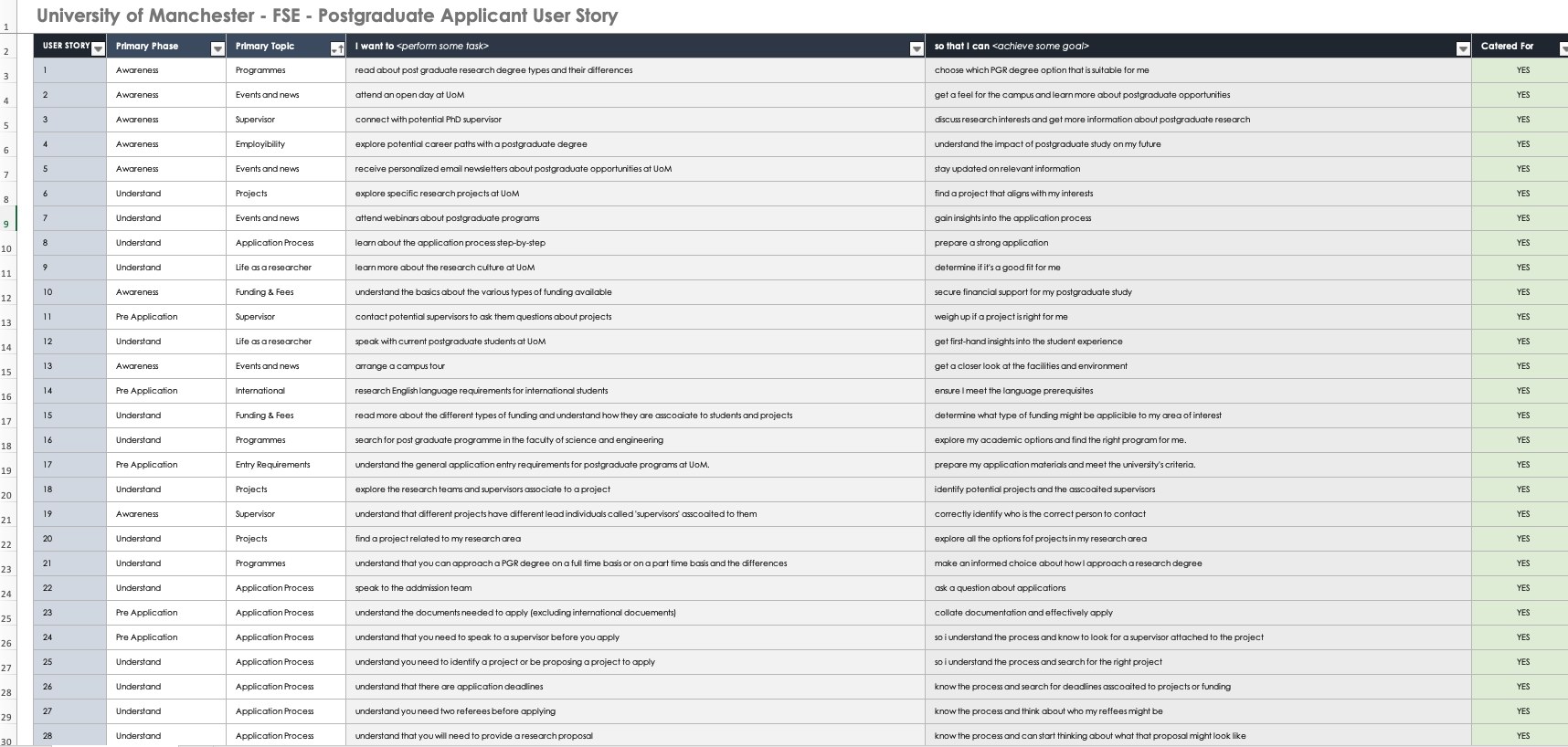
- User stories defining what the rebuild had to deliver, with a tested prototype the faculty endorsed
- Sector
- Higher education
- My role
- UX and research lead
- Timeframe
- 12 weeks
- Team
- Collaborated with university stakeholders and in-house data specialists.
01
The challenge
A globally ranked faculty was losing strong postgraduate applicants to an overloaded, hard-to-navigate site, where only 28.6% of people could finish the core 'how to apply' task. I ran the discovery and research end to end, then turned mixed data and competing stakeholder views into one direction the faculty endorsed: a clearer content structure, a new way to navigate the site, and a tested wireframe prototype they could build.
The work positioned a globally ranked faculty to compete harder for the best applicants by making the experience itself almost invisible.
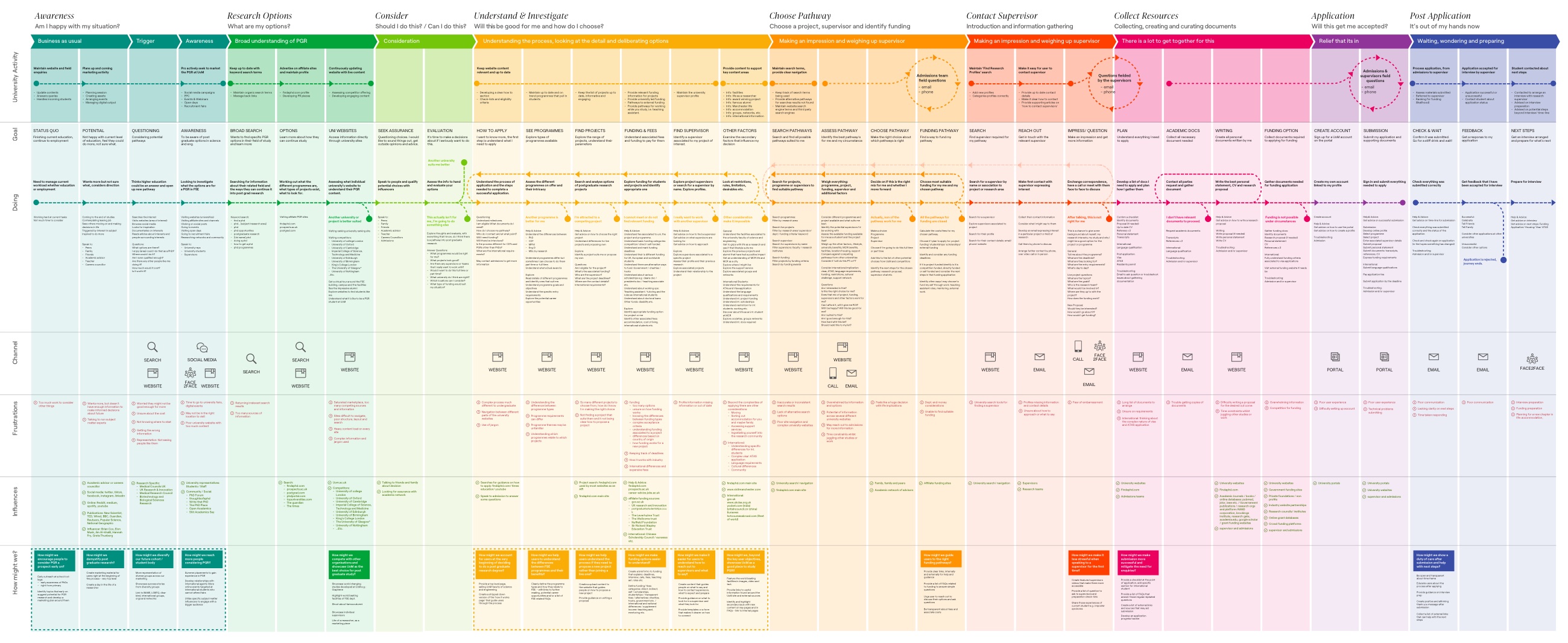
For a globally ranked faculty, postgraduate recruitment is fiercely competitive. The website had to help prospective researchers understand degree types, find live projects, identify supervisors, make sense of funding and understand how to apply, then turn that into a submitted application.
The live experience worked against those goals. A single long landing page held most of the content, priority tasks were hard to find, the language was dense and jargon-heavy, and users routinely dropped out of the faculty site into the wider university network with no clear way back.
The risk was commercial as much as experiential: lost applications, weaker standing against competing Russell Group institutions, and a digital experience that did not match the quality of the research on offer.
The faculty held useful data but not a joined-up picture, and the quantitative numbers told only part of the story. Stakeholders held strong but differing views. The questions I needed to resolve were:
- Which user objectives mattered most, and in what order
- Where prospective students actually struggled, versus where stakeholders assumed they did
- How much was a content problem, a structure problem or a wider-network problem
- What could realistically change within the university's templated system
- How to balance the volume of necessary information against the need for clarity
02
My role
I led the UX thinking across the engagement and was responsible for turning a broad ambition into a structured, evidence-led programme and a deliverable direction. Working alongside data and strategy specialists, my role included:
- Framing the challenge and aligning it to commercial goals
- Designing the research and discovery programme
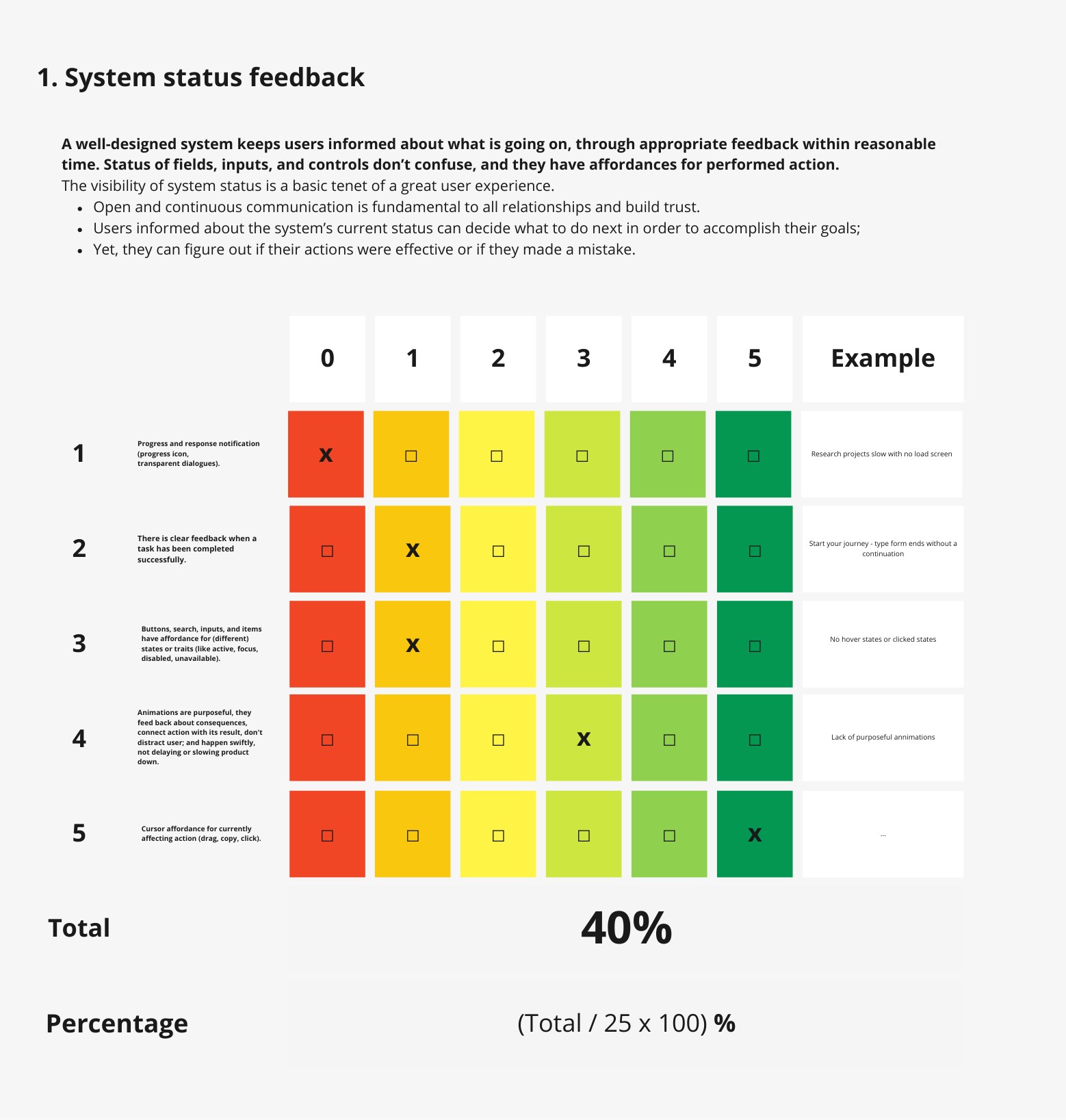
- Running a heuristic evaluation of the existing experience
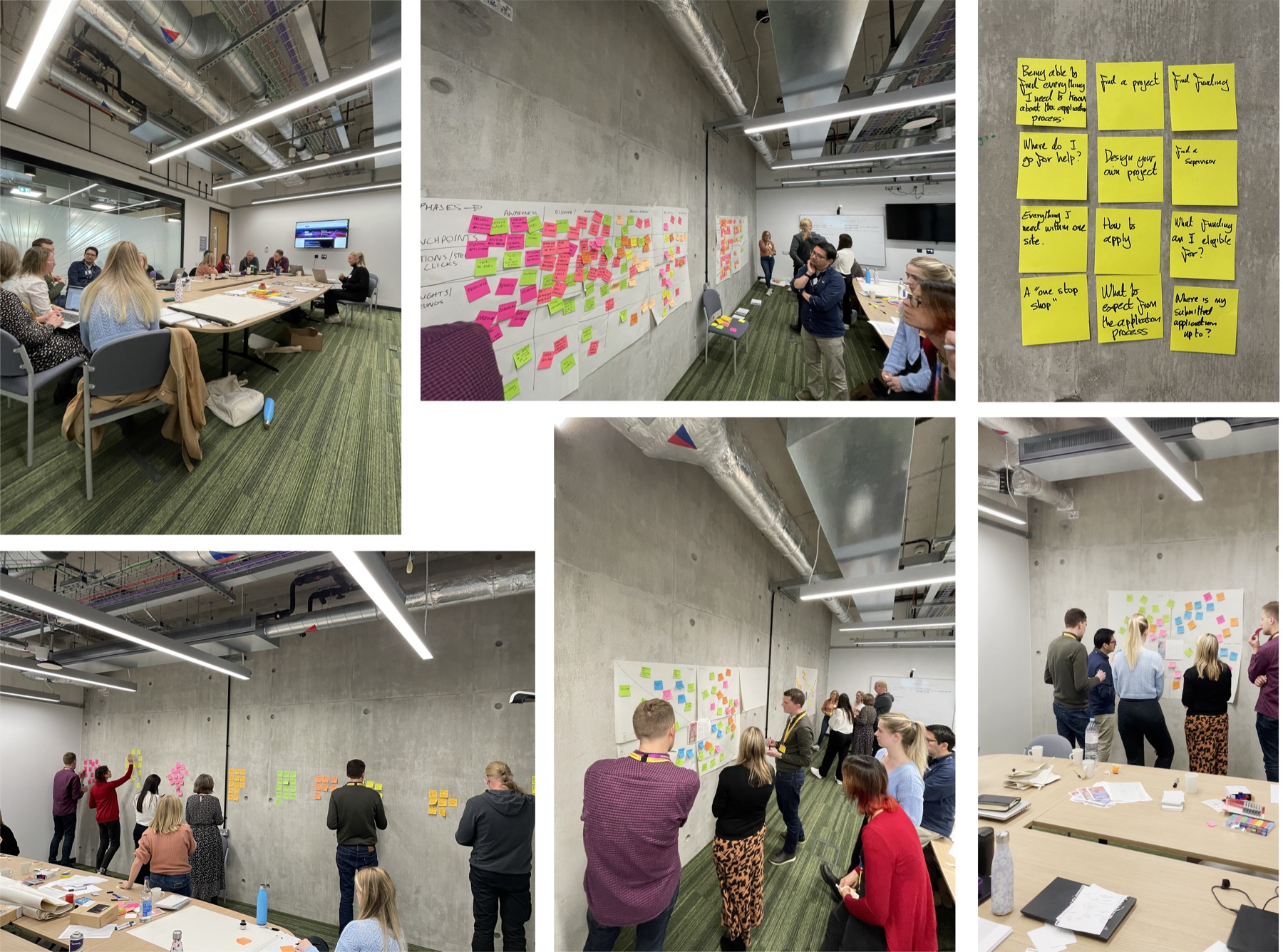
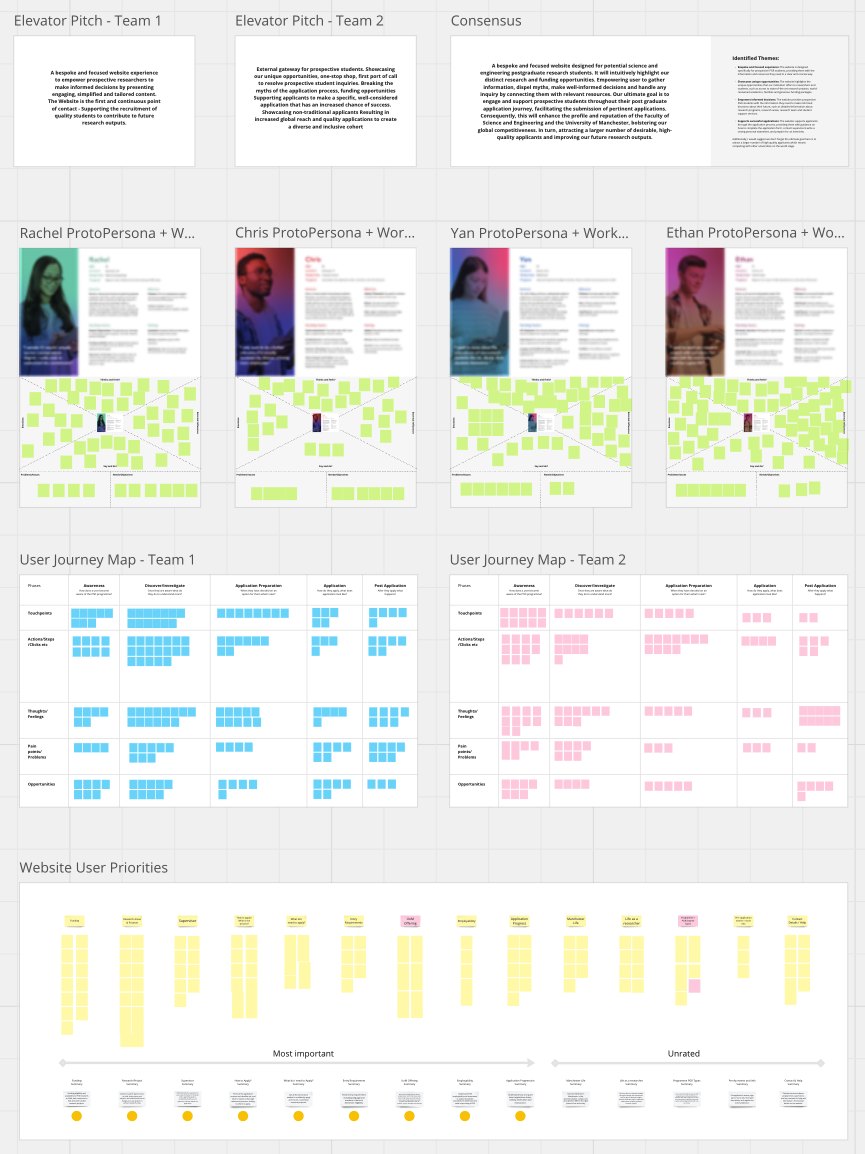
- Planning and facilitating a full-day workshop with 12 subject-matter stakeholders
- Developing five evidence-based personas
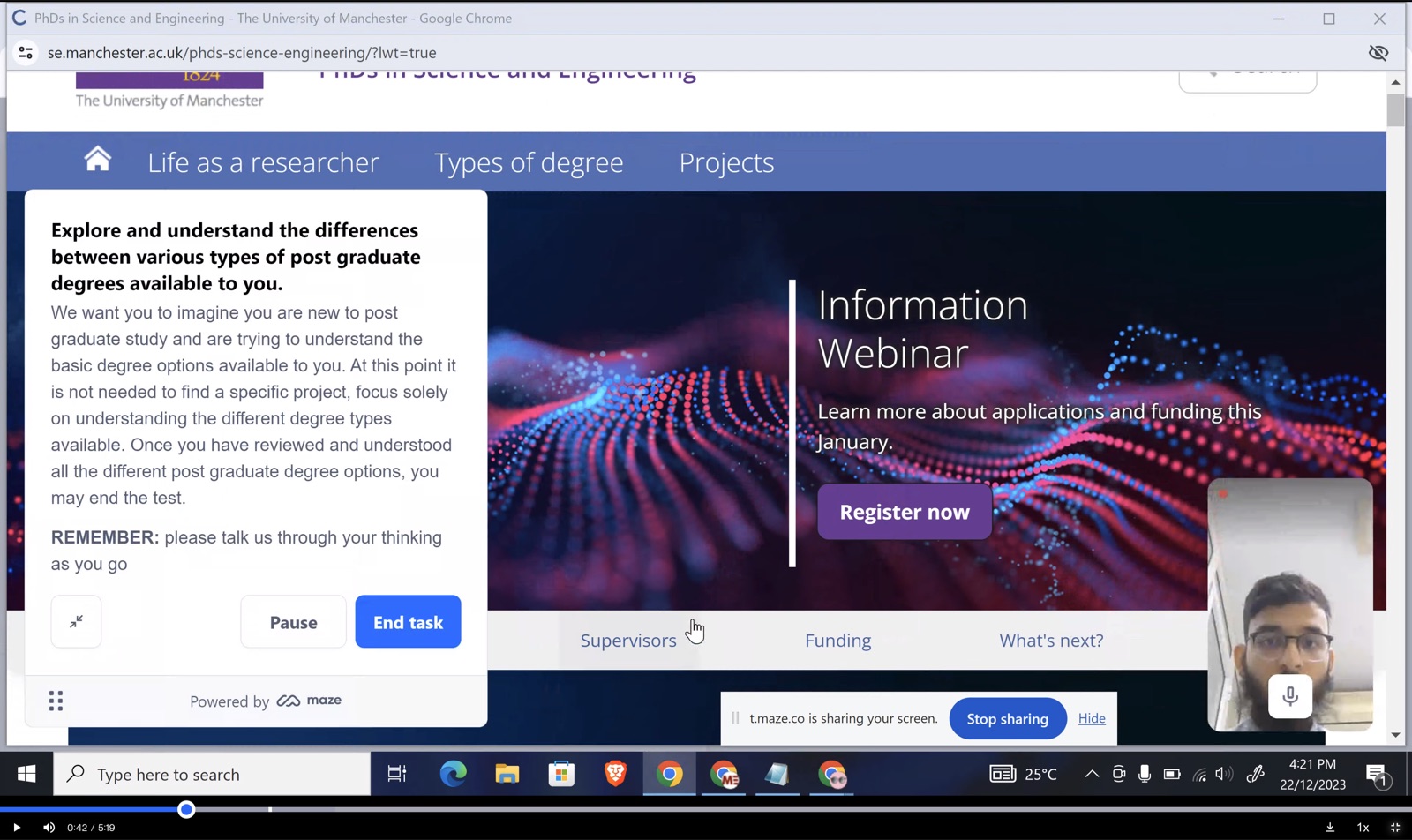
- Designing and analysing the usability study
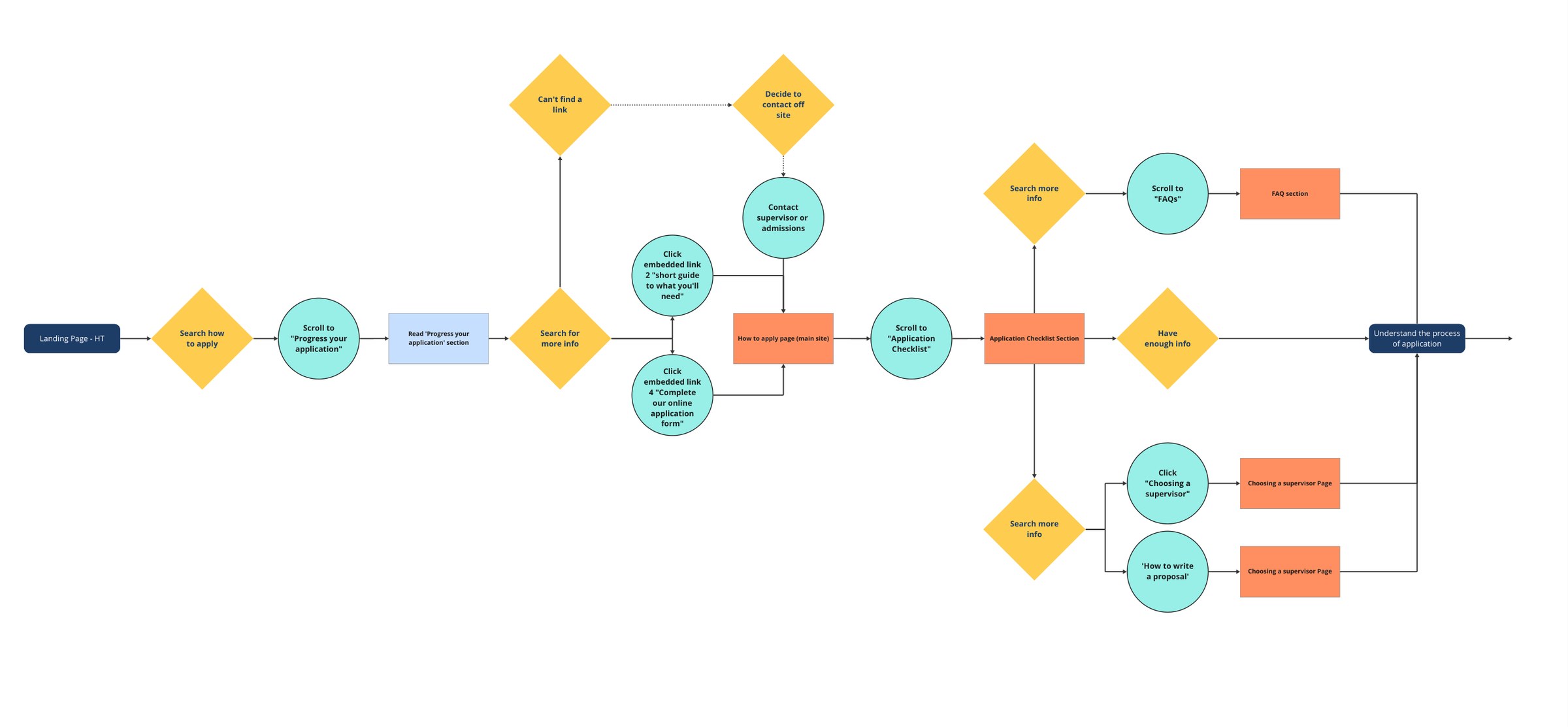
- Synthesising every source into user flows, 152 user stories and a customer journey map
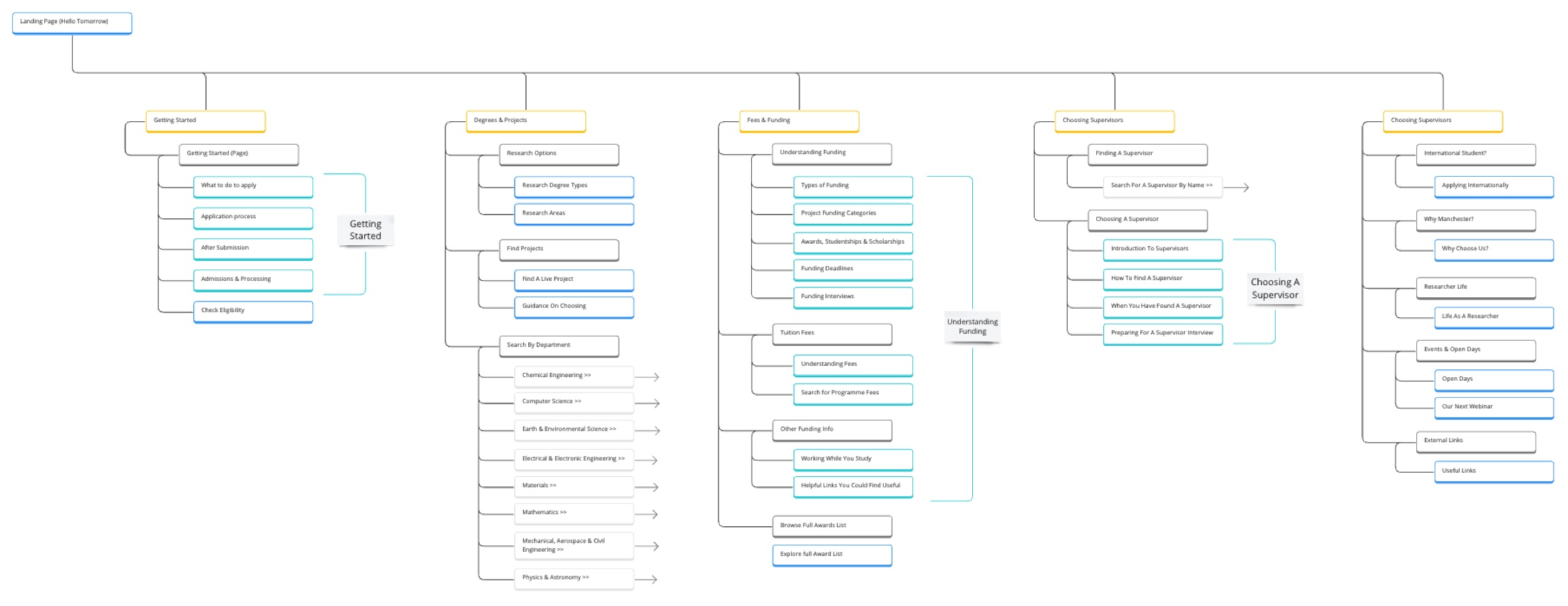
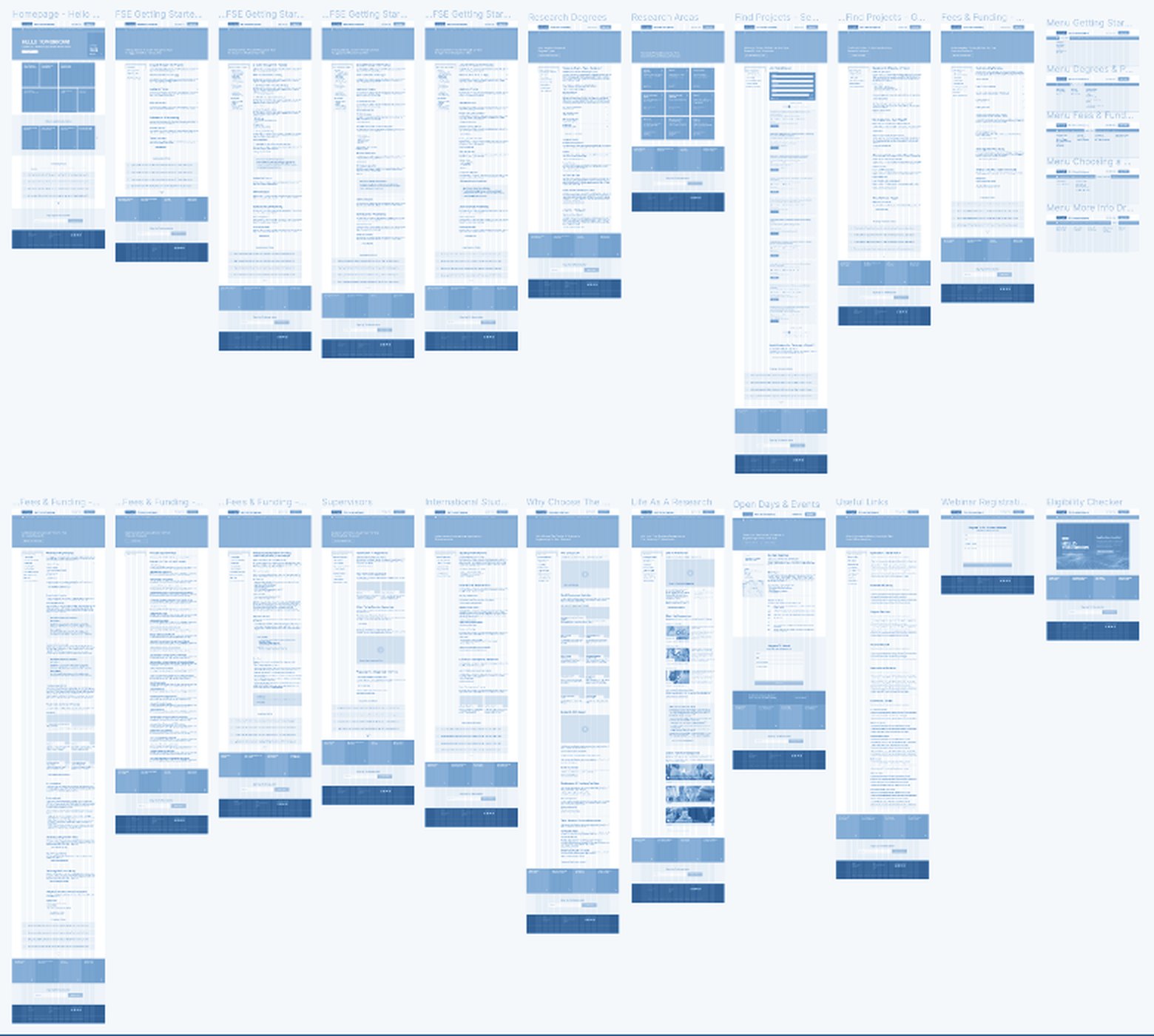
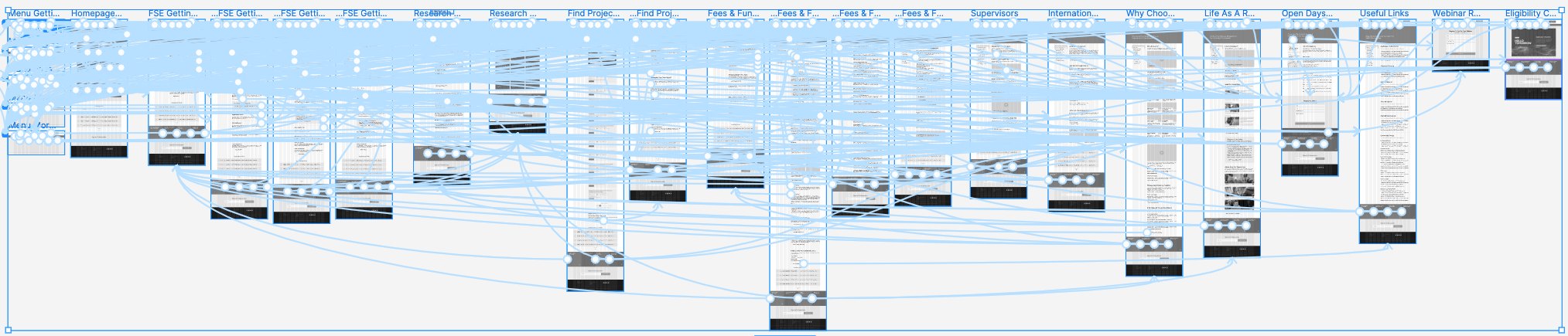
- Turning the evidence into a sitemap, content architecture and wireframe prototype
- Presenting the rationale and recommendations to senior stakeholders
03
Evidence used
The direction was built on a deliberately broad evidence base, triangulating existing data, new research and behavioural insight:
- The faculty's own focus-group and postgraduate insight reports
- Quantitative GA4 behavioural analysis
- Secondary research on postgraduate demographics and motivations
- A competitor review of five comparable Russell Group faculties
- A heuristic evaluation of the current experience
- A usability study with 16 participants across five core tasks
- A full-day stakeholder workshop
04
What I found
The evidence converged on a consistent story. The information existed, but the way it was structured and delivered was costing the faculty applications. Key findings included:
In their words
It is a very word-heavy page and quite intimidating to look at.
More linear navigation to be able to go back and forth, fewer bulks of text and more bullet-point summaries.
- 45.85%
- Heuristic score for the existing experience, signalling significant barriers
- 28.6%
- Of users could complete the core 'how to apply' task
- 5.1/7
- Overall satisfaction, an average that masked deeper task-level failures
- The postgraduate landing page drew over 600,000 views a month but held attention for only around 49 seconds, despite carrying most of the key content.
- Navigational clarity and information architecture were the most urgent weaknesses in the heuristic evaluation.
- Understanding how to apply was the worst-performing task; users defaulted to an 'Apply now' button that bypassed the process entirely.
- Dense, jargon-heavy content led users to skim, miss critical detail and feel overwhelmed.
- Users frequently left the faculty site into the wider university network and could not find their way back.
- Funding was findable but poorly understood; no participant left able to explain their options with confidence.
- The middling satisfaction score was an average that masked the task-level failures only the screen recordings revealed.
05
Strategic recommendations
I translated the findings into a clear direction that respected the constraints of the university's templated system. The recommendations focused on structure, clarity and journey:
- Restructure the single landing page into a linking hub that gives top-level context before guiding users onward.
- Create dedicated pages for each core user objective, including getting started, research programmes, funding and supervisors.
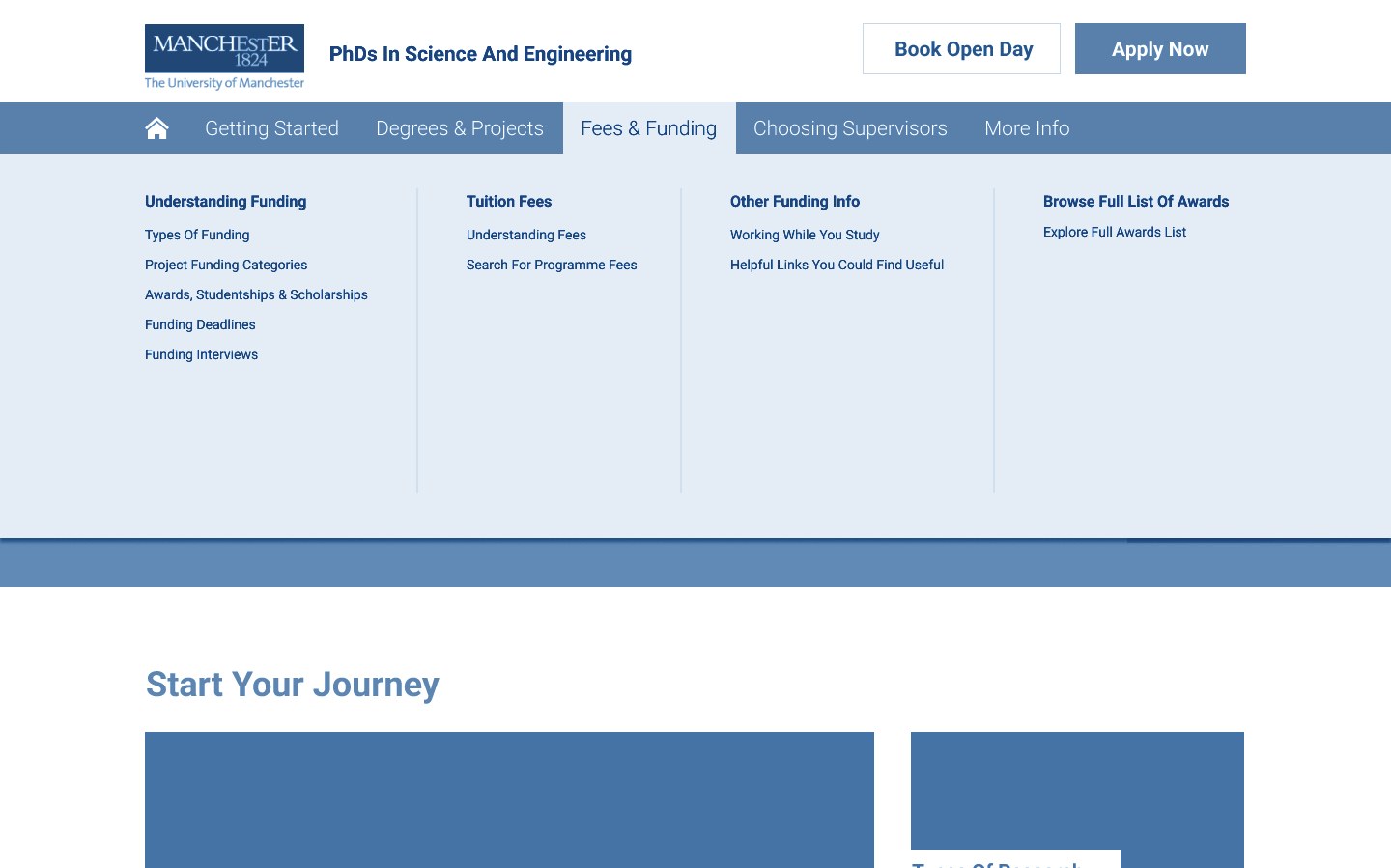
- Redesign the navigation around user objectives, remove the confusing dual navigation, and signal clearly when a user leaves the faculty site.
- Split 'Apply now' into 'Apply now' and 'How to apply' so user intent is matched to the right route.
- Break dense content into scannable, hierarchical, plain-language sections.
- Design for multiple pathways and personas rather than a single assumed journey.
06
What changed
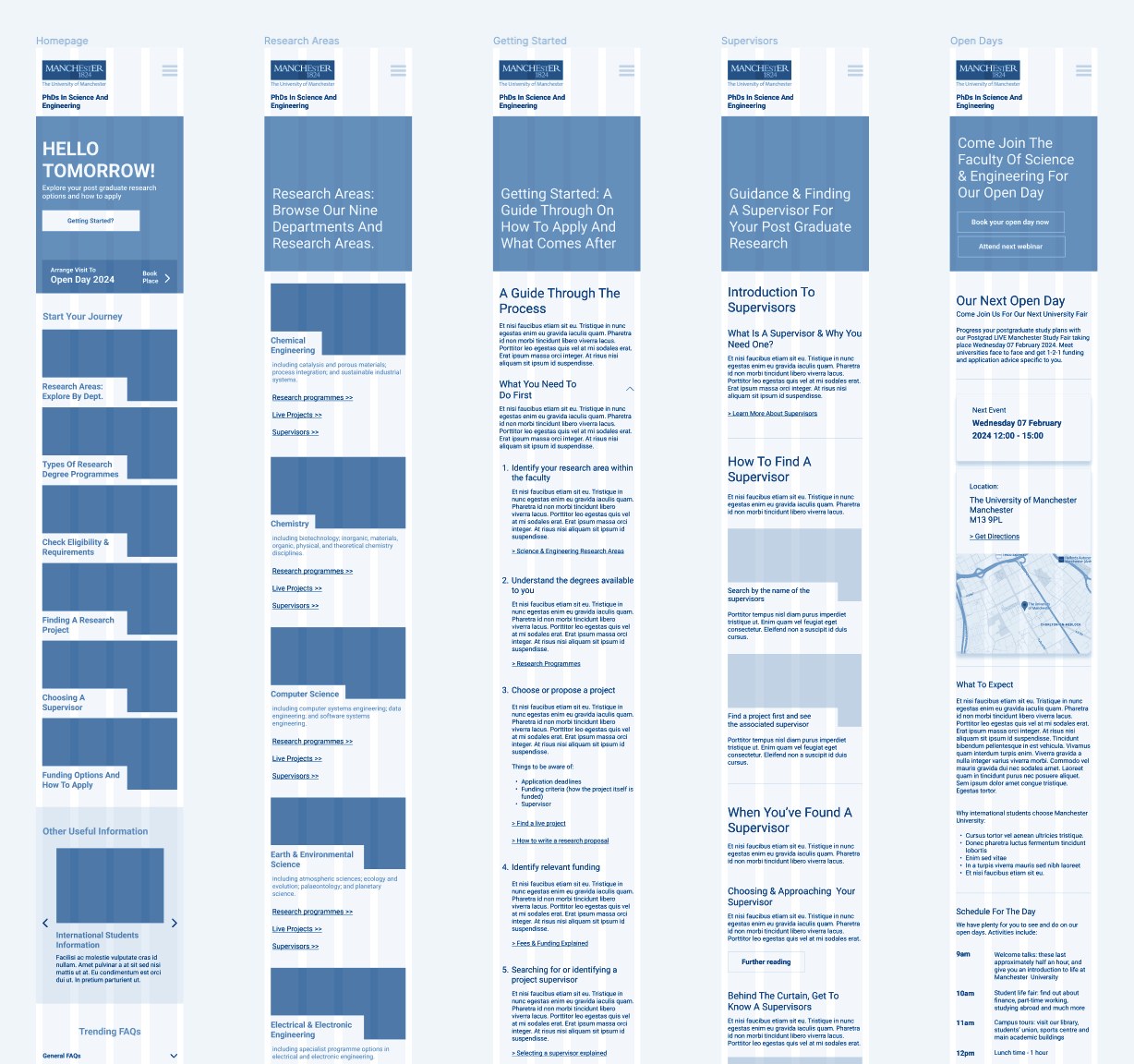
The faculty was handed a tested wireframe prototype and a complete set of recommendations, with the evidence for what to build and why. They endorsed the direction, and quick-win fixes were flagged to act on straight away.
The work moved the faculty from a rough, contested understanding of its users to a clear plan it could act on. The impact included:
- A shared, stakeholder-endorsed challenge statement and set of priorities
- A content architecture and sitemap built from 152 user stories and five personas
- A desktop wireframe prototype demonstrating the recommended journey
- Quick-win heuristic fixes handed to the team before final delivery
- A defensible, commercially framed case for change
Client testimonial
James and his team took the time to really get to know our organisation, our stakeholders and most importantly our users. The research, testing and analysis were so comprehensive, and we were handed a complete prototype and full set of recommendations on what to build and why. Everyone involved has been so easy to work with and have a great range of specialist skills, vital on large and complicated projects like ours. …a massive improvement.”
07
Reflection
What I would do next
If continuing the work, I would validate the proposed architecture with prospective students before build, then put measurement in place to prove the change. Some of what we aligned on was ambitious for the platform: the redesigned navigation, which stakeholders all agreed was better, went beyond what the university's current templated website could support, so it stays an aim to work towards over time rather than a day-one change. I would also push for the wider structural issues the project deliberately scoped out.
- Test the new navigation and priority journeys with representative prospective students
- Track application starts, completion and drop-off against the previous journey
- Commission a content audit and pattern library for the wider university network
- Bring key third-party services in-house for a more consistent experience
What I took from it
- In large institutions, the problem is usually structure and delivery, not missing information.
- Quantitative data flatters a site that high-intent users still cannot navigate. The recordings told the real story.
- A satisfaction score of 5.1 out of 7 hid task failures as severe as 28.6% completion. Look past the average.
- Stakeholder alignment is a deliverable. The workshop and challenge statement made every later decision easier to defend.
- Strong UX recommendations work within real constraints, not around them.
Next case study
UX strategy, research and digital designWCHGRead case study→Let's grab a coffee and start talking.
Hiring a lead position is a serious decision, and one that deserves a proper conversation. I'd welcome the chance to talk you through a decade of research-led strategy, design and team leadership.