UX research, strategy and digital design
Palletower
Research-led UX strategy to merge two companies into one end-to-end storage provider, and reposition Palletower from market underdog to disruptor.
- B2B
- User Interviews
- Content Mapping
- Personas
- Journey mapping
- Information architecture
- Service design
- Website rebuild
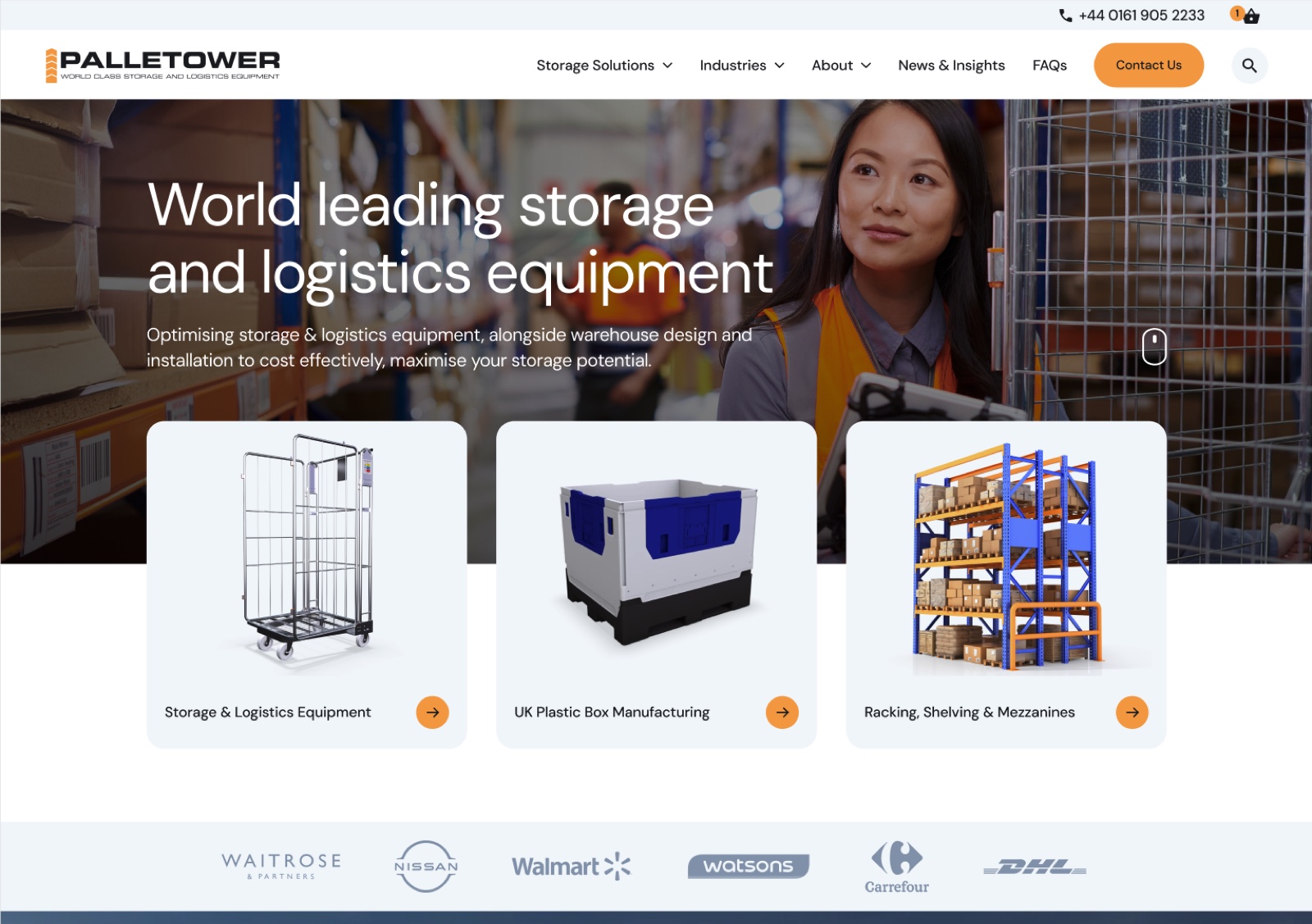
Trust can't be bought with a merger. The challenge was turning a market disruptor into the safe bet.”
The impact
- 152%
- Increase in project and installation enquiries since relaunch
- 5×
- Growth in new page visits to service pages in the first 3 months
- -12%
- Reduction in quote-form abandonment
- Sector
- B2B / industrial storage and logistics
- My role
- UX research and strategy lead
- Timeframe
- 2024
- Team
- With a cross-disciplinary agency team and stakeholders from Palletower and West Pennine
01
The challenge
Palletower, a long-established supplier of storage and handling equipment, had merged with West Pennine Storage Equipment to add a full storage design and installation service. On paper it was a powerful, end-to-end offering. In the market, almost no one knew Palletower as an installation supplier, and buyers of high-stakes installation projects instinctively only trust specialists.
Installing a warehouse storage system is a major decision. It is expensive, disruptive, hard to reverse, and signed off by several stakeholders over a long, cautious buying process. Buyers put projects out to tender and scrutinise every supplier, so a new, integrated player has to earn trust quickly.
Palletower also had two audiences pulling in different directions: traditional product customers buying roll pallets and racking off the shelf, and installation customers making complex, six-figure commitments. The rebrand had to serve both, add the new service without diluting the core business, and do it better than competitors still working the same old way.
The business knew the opportunity was real, but not how to land it. The questions I had to resolve were:
- How warehouse buyers actually research, compare and choose suppliers for high-stakes projects
- How to present an integrated offer without being dismissed as a jack-of-all-trades generalist
- How to structure one site around two very different audiences and buying journeys
02
My role
I led the UX research and strategy, and turned a deep evidence base into a clear direction for the rebrand. In practice that meant:
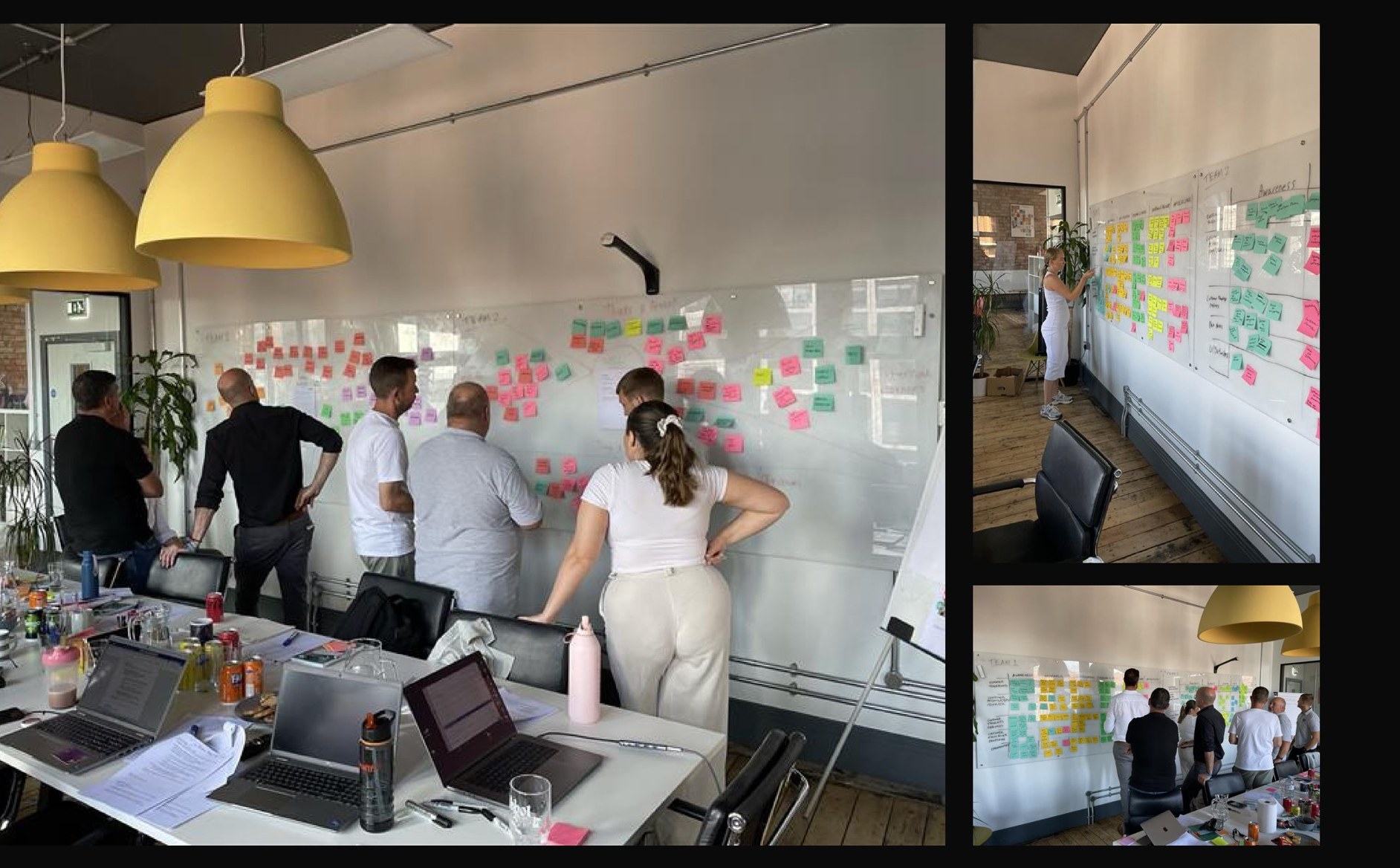
- Planning and facilitating stakeholder workshops to surface what the business already knew about its customers
- Designing and running the research programme, from data analysis to in-depth buyer interviews
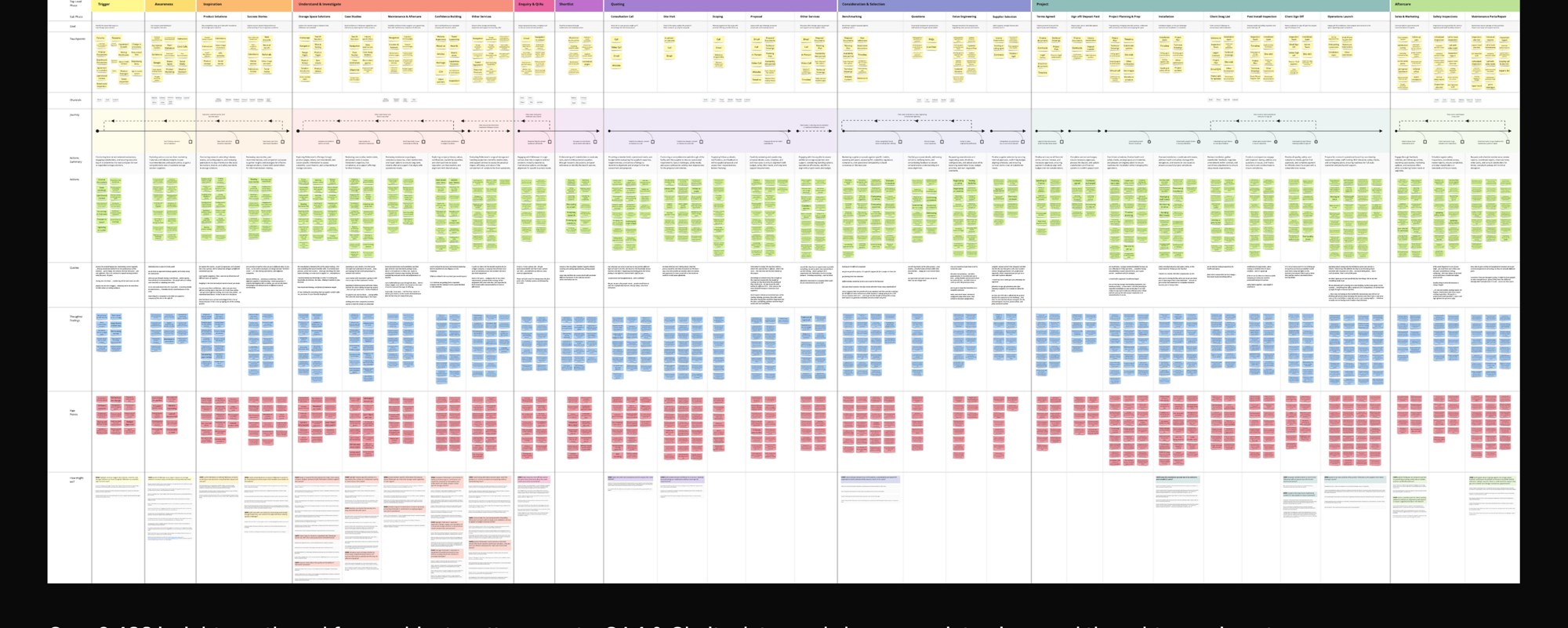
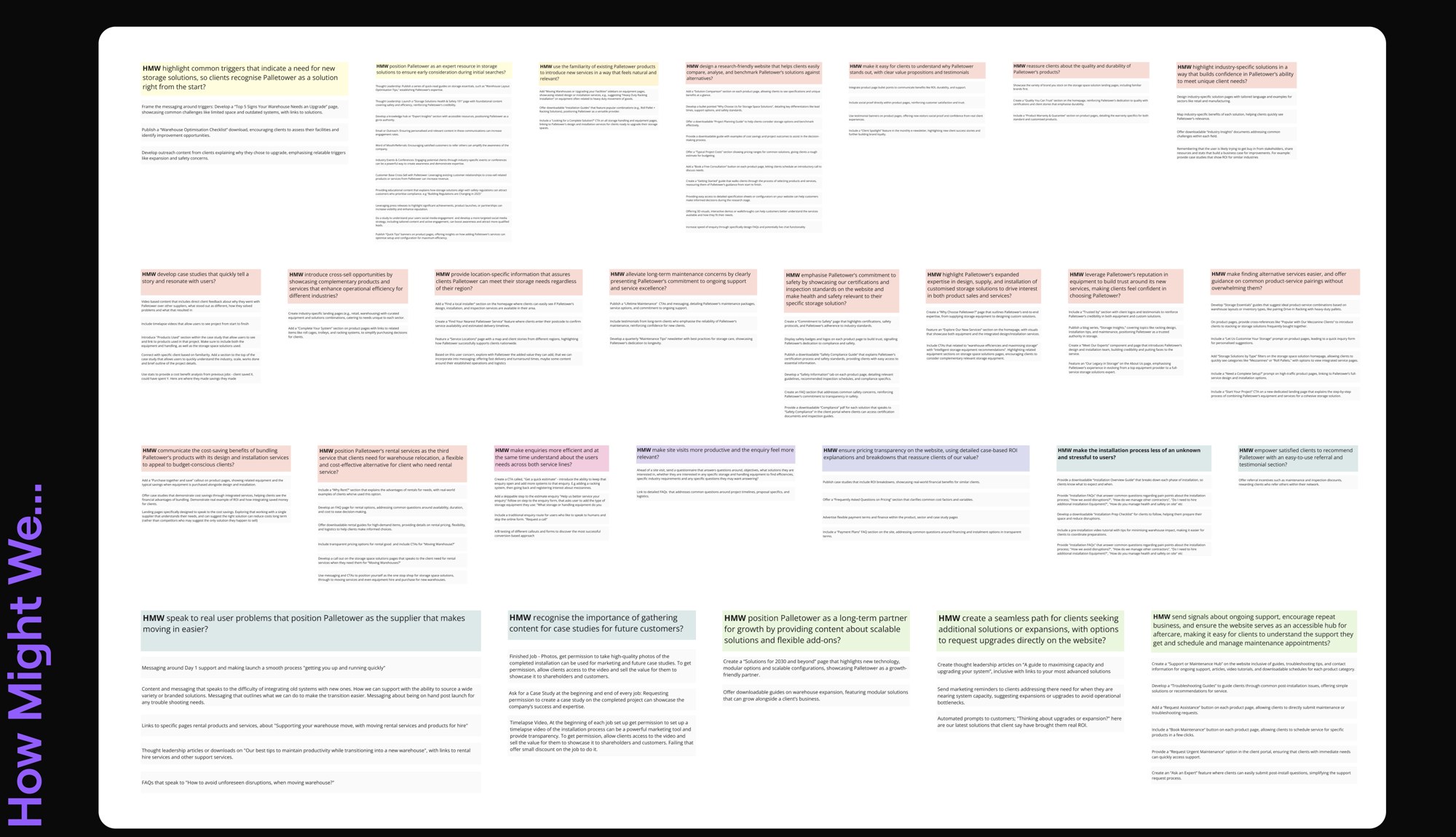
- Synthesising more than 2,400 insights into personas and a single customer journey map
- Translating the evidence into a repositioning strategy and a new information architecture
- Setting the direction for design and shaping the structure the team would build against
03
Evidence used
The strategy drew on a deliberately broad evidence base, combining what the business knew with new, direct research:
- Stakeholder workshops with teams from across both businesses
- GA4 analytics and Microsoft Clarity session analysis
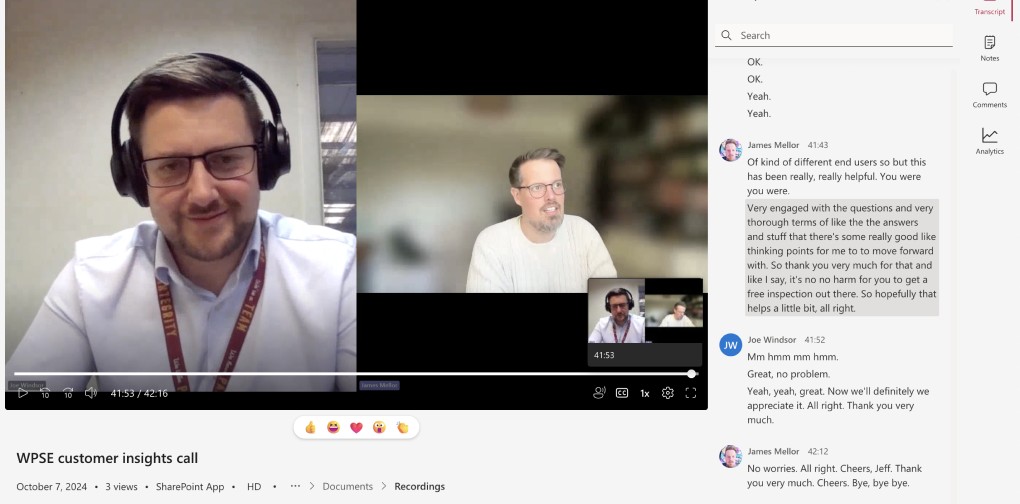
- In-depth interviews with warehouse buyers and decision-makers
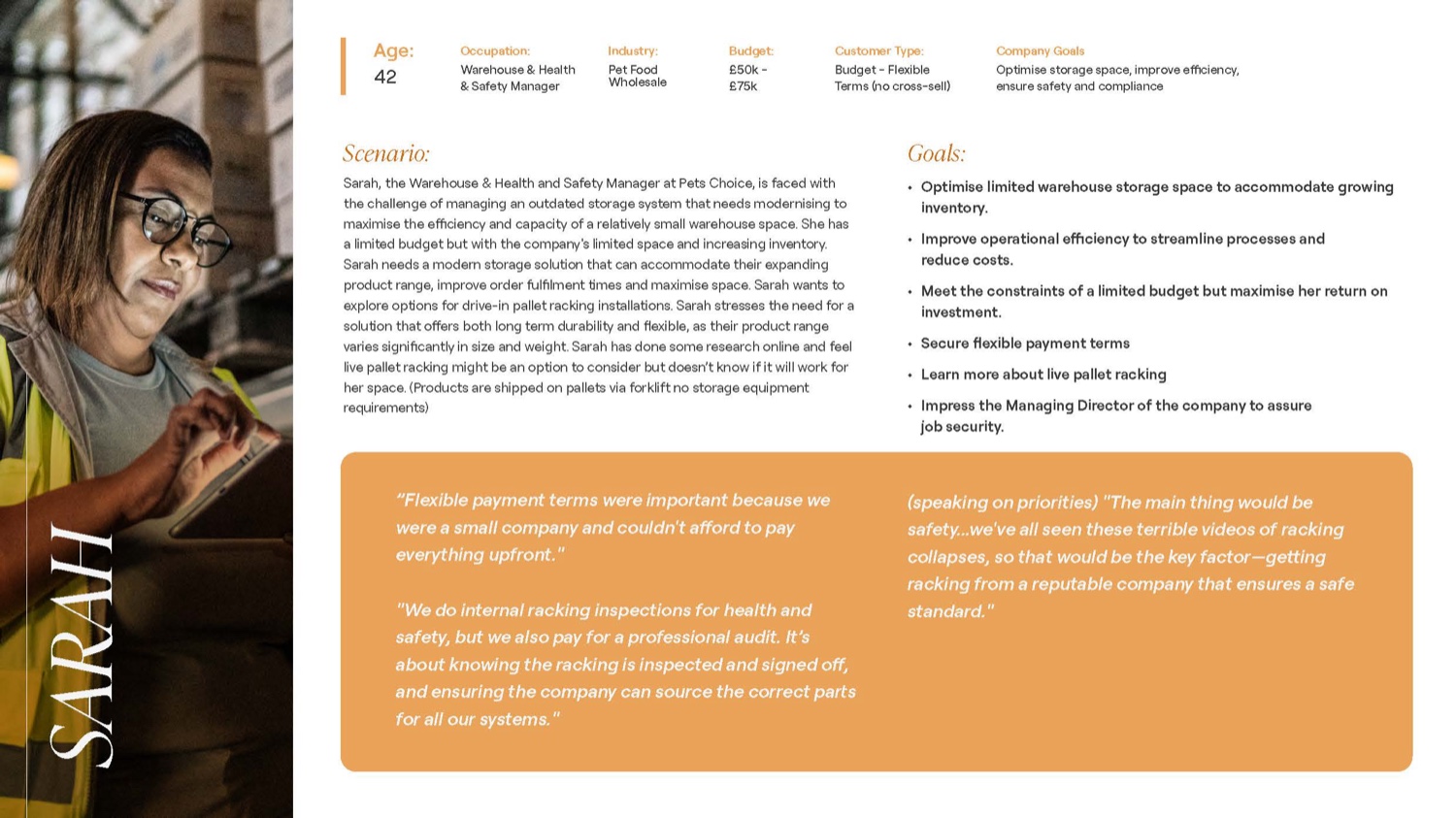
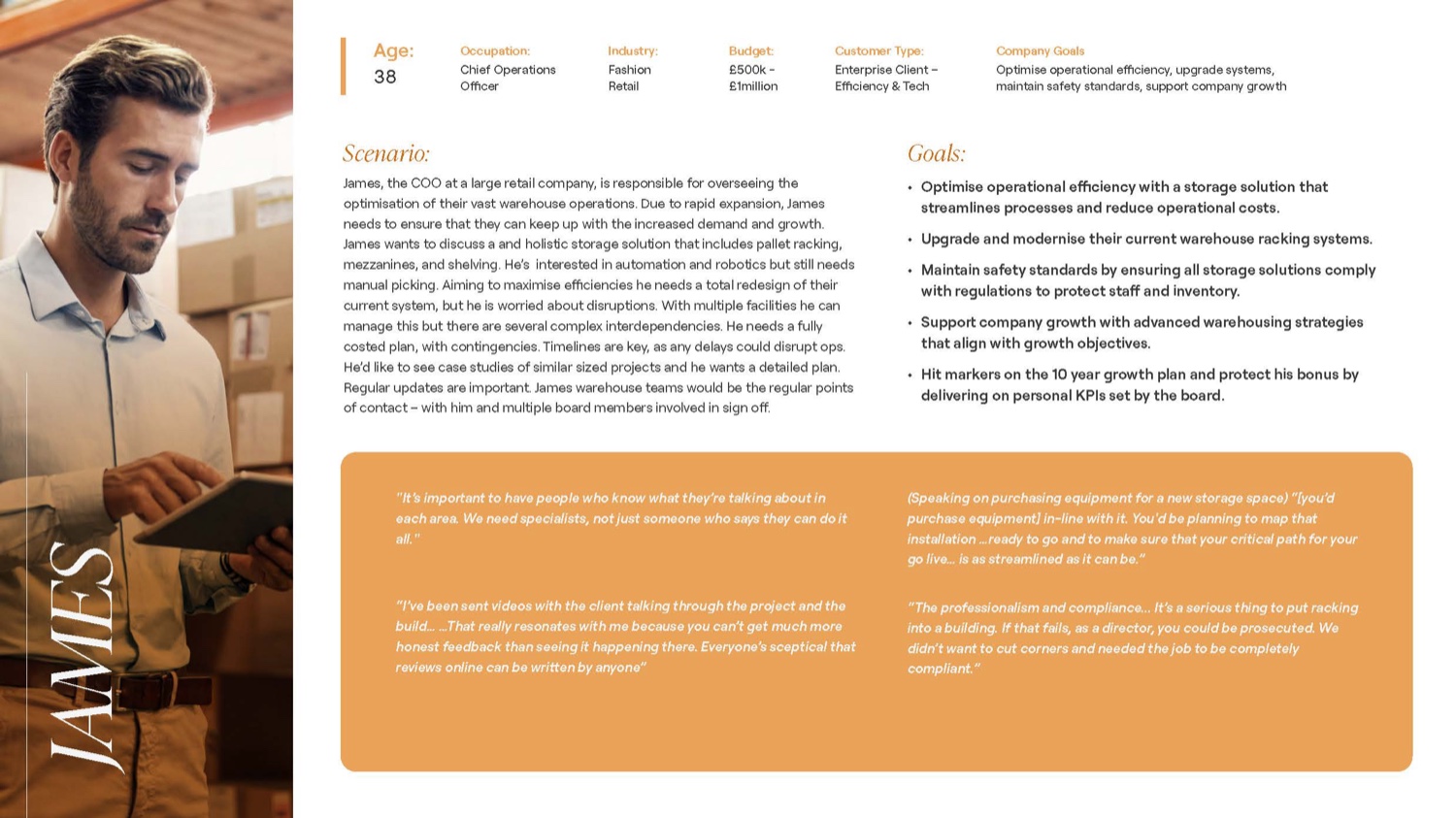
- Four personas spanning the range of roles, budgets and buying styles
- A customer journey map built from more than 2,400 individual insights
04
What I found
The interviews told a remarkably consistent story. These are high-stakes, high-trust purchases, and buyers reward suppliers who prove expertise and reduce risk.
In their words
We've all seen these terrible videos of racking collapses, so that would be the key factor: getting racking from a reputable company that ensures a safe standard.
We need specialists, not just someone who says they can do it all.
If it was something I wasn't familiar with, I'd certainly want pictures of the rack in place, close-ups, before deciding.
- Technical expertise wins. Buyers expect deep, specific knowledge of their warehouse, and the right expert in the room at the right time, not a generalist sales pitch.
- Proof builds trust. Case studies, references and especially video testimonials from comparable projects carry more weight than any claim a supplier makes about itself.
- Downtime is the real cost. Every extra day of installation loses money, so buyers need to see that risk addressed directly, in the messaging and the plan.
- Flexible payment matters. Staged payments and a clear return on investment make a six-figure commitment feasible, especially for smaller and expanding businesses.
- Local presence is a competitive advantage. Buyers assume a nearer supplier means faster maintenance and a stronger long-term relationship.
- An integrated offer is appealing, but only if it stays credible. One supplier for equipment and installation saves time and cost, as long as it does not read as a generalist spread too thin.
05
Strategic recommendations
I turned the evidence into a clear repositioning and a structure to deliver it: one integrated proposition, presented so that each specialism still reads as expert.
- Reposition Palletower as an integrated, end-to-end provider, while segmenting the offer so specialists clearly own each area.
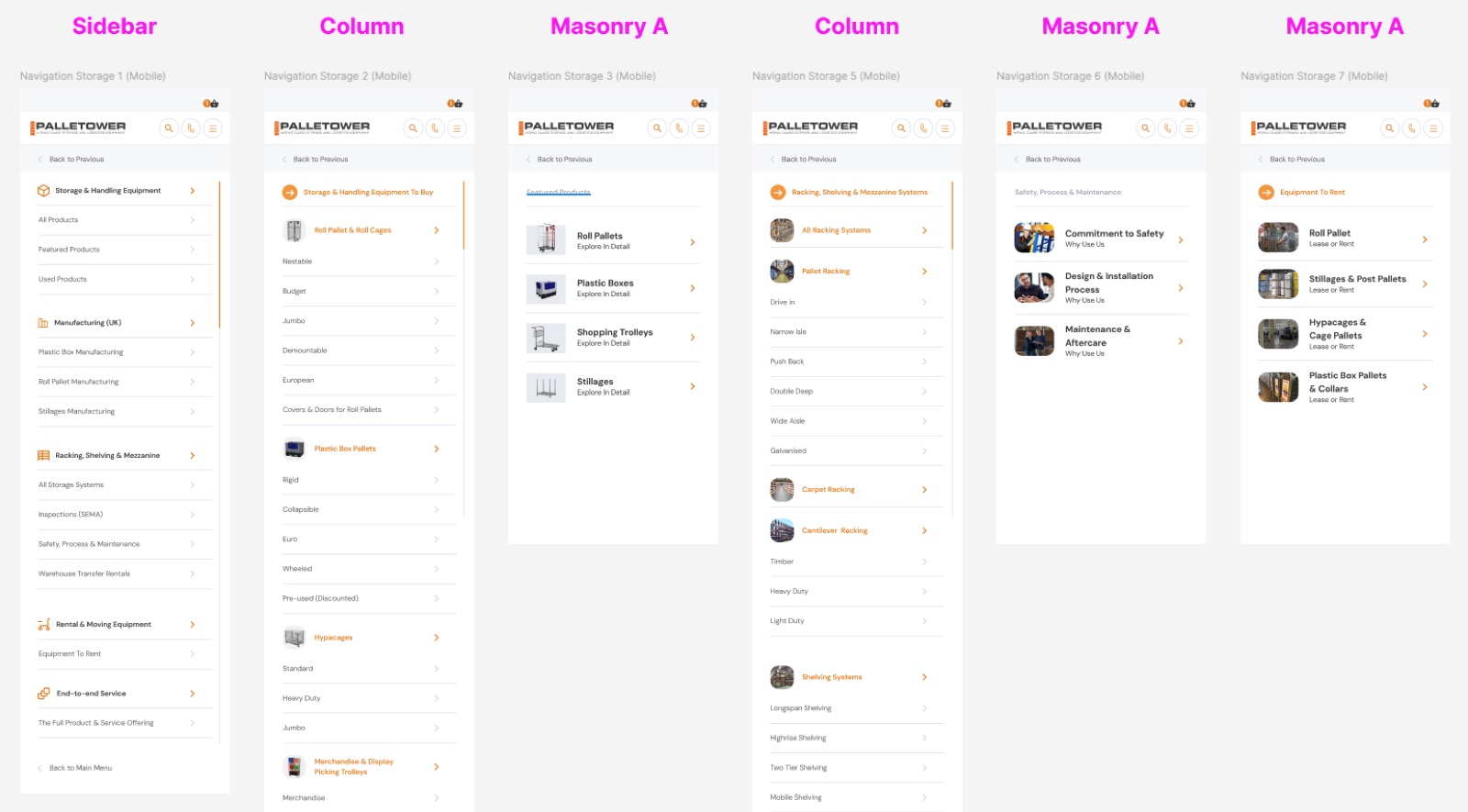
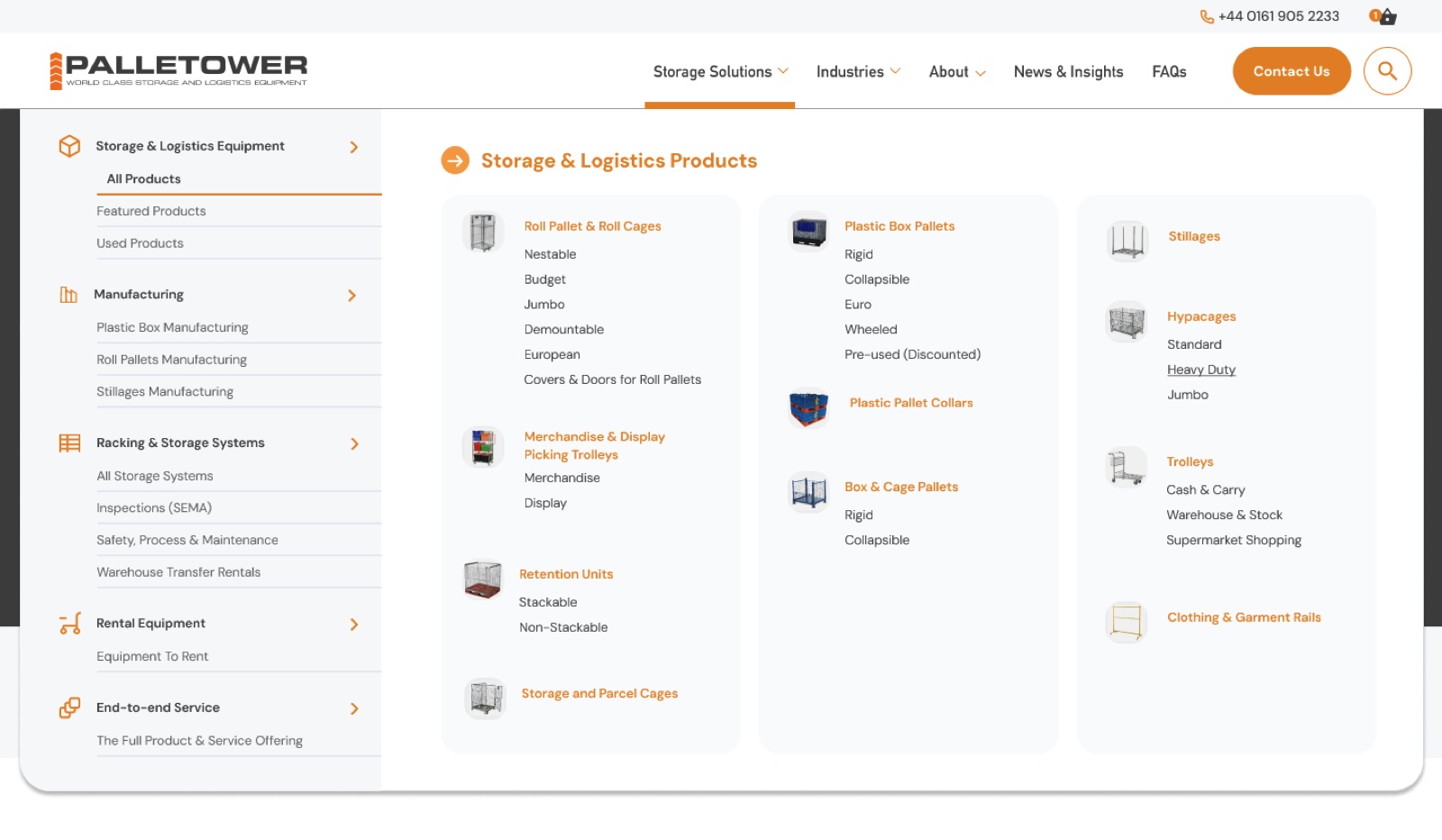
- Restructure the navigation and information architecture around buyer intent, balancing traditional products with the new design and installation service.
- Build proof into the journey, with an integrated case study hub, references and video testimonials from comparable projects.
- Address risk head on, with clear messaging on downtime, flexible payment and return on investment.
- Add location and industry landing pages to win local, sector-specific search and speak to buyers directly.
- Tailor calls to action to the stage of a long buying journey, from Book a consultation to Request a call.
06
Design and iteration
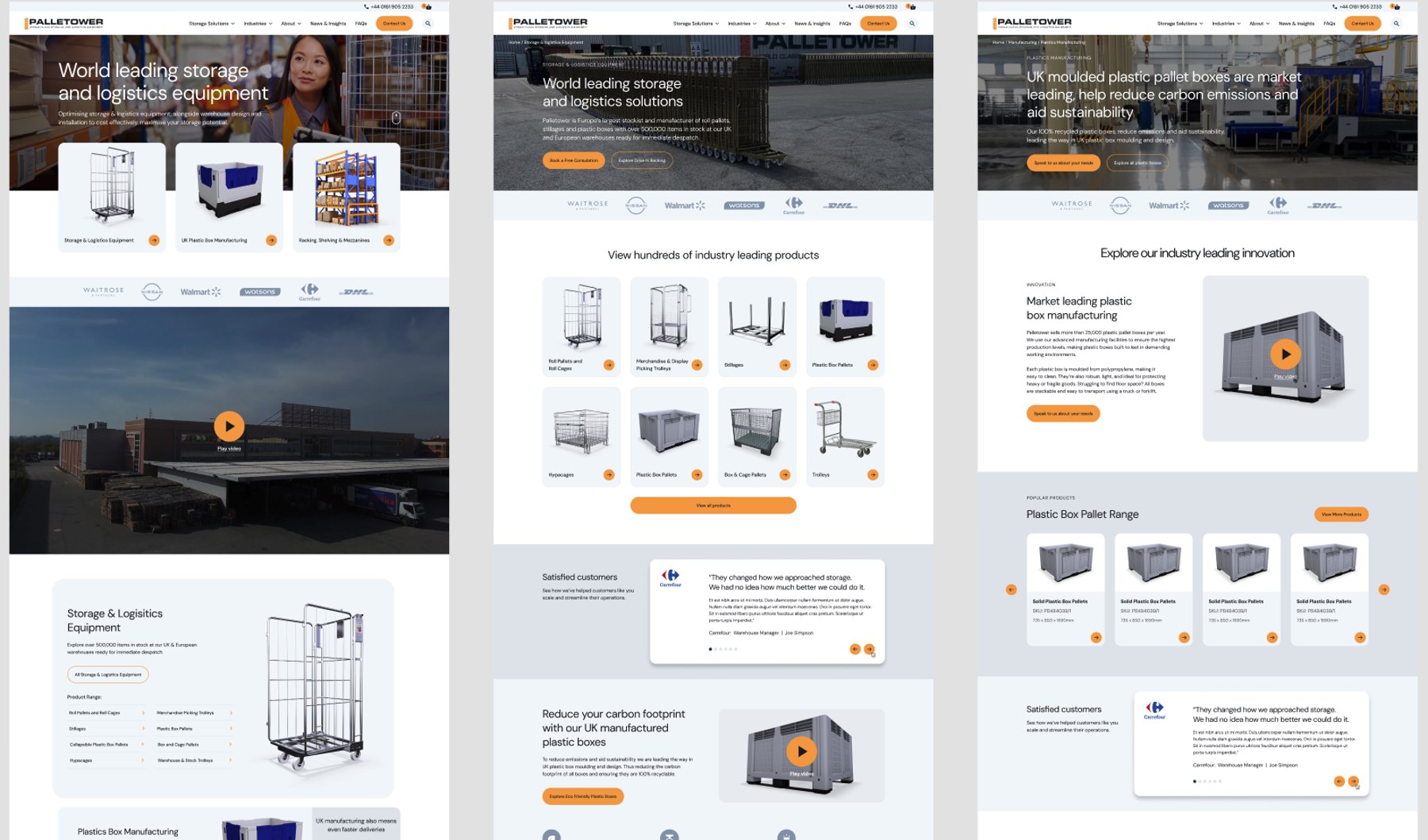
The strategy became a design language and a template system, built to carry a far larger, more complex site and to make Palletower look like the expert, integrated partner the research said buyers wanted.
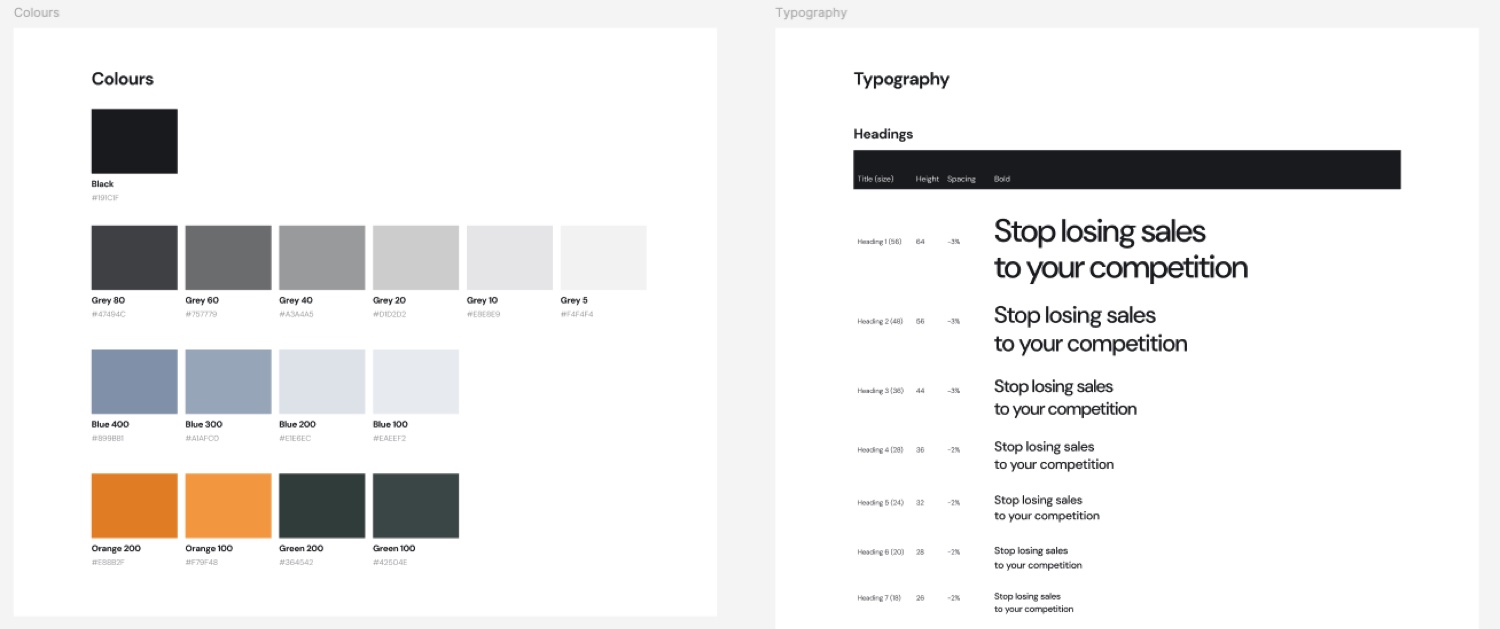
- A design system of colour, type and components gave the rebuilt site one consistent, credible voice across products and services.
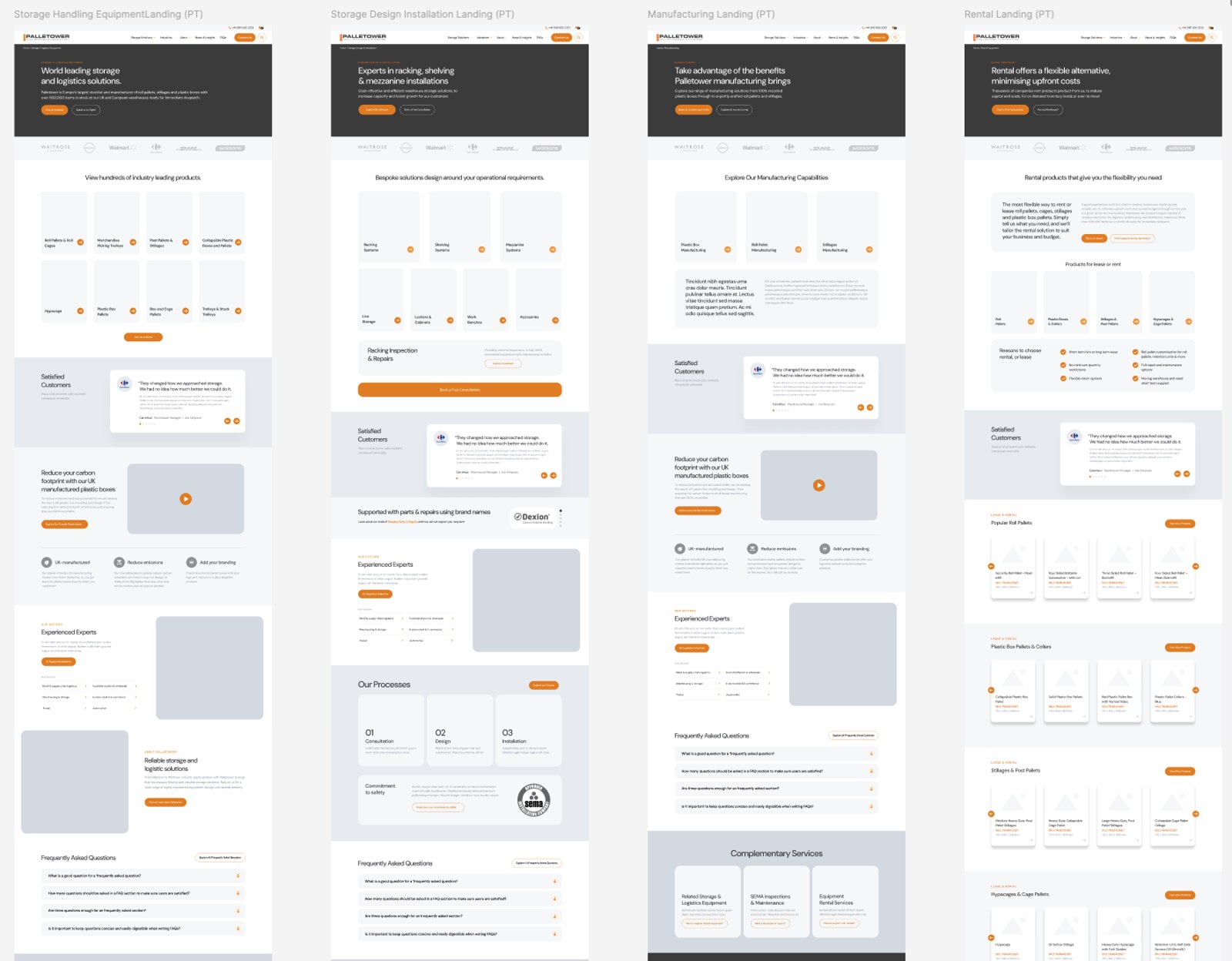
- Templates were designed for the new page types the strategy called for: service landing pages, an integrated case study hub, and industry and location pages.
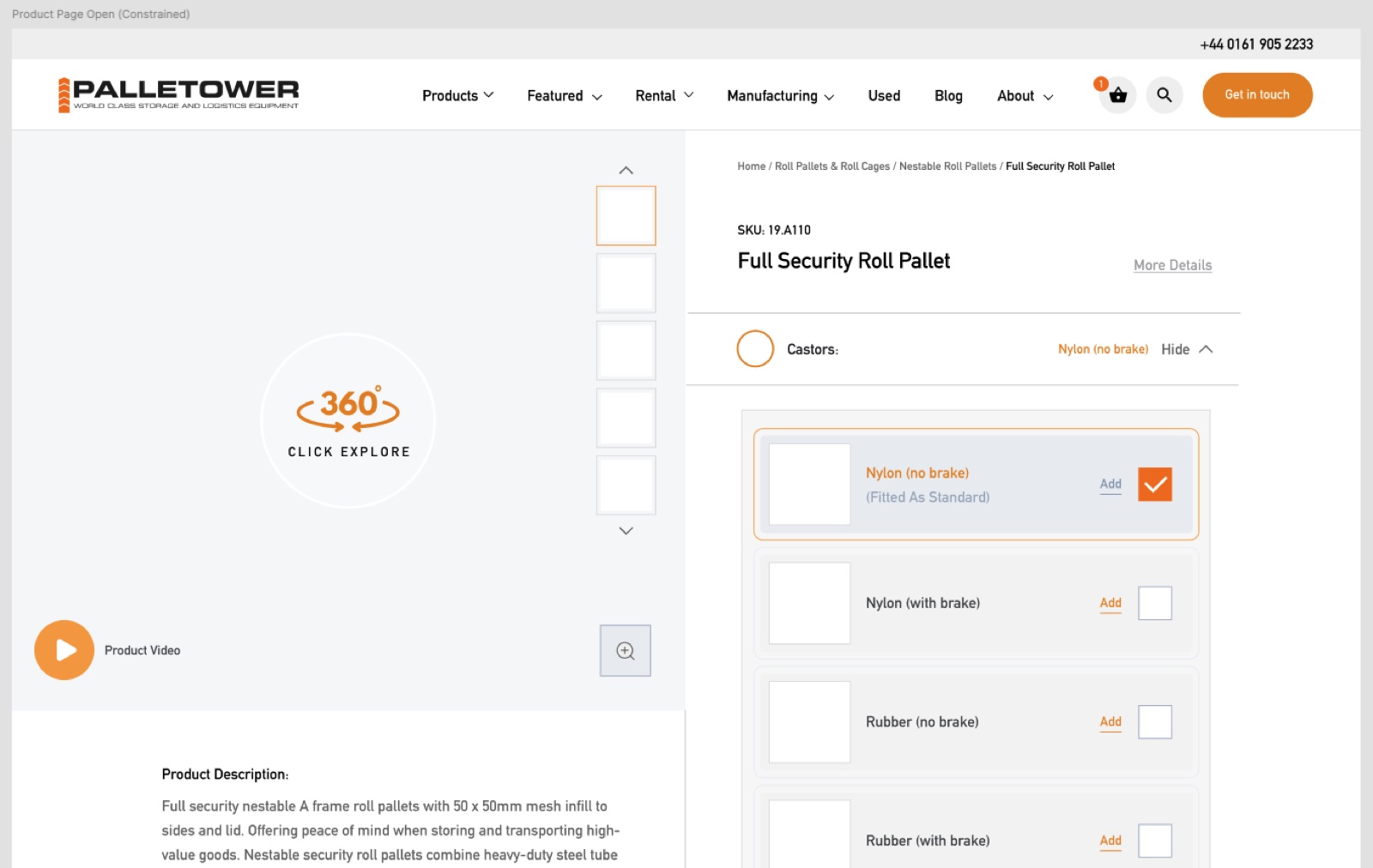
- Product pages were reworked to support comparison and confident choice, with clear specifications, options and a visible next step.
07
What changed
The programme gave Palletower a research-grounded strategy and a designed, integrated experience: one brand, one navigation, and a clear, credible story that brings storage equipment and the new design and installation service together as a single end-to-end offer. Since relaunch, project enquiries are up 152%, visits to the new service pages have grown 5× in the first three months, and quote-form abandonment is down 12%.
The result is a blueprint the business could build and sell against: a repositioning, a new information architecture, a design system, and templates for the service, industry and location pages the strategy called for.
08
Reflection
What I would do next
If continuing, I would validate the new structure with buyers and prove the proposition in market:
- Test the new navigation and key journeys with real warehouse buyers before build
- Build and instrument the case study hub, then track how proof influences enquiries
- Measure local and industry landing pages against the search terms buyers actually use
- Track enquiry quality and conversion across the long, multi-stakeholder buying journey
What I took from it
- In high-stakes B2B, trust is the product. Buyers reward proof, specialism and reduced risk over the loudest claim.
- Integration only works if it stays credible. An end-to-end offer must still read as expert in each part, not as a generalist.
- Synthesis is where strategy is won. Turning 2,400 scattered insights into one journey map made the direction obvious and defensible.
- Research de-risks a big bet. Grounding a merger and rebrand in real buyer behaviour beats designing on assumption.
Let's grab a coffee and start talking.
Hiring a lead position is a serious decision, and one that deserves a proper conversation. I'd welcome the chance to talk you through a decade of research-led strategy, design and team leadership.