UX strategy, information architecture and wireframing
Sabre
Stakeholder-led UX strategy, information architecture and wireframing that turned a sprawling, product-led travel-technology website into a clear, audience-led structure, with handover-ready wireframes in three weeks.
- Travel technology
- Information Architecture
- Stakeholder workshops
- Proto-personas
- Content strategy
- Wireframing
- MVP
- Usability testing
Take more than 80 scattered product pages, give every audience a clear route, and hand over a tested set of wireframes in three weeks.”
The impact
- +35%
- Increase in organic traffic since launch
- 2×
- More demo and sales enquiries through the new audience-led journeys
- -30%
- Lower bounce rate on the priority product pages
- Sector
- B2B / travel technology
- My role
- UX strategy and information architecture lead
- Timeframe
- 2025–2026
- Team
- With Trunk's UX, research and SEO teams, a partner brand agency, and Sabre's stakeholders and internal developers
01
The challenge
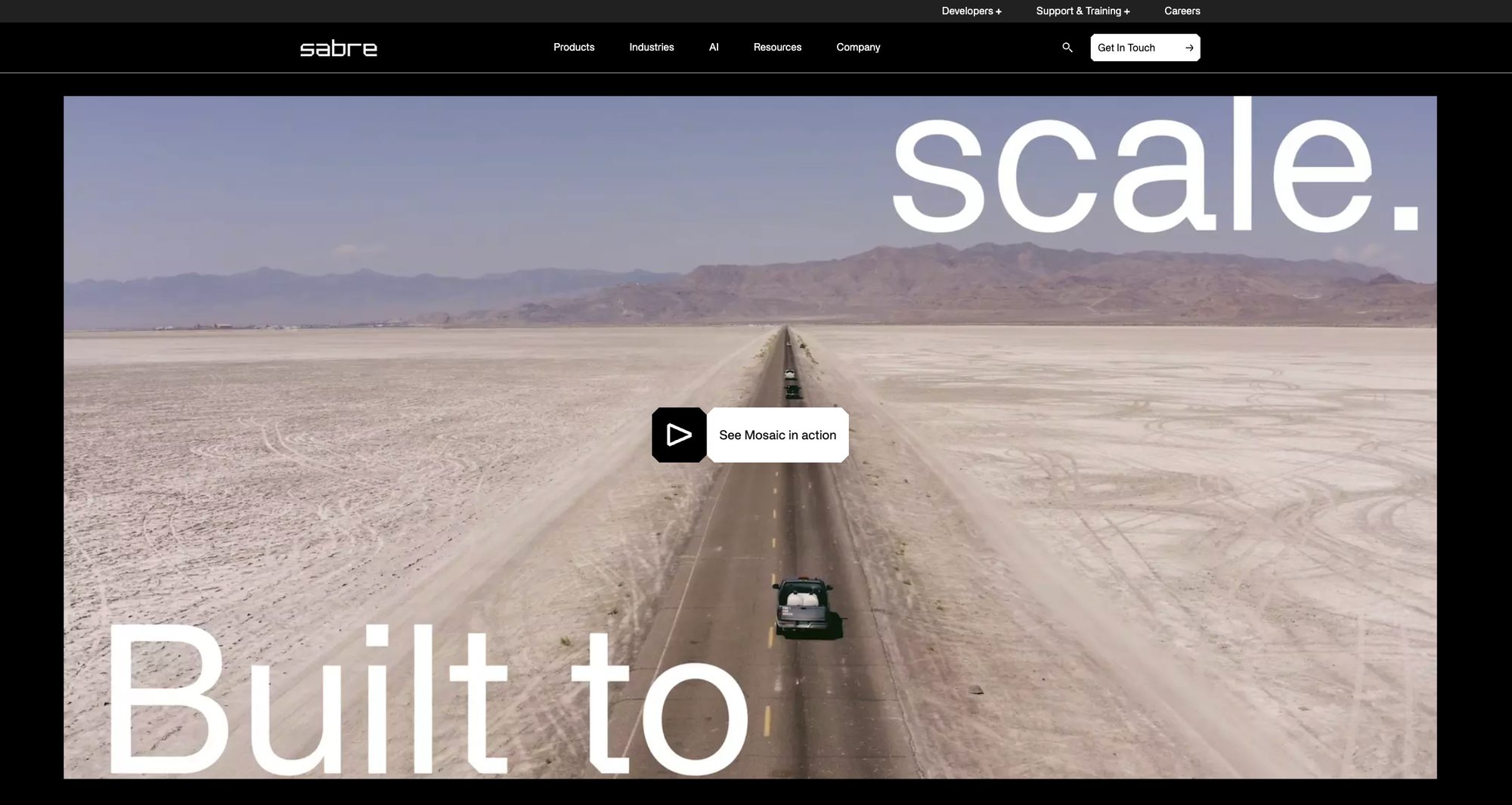
Sabre is one of the largest travel-technology companies in the world, powering airlines, agencies and developers through its SabreMosaic travel marketplace and airline-retailing platform. Alongside a brand refresh led by a separate brand agency, the website had to become a clear digital expression of that new proposition, and it had to be delivered fast.
The existing site had grown into more than 80 pages organised around individual products rather than the people using them. The result was sprawl: duplicated content, inconsistent templates, jargon, and journeys that mirrored Sabre's internal structure instead of its audiences' intent.
The constraints were as demanding as the brief. The MVP had to ship to a fixed launch date, the brand and value propositions were still evolving in parallel, content was being written at the same time as the wireframes, and there was no time for a full primary-research programme. Discovery would have to lean heavily on the people who knew the customers best: Sabre's own stakeholders.
The opportunity was clear; the route to it was not. The questions I had to resolve, quickly, were:
- How to simplify 80-plus product-led pages into a lean, story-led structure without losing hard-won SEO equity
- How to serve three very different audiences, airlines, agencies and developers, from one coherent site
- How to move at pace and still design responsibly, when the available insight was stakeholder knowledge rather than primary research
02
My role
I led the UX strategy, research and information architecture, and turned a fast, stakeholder-led discovery into a clear direction the brand agency and Sabre's developers could build against. In practice that meant:
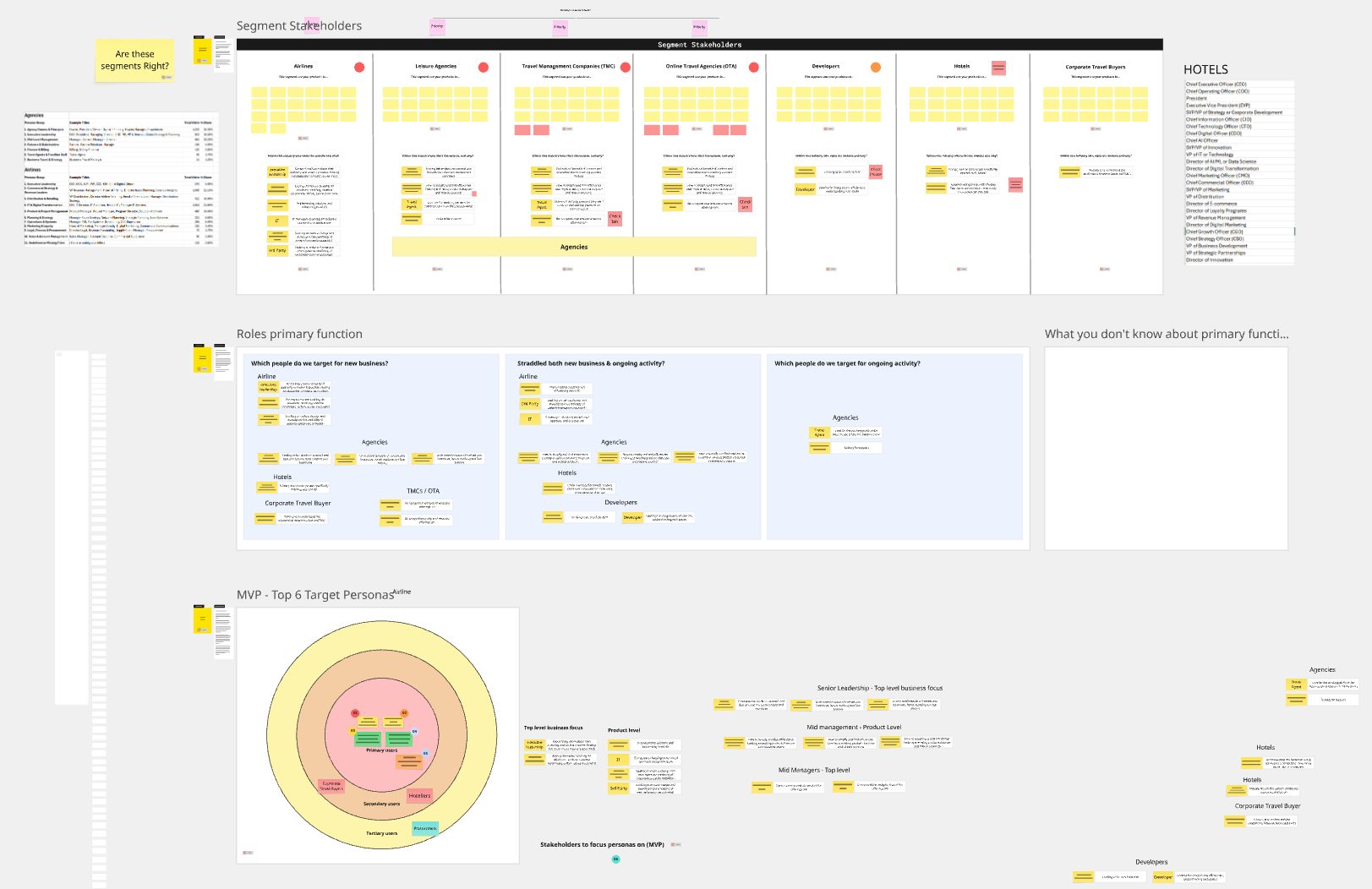
- Planning and facilitating four stakeholder workshops across two days, with subject-matter experts from across the business
- Running the supporting discovery: a site and content audit, GA4 and Hotjar analysis, an SEO review and competitor benchmarking, to create a fact base
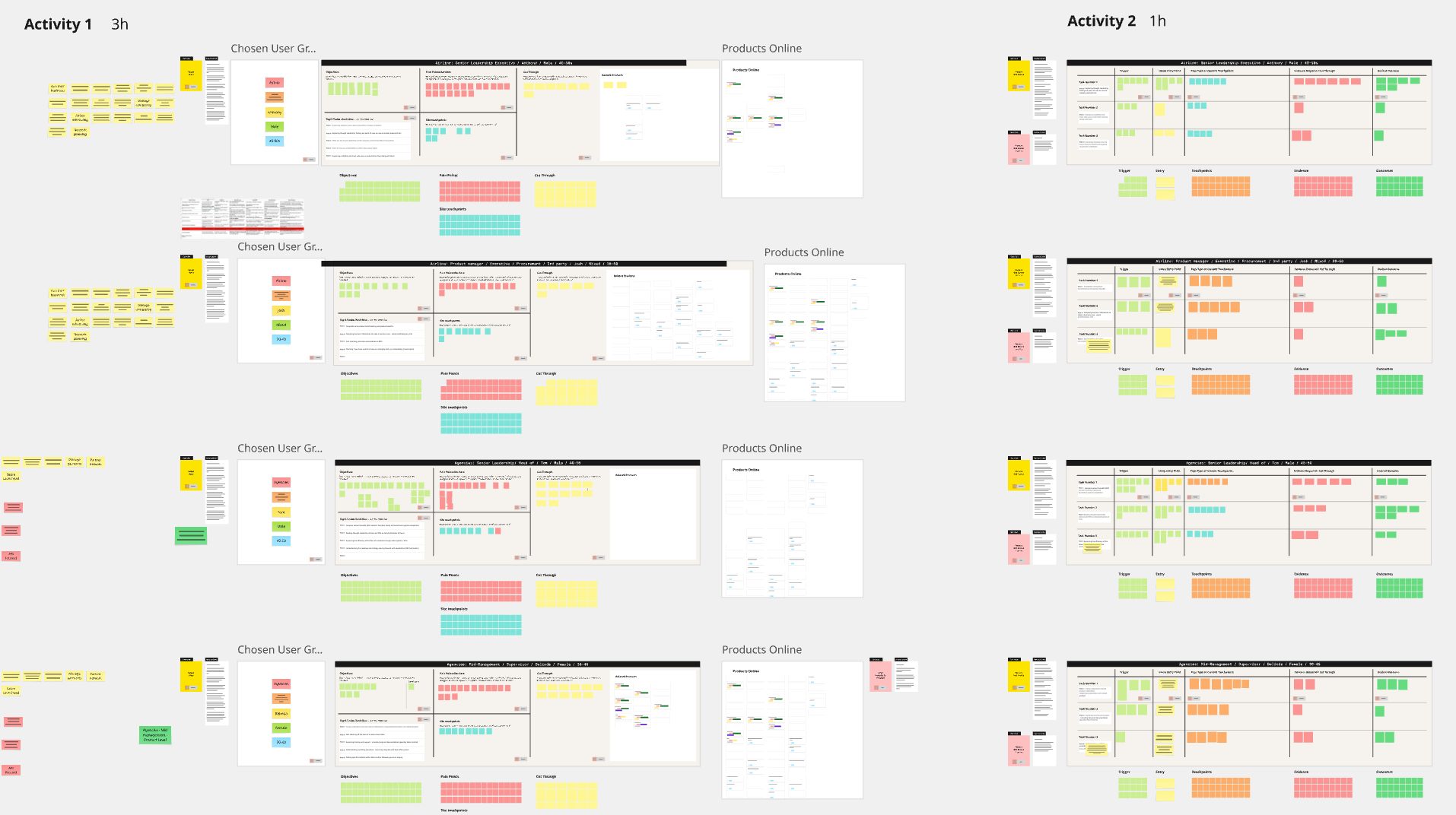
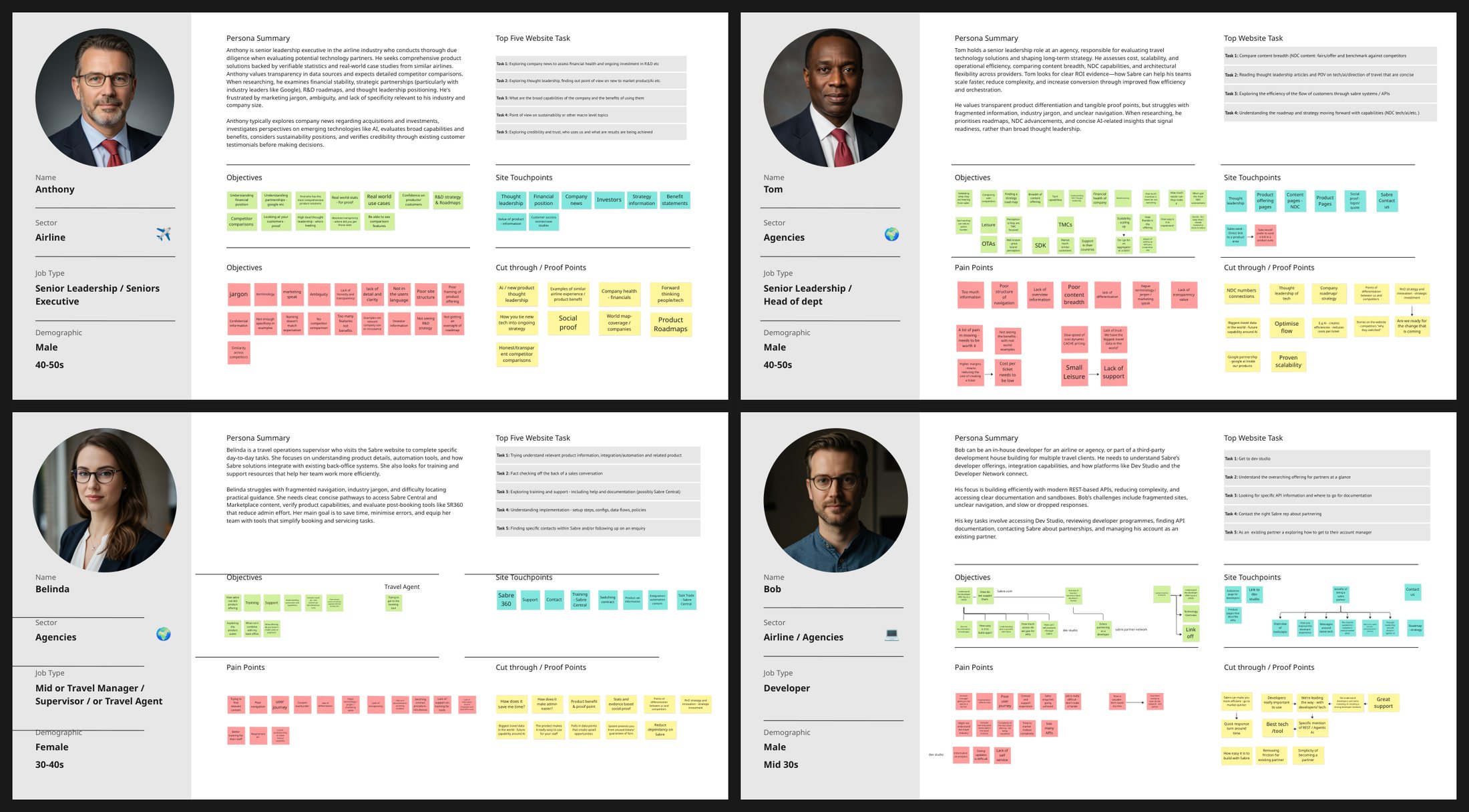
- Synthesising it all into proto-personas and red routes for airlines, agencies and developers
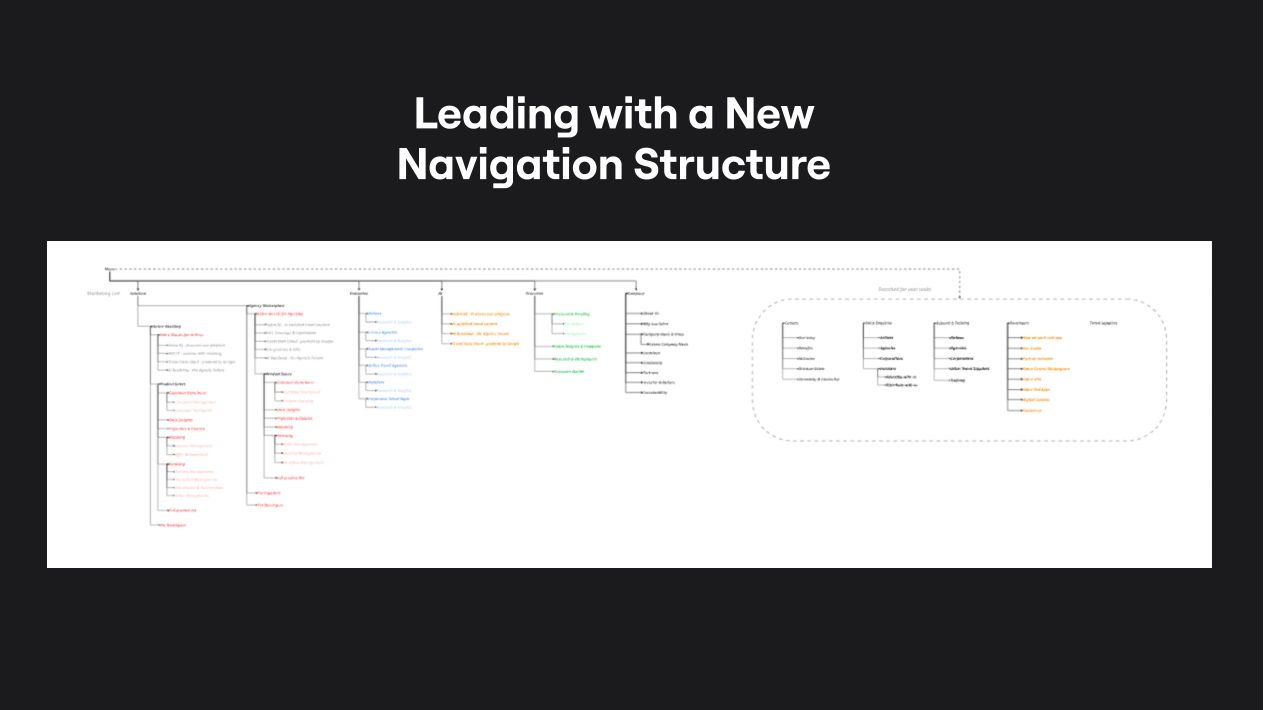
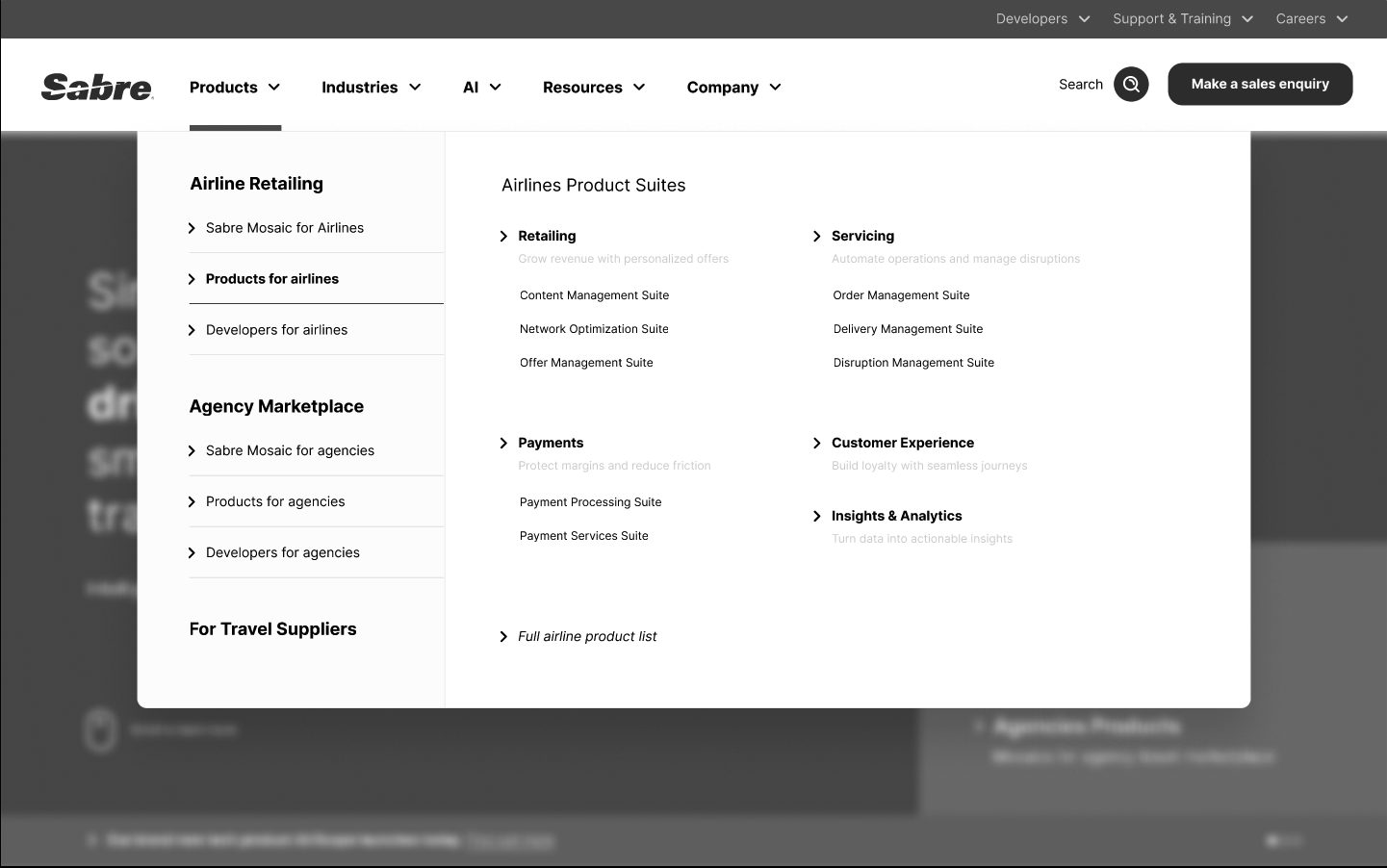
- Defining a simplified information architecture, a two-part navigation and a modular template system
- Setting the direction for roughly twenty wireframes and handing over to the brand agency and internal developers
03
Evidence used
With no time for a full primary-research programme, I built the strategy on a deliberately broad evidence base, combining stakeholder knowledge with hard behavioural and search data:
- Four stakeholder workshops: business and product understanding, audiences and user tasks, content triage and template mapping, and sitemapping, IA and navigation
- A site and content audit of roughly 75 to 80 pages, tagging what to keep, merge, rewrite or retire
- GA4 analytics and Hotjar behaviour, which showed users rarely dig past the surface
- An SEO review to protect organic equity through consolidation, plus competitor and best-practice benchmarking
- Five proto-personas and their red routes, spanning airline leadership and procurement, agency leadership and operations, and developers
These were proto-personas, built from stakeholder insight rather than primary research, and flagged as such, with a clear recommendation to validate them with real users post-launch.
04
What I found
Across the workshops, data and audit, a consistent picture emerged. These are high-consideration B2B decisions, and the site was making them harder than they needed to be.
In their words
Honestly, the current site feels like a disconnected bag of bolts.
We have the biggest travel data in the world, but the site doesn't tell that story.
Our buyers won't engage until they see proof, and right now it's buried.
- Decision-makers want proof before they engage. Every audience needed evidence, client logos, stats and comparisons, before committing, yet proof was buried or missing.
- Users do not dig. GA4 and Hotjar showed people stay near the surface, so a product-first structure left them lost rather than informed.
- The structure mirrored Sabre, not its audiences. Navigation was product-led and overloaded, with key themes like AI and thought leadership hard to find.
- One story, three audiences. Airlines, agencies and developers had distinct goals and red routes, but the site spoke to none of them clearly.
- Sprawl eroded trust. Duplicated content, inconsistent templates and jargon made a market leader feel, in stakeholders' own words, like a disconnected 'bag of bolts'.
- Developers were being gated. They wanted a fast, self-serve route to Dev Studio and API documentation, not a path through an account manager.
05
Strategic recommendations
I turned the evidence into one simple idea, executed across the whole site: simplify, and lead with the audience. Cut the product-led sprawl down to a solution-led offering, and give each audience a direct path to what they need.
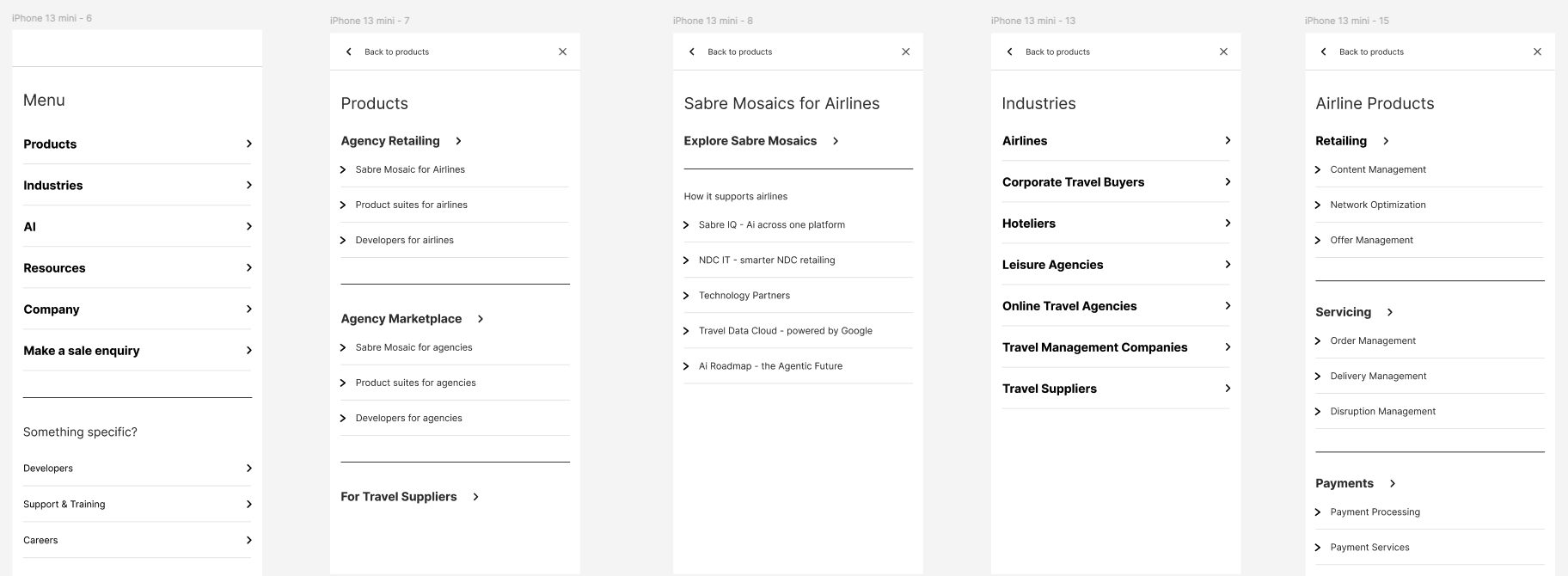
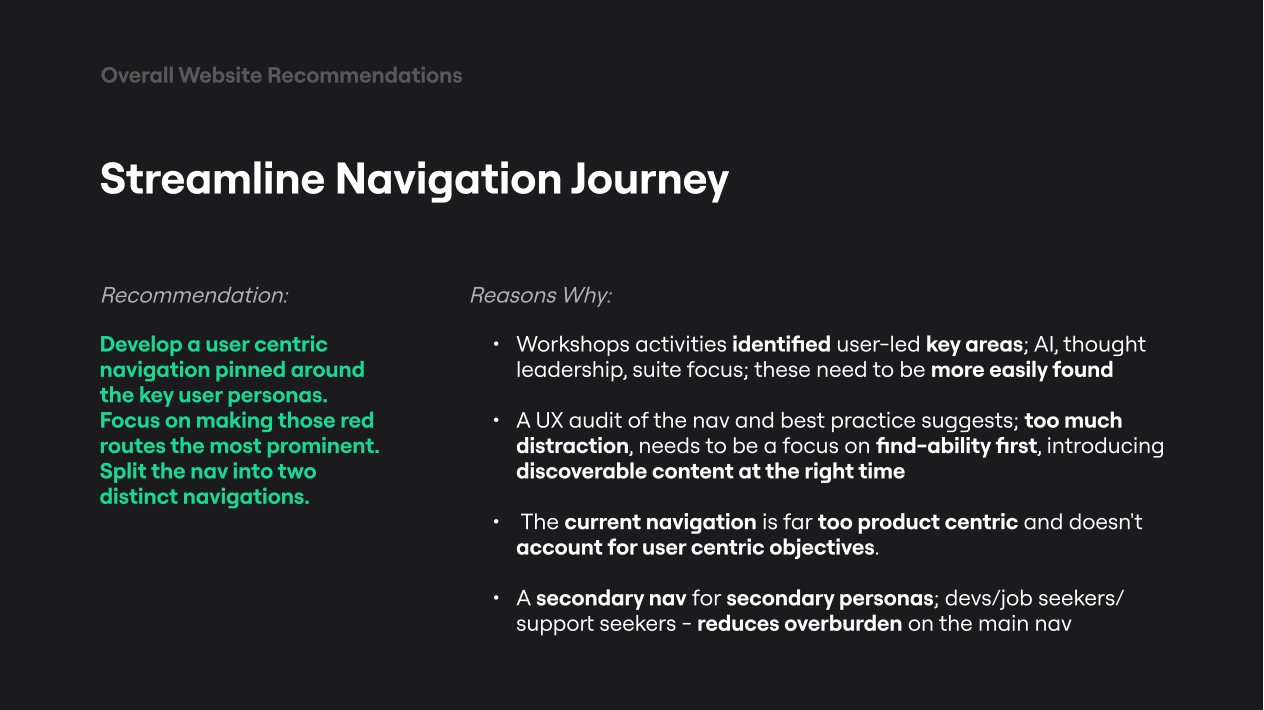
- Restructure the site around audiences and intent, with a new two-part navigation: a primary nav pinned to the key personas and red routes, and a secondary nav for developers, support and careers.
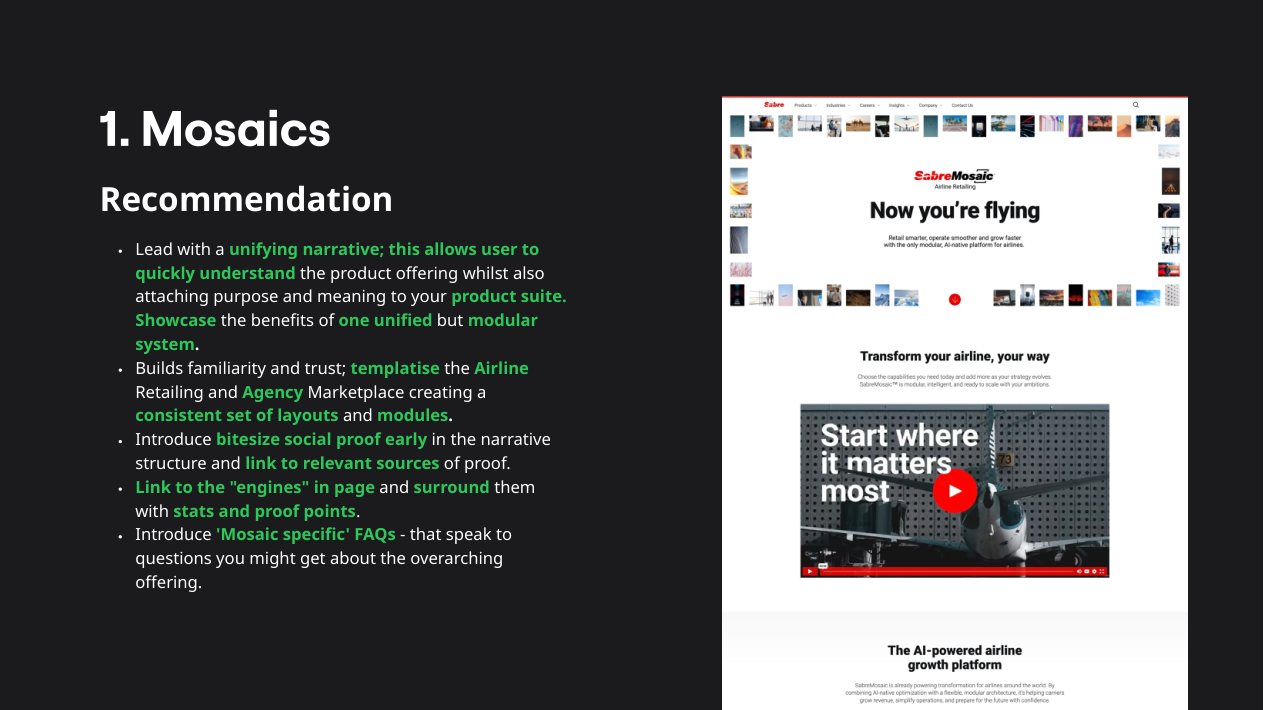
- Lead with the SabreMosaic story and surface solutions before individual products, using progressive disclosure so users meet breadth before depth.
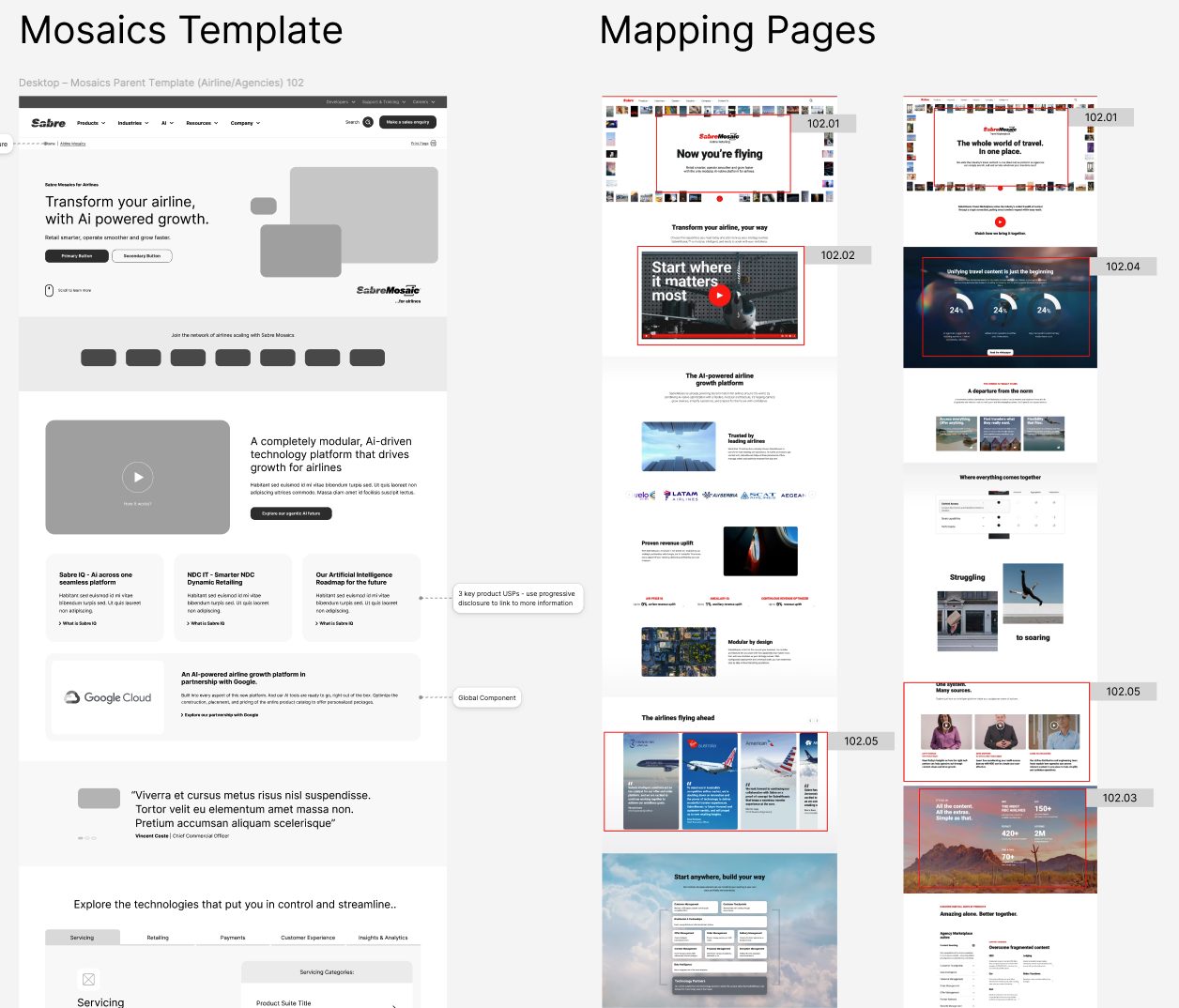
- Standardise around roughly twenty modular, reusable templates, keeping the components that already worked, to build consistency, speed and easier governance.
- Build proof into every journey, with social proof, stats and customer stories surfaced early, and calls to action matched to each stage of the buying cycle.
- Create a dedicated developer hub and own the AI narrative, positioning Sabre as a market leader with a clear point of view and roadmap.
- Protect SEO equity through consolidation, with redirect and metadata guidance and supporting content blocks, so simplification did not cost hard-won visibility.
06
Design and iteration
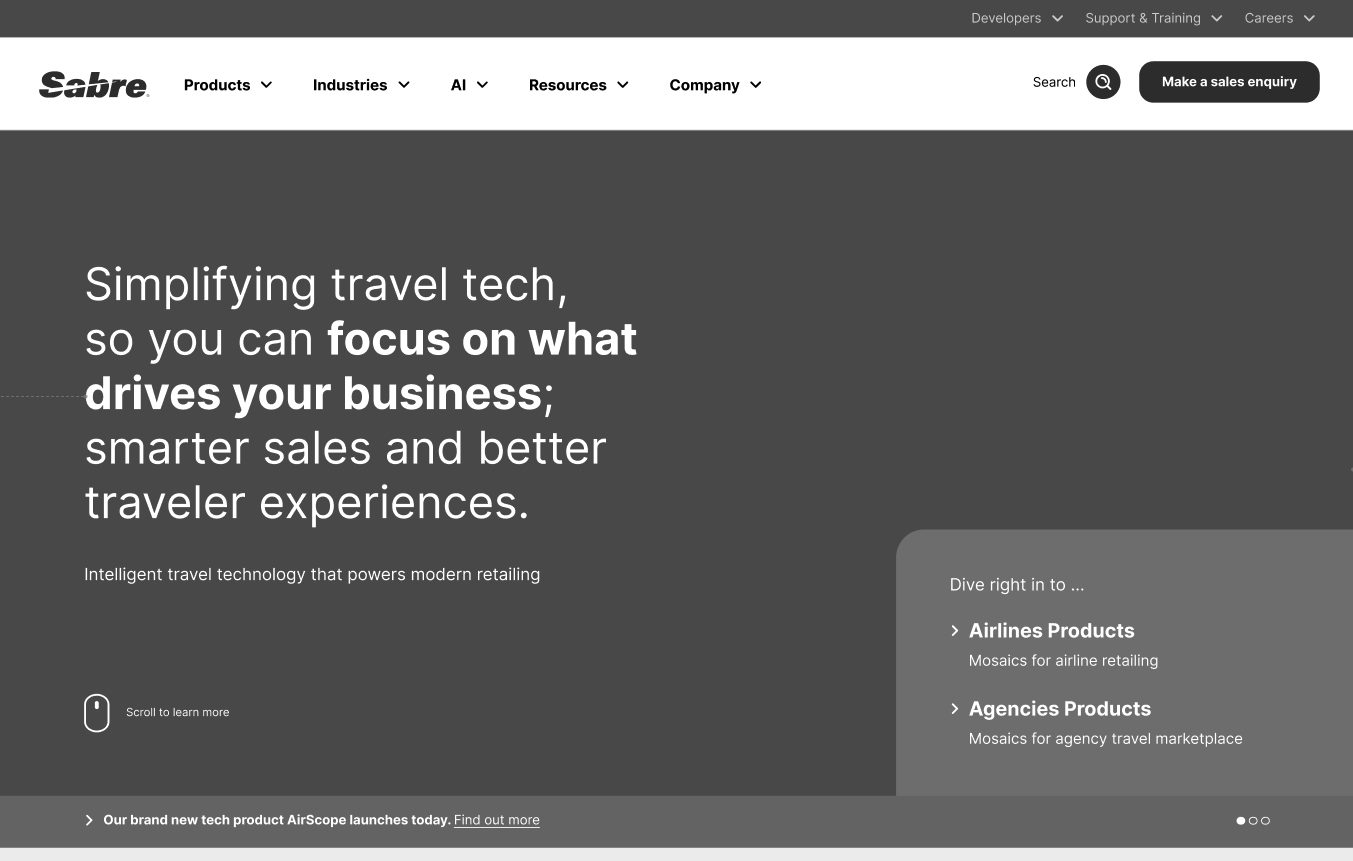
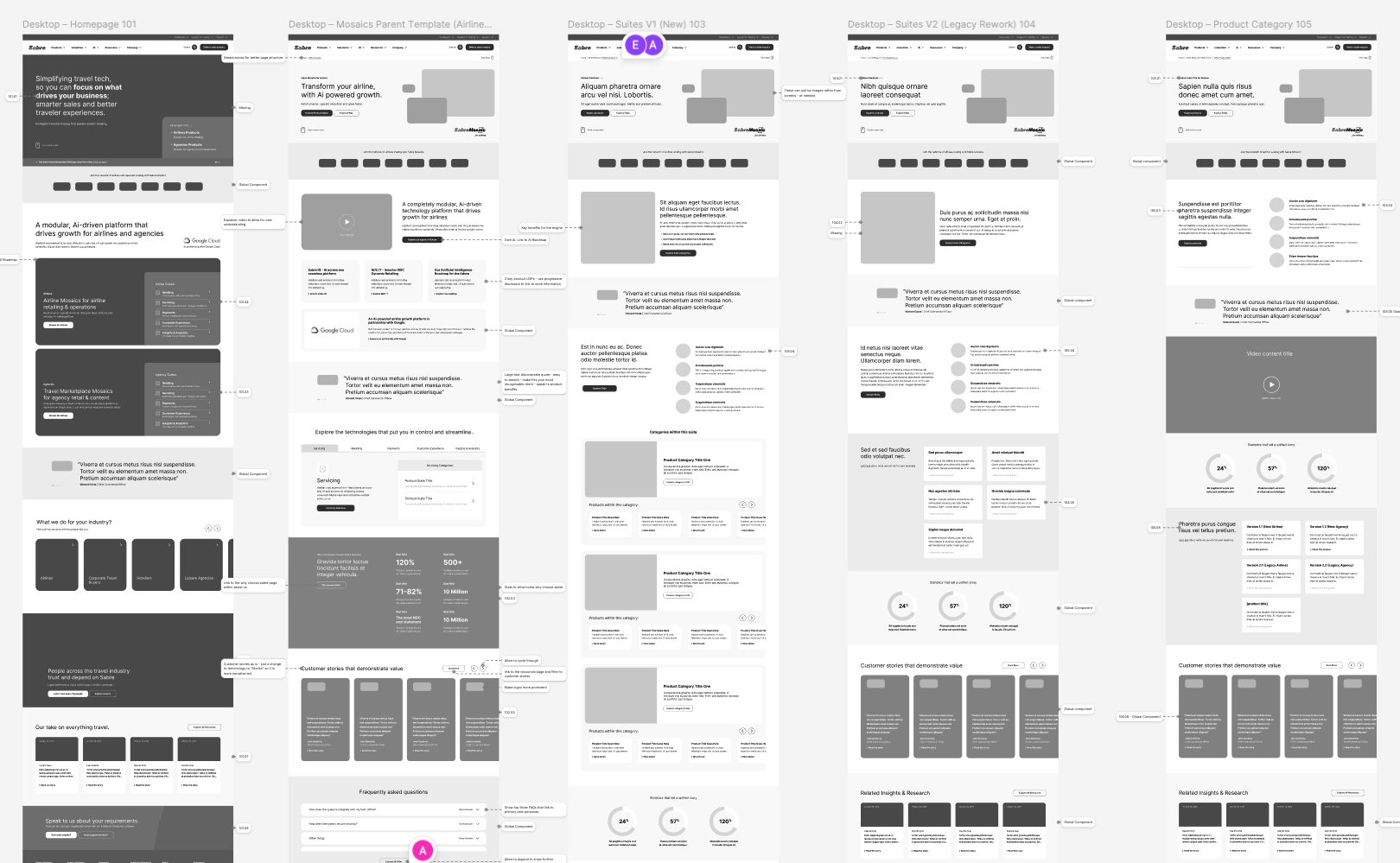
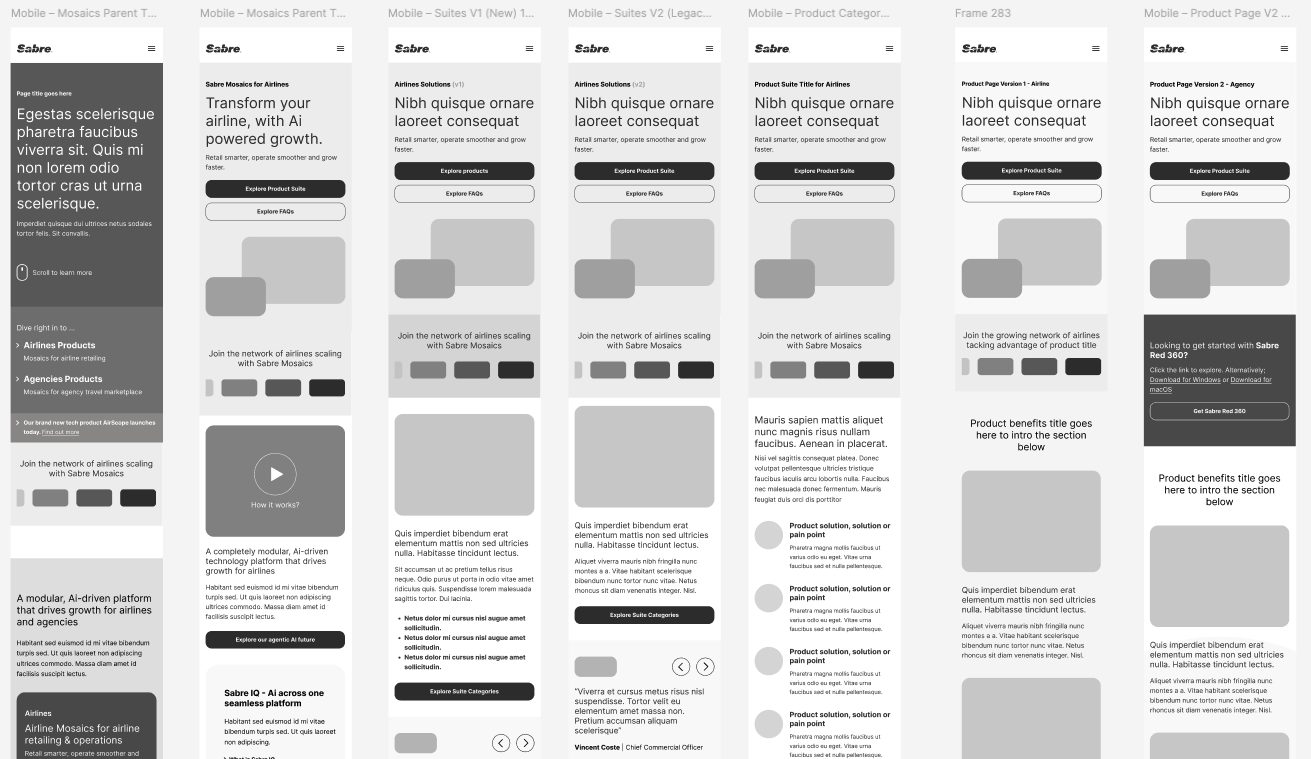
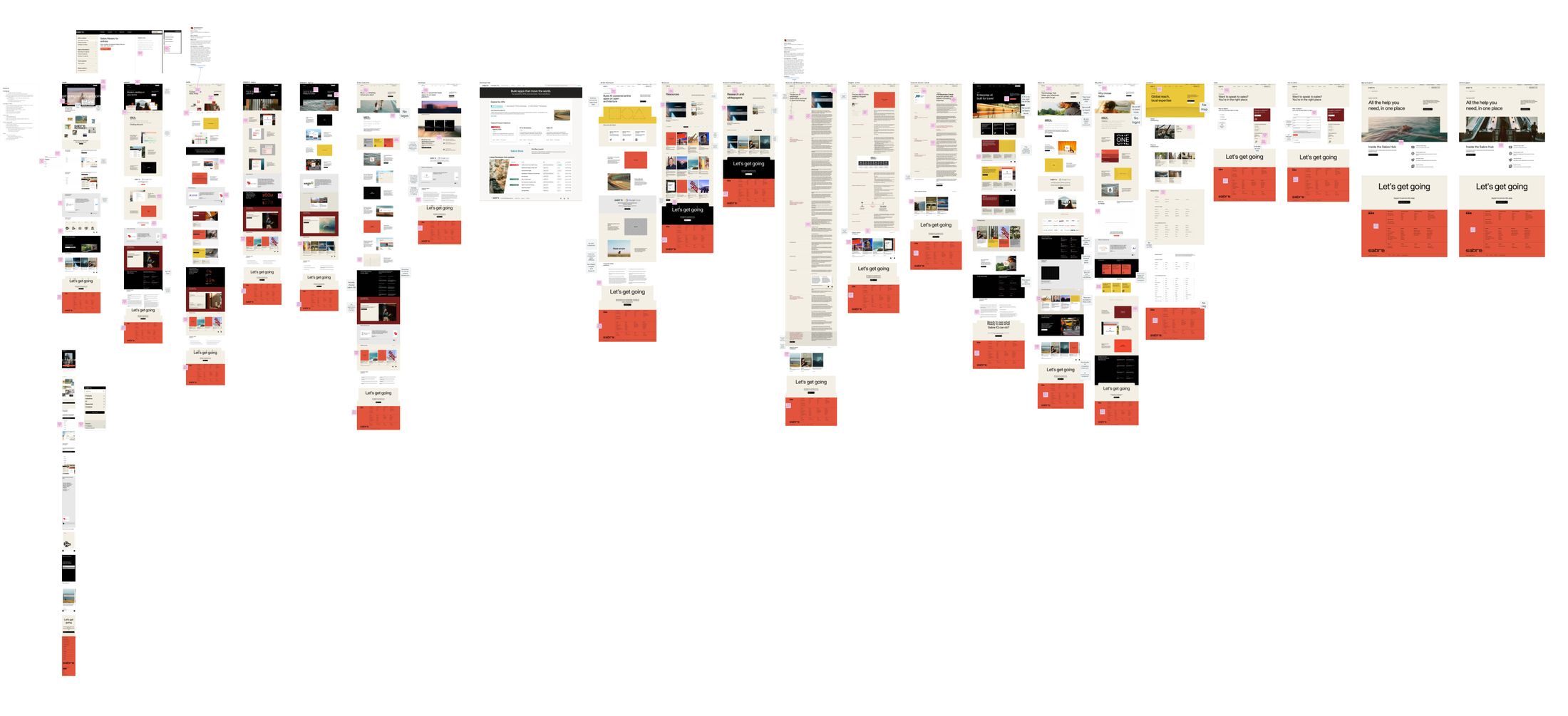
With the strategy agreed, I translated it into a working blueprint in a single week: roughly twenty low-fidelity templates and a navigation system, mapped directly to the content architecture so design, content and build could run in parallel.
- Desktop-first low-fidelity templates for the core page types, home, Mosaic, solutions, product, industry, resources, company and support, with mobile variants and defined breakpoints.
- A global navigation, header, footer and mobile menu, built around the red routes to shorten paths to critical tasks.
- Field-level content slots, headline, proof, CTA and schema, in every template, so Sabre's teams could author content in parallel and the build could move quickly.
07
What changed
The work gave Sabre a research-informed strategy and a simplified, audience-led structure: more than 80 product pages reorganised into around 20 reusable templates, with handover-ready wireframes in three weeks. Sabre and a brand agency took it live, and in the first two months organic traffic is up 35%, demo and sales enquiries have doubled, and bounce rate on the priority pages is down 30%, turning a one-off rebuild into a foundation the business can keep testing and improving.
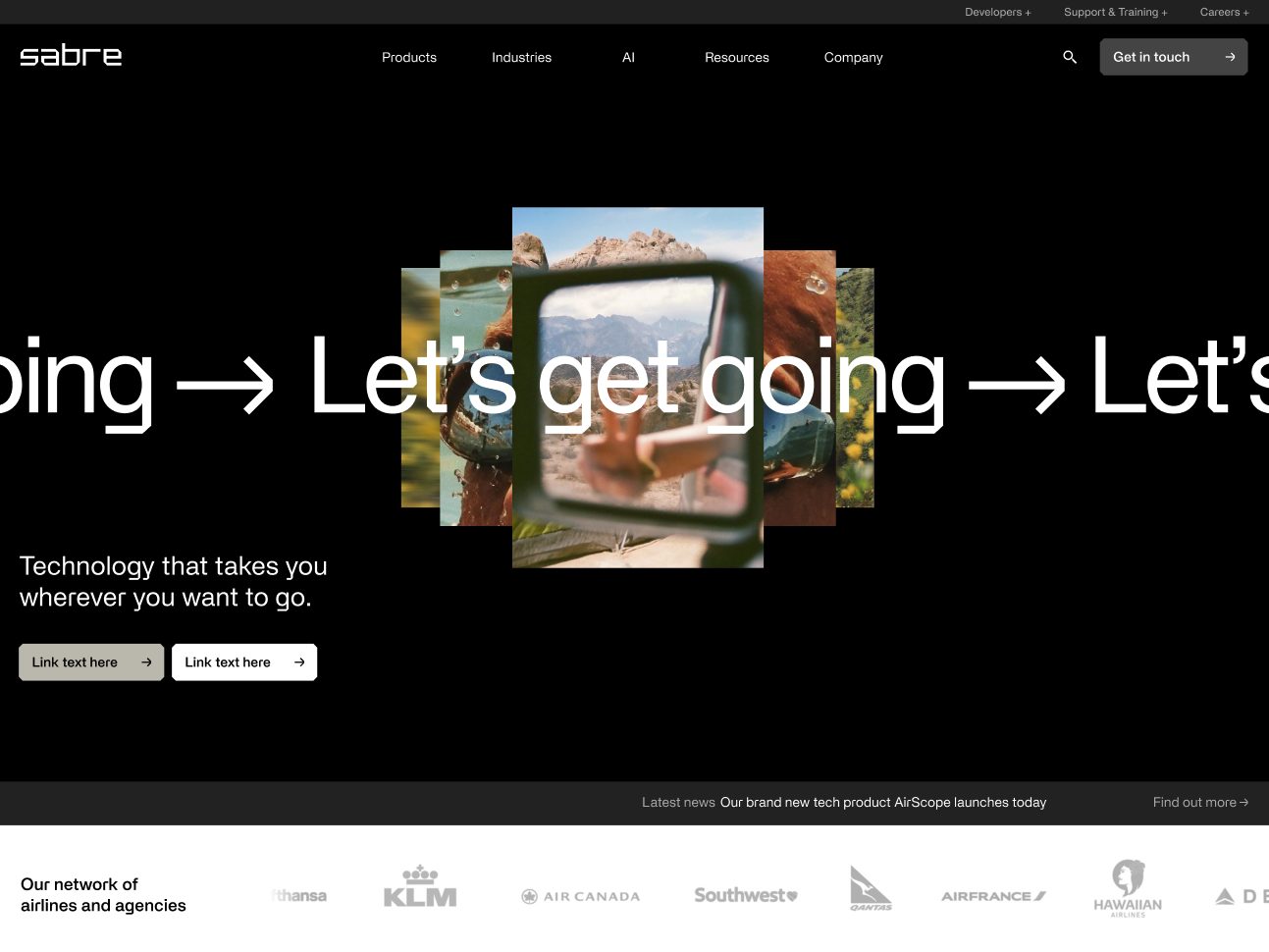
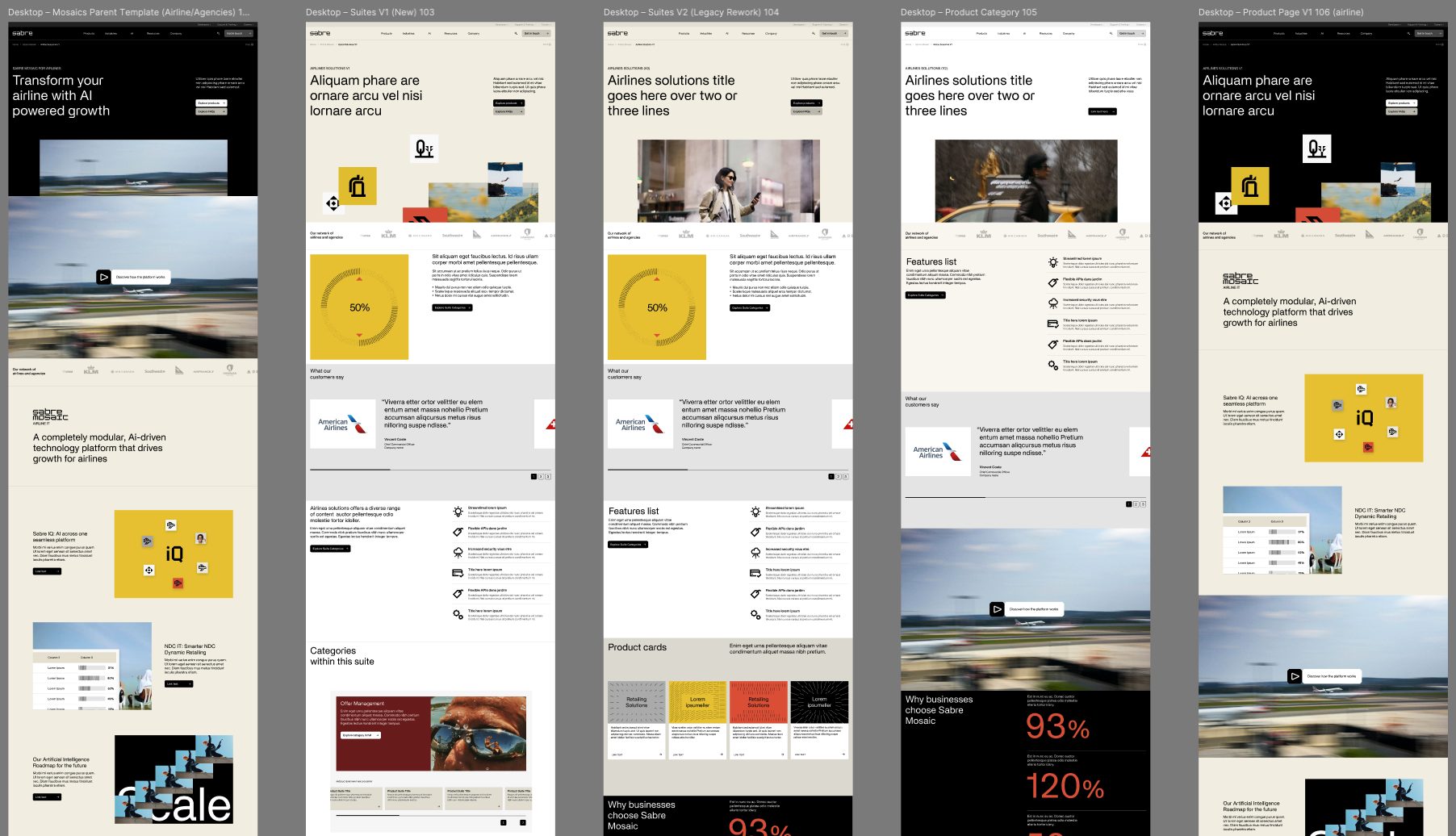
Sabre and the brand agency took the strategy, information architecture and wireframes into high-fidelity design and build. The new site launched as an MVP, leading with a simplified, audience-led story, and is now live and being tested and iterated with real users.
- A simplified, audience-led homepage and template system, replacing product-led sprawl with one coherent story
- A launched MVP the business can now test, measure and improve, rather than a one-and-done rebuild
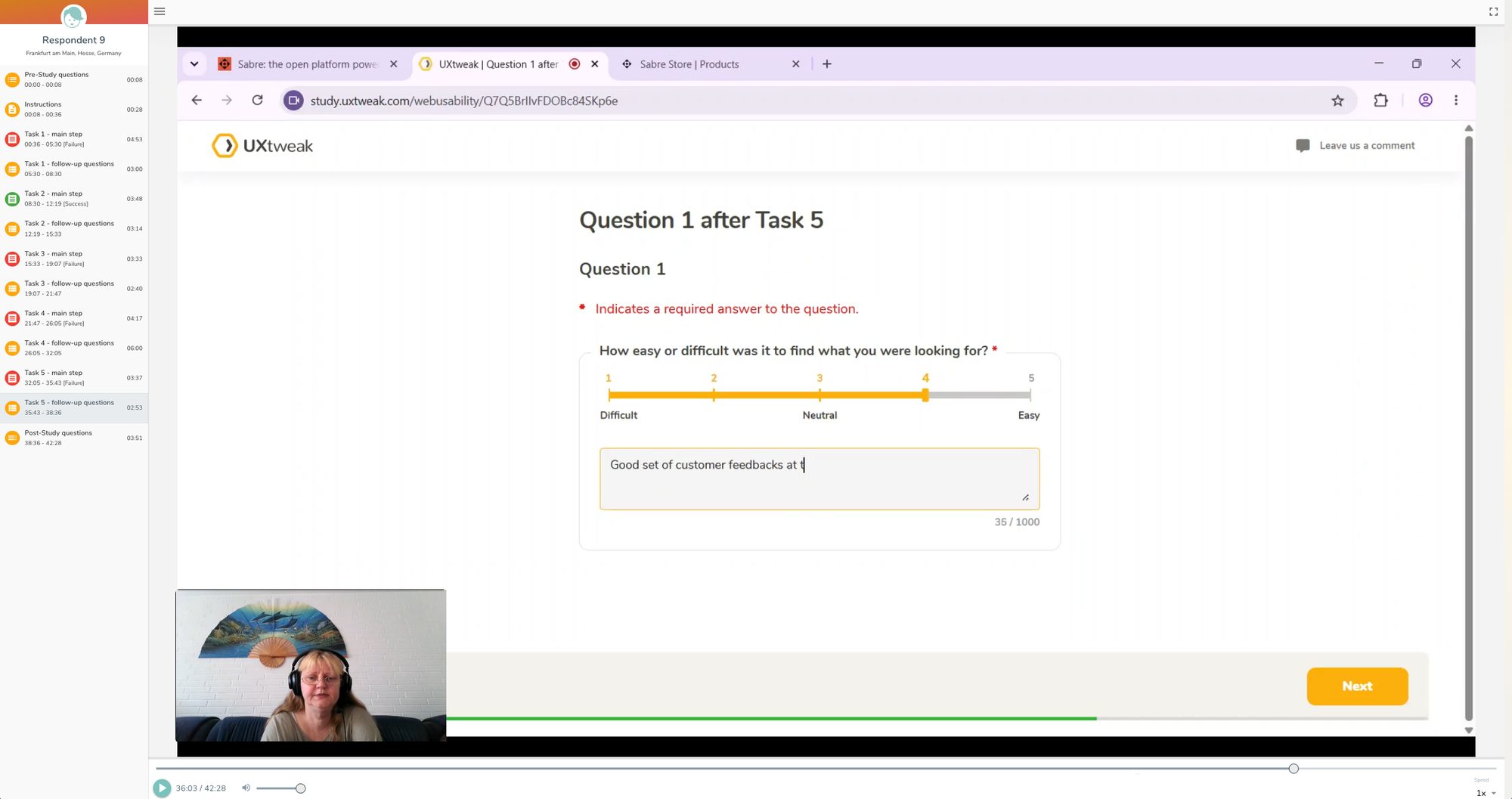
- An ongoing programme of post-launch usability testing and UX review feeding a define, iterate, test and launch cycle
08
Reflection
What I would do next
The MVP was always designed as a starting point. With the site live, the priority is to replace stakeholder assumptions with real evidence and iterate:
- Validate the proto-personas and red routes with primary user research, turning them into evidence-based personas
- Run continued usability testing on the live journeys and act on the post-launch UX review
- Track organic performance through the migration and tune content and metadata to protect SEO equity
- Work through a define, iterate, test and launch cycle, prioritising fixes by impact against audience needs and business goals
What I took from it
- Pace is a discipline, not a shortcut. A tight timeline only works with a clear process, focused decisions and genuine stakeholder trust.
- Simplify, then lead with the audience. Cutting product-led sprawl into a solution-led, audience-first structure is what turns a complex offer into a clear one.
- Be honest about the evidence. Proto-personas built from stakeholder insight are a fast, defensible start, as long as you flag the assumptions and plan to test them.
- Treat launch as the beginning. An MVP framed as the first iteration, not the finished article, keeps a fast project improving instead of fossilising.
Let's grab a coffee and start talking.
Hiring a lead position is a serious decision, and one that deserves a proper conversation. I'd welcome the chance to talk you through a decade of research-led strategy, design and team leadership.